Is the DMZ Tour Worth It? What You Actually See
Course, tunnel and observatory details checked against Paju City's DMZ Peace Tour pages, JSA status against the Ministry of Unification, and the War Memorial, Odusan and DMZ Peace Trail rules against their own sites, on 17 Oct 2026.
This guide contains affiliate links. If you book through them we may earn a commission at no extra cost to you. How this works.
Worth it if you have five or more days in Seoul and care about the Korean War: a ₩67,000 half-day tour gives about 4.5 hours at the border in a day that starts at 06:50. Skip it on a three-day trip or if you hope to see JSA, which stays closed to foreigners (checked 17 Oct 2026).
Best forFirst-timersSoloSeniorsBudget
The verdict Depends
Worth one morning if the Korean War interests you and you have 5+ days; it is a museum-style visit, not a close look at the border.
Worth it if
- You have five or more days in Seoul and one free Tuesday to Sunday
- You want to stand inside a North Korean tunnel and look at the North yourself
- You travel solo or as a senior and want a guided, seated day
Skip it if
- You have three days or fewer in Seoul
- You expect soldiers face to face or the blue huts: JSA is closed to foreigners
- Photos are the point: the whole Paju course bans cameras
When this stops being true: If JSA reopens to foreign visitors, a JSA tour becomes the one to book; if half-day tours rise well above ₩67,000 (checked 17 Oct 2026), DIY on Paju's ₩12,200 shuttle wins for most people. (checked 17 Oct 2026)
Key takeaways
- A ₩67,000 half-day tour leaves Seoul at 06:50–07:30 and is back by 14:30–15:10; about 4.5 hours of that is in Paju.
- You see a 1,635 m North Korean tunnel, then North Korea's Kaesong area through binoculars at Dora Observatory.
- No photos or video anywhere on the Paju DMZ course; Imjingak park outside the control line is the photo stop.
- JSA and the blue huts at Panmunjom are closed to foreigners in October 2026; tours promising them get cancelled.
- Free alternatives: the War Memorial of Korea in Seoul (closed Mondays) and Odusan Observatory, about an hour by bus from Hapjeong.
| Half-day tour from Seoul | ₩67,000 adult; pickup 06:50–07:30, back 14:30–15:10Source: Trazy listing, 17 Oct 2026 |
|---|---|
| Third Tunnel | Found 1978; 1,635 m long, 2 m wide and high; 265 m open to visitorsSource: Paju DMZ Peace Tour; Korea Tourism Organization |
| Dora Observatory view | Songaksan, Kaesong outskirts, Gijeong-dong; Kaesong Industrial Complex on clear daysSource: Paju DMZ Peace Tour |
| Photos on the course | Banned, drones included; CCTV in operationSource: Paju DMZ Peace Tour visitor rules |
| JSA / Panmunjom | No foreigner or group visits (Oct 2026)Source: Ministry of Unification |
| War Memorial of Korea | Free; 09:30–17:40, last entry 17:00; closed MondaysSource: warmemo.or.kr |
The DMZ tour is worth a morning for first-timers with five or more Seoul days who expect a tunnel, a viewpoint and a lot of bus time. This page is the before-you-book decision; for which tour to pick, see the DMZ tour comparison. More trips out of Seoul are in Day Trips.
What do you actually see on a DMZ tour?
Every standard DMZ trip from Seoul runs on the same track: Paju City’s DMZ Peace Tour course. Civilians can’t enter the Civilian Control Line on their own, so tour coaches and Paju’s own shuttle bus all drive the same loop from Imjingak: the Third Tunnel, Dora Observatory, Unification Village and back. Paju’s timetable calls it about three hours.
The four stops on the Paju DMZ course and what each one is (checked 17 Oct 2026)
| Stop | What you do there | What you see | Photos |
|---|---|---|---|
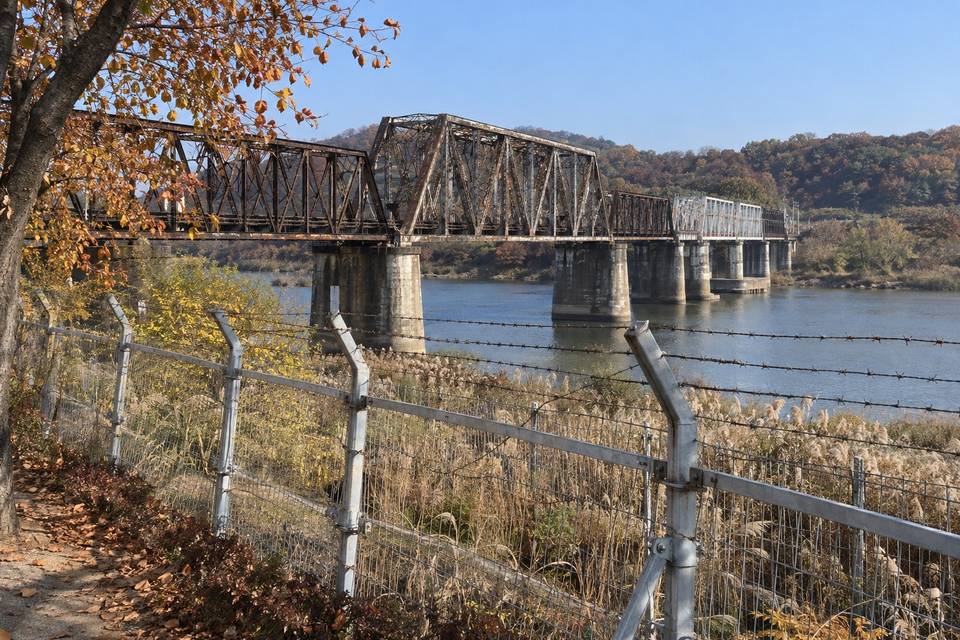
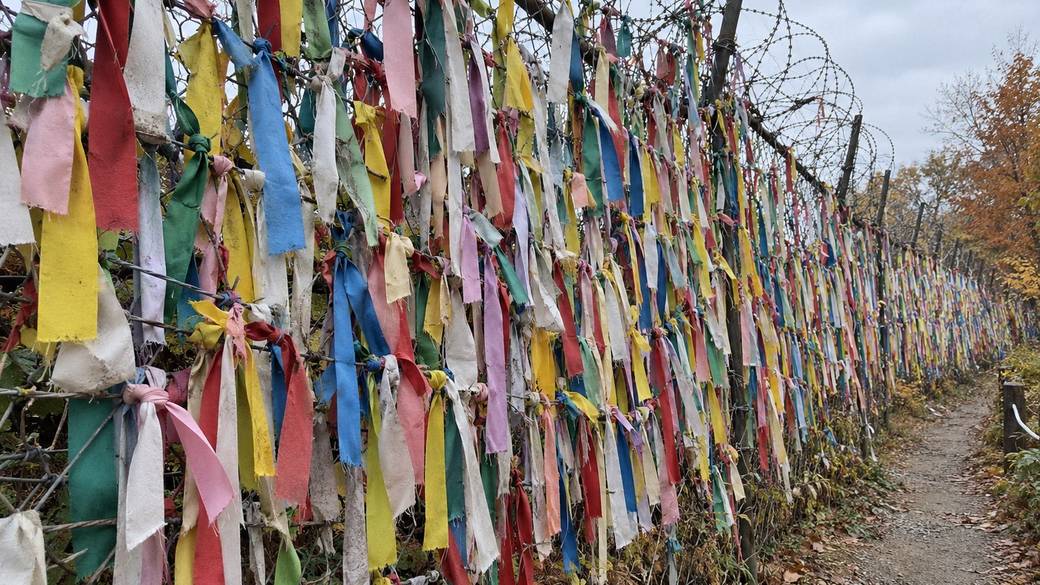
| Imjingak park | Start and end point, outside the control line | Freedom Bridge, memorials, ribbons on the fence, optional gondola | Allowed |
| Third Tunnel | Ride the monorail or walk down a steep slope into the tunnel | A bare 2 m × 2 m rock tunnel, a 3D film, a shop | Banned |
| Dora Observatory | Look north through fixed binoculars | Songaksan, Kaesong outskirts, Gijeong-dong village | Banned |
| Unification Village | Short stop in a farming village inside the line | Binocular post, old air-defence site | Banned |
The tunnel and the observatory are the two moments people remember; Imjingak and the village are where you stretch your legs.
The Third Tunnel
North Korea dug this tunnel towards Seoul. A defector’s tip in September 1974 started the search, and on 10 June 1978 a borehole caught an explosion and a jet of water, which led to its discovery, according to Paju City. It is 1,635 m long, 2 m wide and 2 m high, 52 km from Seoul, and Paju says it could have moved 30,000 troops an hour.
You don’t walk the whole thing. The Korea Tourism Organization’s listing says only 265 m is open to visitors for safety. Paju runs a monorail on five departures a day; on the other runs you walk down the access slope and back up, which is the hardest physical part of the day. If the monorail breaks down, Paju switches the run to walking.
Dora Observatory
This is the view of North Korea. Paju describes dozens of binoculars facing north, with Songaksan mountain, a statue of Kim Il-sung, the propaganda village of Gijeong-dong, the edge of Kaesong city and a collective farm in sight; on a clear day you can see as far as the Kaesong Industrial Complex. The current building opened in October 2018. The view depends on the weather: on a hazy day you see far less.
What you don’t see
- JSA and the blue huts at Panmunjom. The Ministry of Unification’s page says group and foreigner visits are not operating, with any restart to be announced separately. Only South Korean nationals aged 8 and over can apply.
- Soldiers at the line. You see guard posts and fences from a distance, not a face-to-face border.
- Dorasan Station, on most runs. Older Korea Tourism Organization listings include it, but Paju’s current timetable lists only Imjingak, the tunnel, the observatory and Unification Village.
- Your own photos. Paju bans photos and video, drones included, everywhere on the course, and runs CCTV.
Does it pay off in time and money?
The real cost of the DMZ is a day of your trip, not the ticket. Trazy’s half-day tour from Seoul picks up at 06:50 (Dongdaemun History & Culture Park), 07:00 (Myeongdong) or 07:30 (Hongik Univ.), reaches Imjingak at 09:00, leaves Paju at 13:30 and drops off between 14:30 and 15:10. That is about 8 hours 20 minutes for about 4.5 hours in Paju.
DMZ half-day tour vs the alternatives, per adult (checked 17 Oct 2026)
| Option | Time out of your day | Cost | North Korea in view | Tunnel | Closed |
|---|---|---|---|---|---|
| Half-day DMZ tour | 06:50–15:10 | ₩67,000 | Yes, through binoculars | Yes | Mondays, weekday holidays |
| DIY, Paju shuttle | About 3 h course + train each way | ₩12,200 (monorail) or ₩9,200 + train | Yes | Yes | Mondays, weekday holidays |
| Odusan Observatory | About 1 h bus each way + 35 min walk | Free | Yes, across the river | No | Mondays |
| War Memorial of Korea | In Seoul, by subway | Free | No | No | Mondays |
The tour mostly buys you an English-speaking guide and a seat on a coach; the sights are the same ones Paju’s own ₩12,200 shuttle visits.
How to do the maths
Price per hour at the border = ticket ÷ hours in Paju. For the tour that is ₩67,000 ÷ 4.5 ≈ ₩14,900 an hour; for the DIY shuttle it is ₩12,200 ÷ 3 ≈ ₩4,100 an hour plus your train fare, and you give up the guide. Use the same sum on any listing you find: if a “DMZ tour” spends under three hours in Paju, it is mostly a bus ride.
Who is it for, and who should skip it?
Book it if:
- You have five or more days in Seoul. On a short trip one DMZ morning replaces a palace and a neighbourhood. Our guide to how many days to spend in Seoul shows where a spare day appears.
- You’re a first-timer or solo traveller curious about the Korean War. The guide fills in the context that the plain tunnel and binoculars don’t give you.
- You’re a senior who’d rather sit on a coach than change trains. Pick a monorail run and check the tunnel rules above first.
Skip it if:
- You have three days or fewer. The War Memorial gives you the history in Seoul in a couple of hours.
- You want the dramatic border photos you’ve seen online. Those were taken at JSA, which is closed to you, or at Imjingak, which you can visit without a tour.
- You hate early starts. The first pickup is 06:50.
What are the cheaper or better alternatives?
- The War Memorial of Korea, Seoul. Free, open 09:30–17:40 with last entry at 17:00, closed every Monday (when a holiday run includes a Monday, it closes the day after instead), plus New Year’s Day, Seollal Day and Chuseok Day. It sits on Itaewon-ro in Yongsan, near Samgakji Station, so it fits into an afternoon with no early start. Booking isn’t needed for the permanent galleries.
- Odusan Unification Observatory, Paju. Free since 1 January 2024 and outside any shuttle system. Hours are 09:30–17:30 from March to October (last entry 17:00) and 10:00–17:00 from November to February (last entry 16:30); closed Mondays, or the next day when Monday is a holiday. Take bus 2200 from Hapjeong Station (Line 2 exit 1 or Line 6 exit 8) for about 60 minutes, then walk about 35 minutes including a 1.4 km walkway. The operator says weekend afternoons can mean an hour’s wait for parking, so go in the morning.
- DIY on Paju’s shuttle. Same tunnel and observatory for ₩12,200, but you need to reach Imjingak yourself and tickets sell only 09:00–14:30. The DMZ comparison has the steps and the timetable.
- The DMZ Peace Trail walks. The Korea Tourism Organization runs 11 guided walking courses in 2026, from Ganghwa to Goseong, for ₩10,000. They are open only to South Korean nationals, so they are not an option for foreign visitors. If you want a look across the border without a tour, the Ganghwa Peace Observatory sells tickets to anyone; our Ganghwa Island day trip plan covers the buses and fees.
If your choice is really “DMZ or a green day out”, read whether Nami Island is worth it as well: it fills the same slot in a trip with a far easier morning.
What can go wrong on the day?
When does this verdict stop being true?
Three things would change the answer. If the Ministry of Unification reopens Panmunjom to foreigners, a JSA tour becomes the reason to go and this page will say so. If half-day tour prices climb well above ₩67,000 while Paju’s shuttle stays at ₩12,200, DIY becomes the better choice for most adults. And if Paju adds stops such as Dorasan Station back to its course, the day gets more for the same time. All prices and rules here were checked on 17 October 2026.
For a full Seoul plan with a free day for a trip like this, see the 7-day Seoul itinerary, or compare the DMZ with Suwon, Jeonju and Gangneung in our best day trips from Seoul.
Questions people ask
- Is the DMZ tour worth it for first-timers?
- Yes if you have five or more days in Seoul and an interest in the Korean War. On a three-day trip it costs you a full morning plus early afternoon for about 4.5 hours of sightseeing, and the War Memorial in Seoul covers the history for free.
- Can you see North Korea on a DMZ tour?
- Yes, at a distance. From Dora Observatory dozens of binoculars look across to Songaksan mountain, the outskirts of Kaesong, the village of Gijeong-dong and, on clear days, the Kaesong Industrial Complex. You don't meet North Korean soldiers or cross any line.
- Can I take photos on a DMZ tour?
- Not on the Paju DMZ course. Paju City bans photos and video, drones included, everywhere inside the course, and there is CCTV. Take your photos at Imjingak park before or after the shuttle, which is outside the control line.
- Can foreigners visit JSA or Panmunjom in 2026?
- No. The Ministry of Unification says group and foreigner visits to Panmunjom are not operating, with any restart to be announced separately. Only South Korean nationals aged 8 and over can apply.
- Is the DMZ tour scary or dangerous?
- It is a routine, controlled visit. Paju can stop tours at short notice for security threats, bad weather or safety, and the main physical challenge is the steep tunnel slope, which visitors with heart, blood-pressure or breathing problems may be refused.
- Is the DMZ tour good for kids?
- For school-age children who can handle a 06:50 start and the steep tunnel, yes. Minors must be with an adult guardian, and Paju may keep visitors out of the tunnel if the slope is unsafe for them.
Next in your trip
- Pick your DMZ tour or go DIY — Half-day vs full-day vs Paju's ₩12,200 shuttle, with the timetable
- Check you have a day to spare — How many Seoul days to plan before adding trips out
- Compare other day trips — Suwon, Nami, Jeonju and Gangneung with train times and fares
Sources
- 통일부 – 판문점 방문 (외국인·단체 견학 미운영) (Korean)
- 파주 DMZ 평화관광 – 안내 (제3땅굴·도라전망대·통일촌) (Korean)
- 파주 DMZ 평화관광 – 관람안내 (휴무일·신분증·촬영금지) (Korean)
- 파주 DMZ 평화관광 – 이용요금 (Korean)
- 파주 DMZ 평화관광 – 코스별 시간표 (Korean)
- 대한민국 구석구석 – 제3땅굴 (Korean)
- Korea Tourism Organization – 3. Invasionstunnel (German listing, 265 m open)
- 전쟁기념관 – 관람안내 (Korean)
- 오두산 통일전망대 – 이용안내 (무료·관람시간) (Korean)
- 오두산 통일전망대 – 오시는 길 (2200번 버스) (Korean)
- 두루누비 DMZ 평화의 길 – 방문 절차 (대한민국 국적자만 신청) (Korean)
- Trazy – Paju DMZ Tour from Seoul (itinerary and price)
Updates
- Published, with the Trazy half-day timetable, Paju's course and closure rules, the JSA status and the War Memorial and Odusan hours, all checked that day.
About Korea Field Notes
An English guide to the practical side of visiting South Korea. Guides are researched from Korean-language official sources (Korail, T-money, Seoul Metro, the Korea Tourism Organization) and re-checked when rules or prices change. Each guide shows when its facts were last checked and lists its sources. About the site · How we research and update guides · Found something out of date? Tell us.