Korea in Summer: How to Beat the Heat in July and August
KMA 1991–2020 normals, KMA alert criteria and its summer 2026 figures, KDCA heat-illness data, Seoul's Han River and palace pages, and Seoul press releases, checked 2 Nov 2026
Summer in Korea works if you plan each day around the heat: Seoul averages 30.0°C highs and 22.9°C lows in August, and summer 2026 brought 21.5 heatwave days nationwide, twice the normal. Sightsee before 11:00 and after 17:00, and move to early June or September if you can (checked 2 Nov 2026).
Best forFirst-timersFamiliesSeniors
Your situation → do this
| If you… | Do this |
|---|---|
| Your dates are fixed in late July or August | Keep them; do outdoor sights before 11:00 and after 17:00 and spend midday in museums, malls and the subway |
| You can move your trip by a few weeks | Go in the first three weeks of June (27.6°C highs, before the rain) or in late September |
| You are travelling with children or older parents | Use evening sights such as Deoksugung (open to 21:00) and treat a heat warning as an indoor afternoon |
| You need trains or Jeju flights in late July or early August | Book as soon as sales open: Korea's own holiday rush ran 25 July–10 August in 2026 |
Key takeaways
- Seoul averages 30.0°C highs and 22.9°C lows in August; July humidity averages 76%.
- Summer 2026 had 21.5 heatwave days nationwide, about twice normal, and 18.2 tropical nights.
- A heat advisory means a feels-like 33°C for 2+ days, a warning 35°C; a new 'serious' level sits above both.
- Korea's own holiday rush ran 25 July–10 August in 2026: book KTX and Jeju flights early.
- Deoksugung and Changgyeonggung stay open until 21:00 all year, so palaces work after the heat.
| Seoul in August (1991–2020 normal) | 30.0°C average high, 22.9°C low; July humidity 76%Source: Korea Meteorological Administration |
|---|---|
| Summer 2026, nationwide | 25.4°C mean (+1.7°C), 21.5 heatwave days, 18.2 tropical nightsSource: KMA, reported by The Fact, 3 Sep 2026 |
| Heat advisory / warning | Feels-like 33°C / 35°C or more for 2+ daysSource: Korea Meteorological Administration |
| Heat illness, 15 May–30 Sep 2026 | 4,066 emergency cases, 36 deathsSource: KDCA, reported by YTN, 12 Oct 2026 |
| Han River pools 2026 | 19 June–30 August; adults ₩5,000, water-play areas ₩3,000Source: Seoul Han River parks; Seoul Shinmun, 19 Jun 2026 |
Korean summer is hot, humid and busy, but it is very doable if you move your outdoor sightseeing to the mornings and evenings. This guide covers the heat itself: when it peaks, what the alerts mean and how to plan a day around it. More seasonal planning is in Seasons & Festivals.
Is summer a good time to visit Korea?
It is a fine time with caveats, and the caveats change by week. Early June is warm and mostly dry. From about 25 June to 26 July the rainy season (jangma) brings heavy showers, which our rainy season guide covers in detail. From late July to mid-August comes the real heat: 30°C afternoons, nights that stay above 22°C, and humidity around 75%.
Three things make the heat harder than the numbers suggest. Seoul sightseeing means a lot of walking between palaces, markets and long subway transfers. Many of the best sights, including palace courtyards, the city wall and Bukchon’s lanes, have little shade. And Korea’s own holiday rush lands in the same weeks, so trains, beaches and Jeju fill up.
Summer still has things going for it: long evenings, night markets and festivals along the Han River, beaches with lifeguards, and every museum and mall is air-conditioned. If your dates are set by school holidays, keep them and plan around the heat as below. If you can move them, see the next section.
When is the best time to go in summer?
| Month | High / low °C | High / low °F | Rain | Verdict | Note |
|---|---|---|---|---|---|
| Jun | 27.6 / 18.7 | 82 / 66 | 130 mm | Good | Warm; rain from late June |
| Jul | 29 / 22.3 | 84 / 72 | 414 mm | Fine with caveats | Monsoon, then heat |
| Aug | 30 / 22.9 | 86 / 73 | 348 mm | Fine with caveats | Hottest; typhoon peak |
| Sep | 26.2 / 17.7 | 79 / 64 | 142 mm | Good | Heat eases late in month |
The first three weeks of June and the second half of September are the best summer-adjacent windows; July and August work, but only with a heat plan.
Averages hide the peaks. KMA’s analysis of 53 years of data, published in July 2026, found that over the last decade heatwaves have started in June in Seoul and the central inland region, about a month earlier than they used to, and ended in mid-to-late August, about ten days later. Tropical nights (when the minimum stays at 25°C or above) run from early July to mid-August, and sometimes into early September.
What changes week by week?
Summer in Korea week by week, from KMA normals and the 2026 season (checked 2 Nov 2026)
| Period | What to expect | What it means for you |
|---|---|---|
| 1–24 June | 27–28°C highs, mostly dry | The easy weeks: full-day sightseeing still works |
| 25 June – 26 July | Rainy season, 17–18 rain days | Indoor backup every day; see the rainy season guide |
| Late July – mid-August | Peak heat, tropical nights, Korean holiday rush | Mornings and evenings outdoors; book transport early |
| Late August | Still hot; typhoons possible | Watch the forecast; ferries and flights can be cancelled |
| September | 26°C highs falling, Chuseok mid-month (14–16 Sep 2027) | Comfortable by the end of the month; avoid Chuseok trains |
The hardest stretch for visitors is late July to mid-August, when the heat peaks and Korea’s own holiday crowds arrive.
How hot does it get, and what do the heat alerts mean?
Normals say 30°C, but recent summers have gone well past them. KMA’s figures for summer 2026 (June–August) put the nationwide average at 25.4°C, 1.7°C above normal and the third-warmest summer on record. There were 21.5 heatwave days (a day with a maximum of 33°C or more), about twice the normal, and 18.2 tropical nights, about 2.8 times normal and the second-highest count on record.
KMA uses a “feels-like” temperature, which adds humidity to the air temperature, to trigger its heat alerts:
KMA heat alert levels (KMA alert criteria, checked 2 Nov 2026)
| Alert | Korean | Trigger | What to do |
|---|---|---|---|
| Heat advisory | 폭염주의보 | Feels-like 33°C or more expected for 2+ days | Outdoor sights before 11:00 and after 17:00 |
| Heat warning | 폭염경보 | Feels-like 35°C or more expected for 2+ days | Indoors from about 14:00 to 17:00; no midday hikes |
| Serious heat warning | 폭염중대경보 | After 2+ days at 35°C: feels-like 38°C or air 39°C expected | Keep children and older travellers indoors through the afternoon |
An advisory is common in a Korean summer; a warning is when walking tours, hikes and long queues in the sun become a health risk.
The risk is real. The Korea Disease Control and Prevention Agency (KDCA) counted 4,066 heat-illness cases in emergency rooms between 15 May and 30 September 2026, and 36 deaths. That was the third-highest case count after 2018 and 2025, and the second-highest death toll after 2018; KDCA singled out older people as the group to protect. Families with grandparents should plan the shortest walking days for heat-warning afternoons.
Alerts go out in Korean as emergency texts. For English, install the Emergency Ready App, the foreigners’ version of the government safety app, before you fly, and check KMA’s English site. Both need mobile data, which is one more reason to get a local data plan; our eSIM vs SIM vs pocket Wi-Fi guide compares the options.
How should you plan a summer day?
Split each day into three blocks and put the hard walking at the ends. Seoul is well set up for this: palaces open at 09:00, two of them stay open late, and museums, malls and the subway cover the hot middle of the day.
A summer day in Seoul in three blocks, palace and museum hours from official pages (checked 2 Nov 2026)
| Block | What to do | Examples |
|---|---|---|
| 07:00–11:00 | Outdoor sights, walking, markets | Gyeongbokgung from 09:00 (Jun–Aug to 18:30, closed Tue); the Naksan section of the Seoul City Wall |
| 11:00–17:00 | Air-conditioned sights and a long lunch | National Museum of Korea (free); Starfield Library at COEX; shopping; a café |
| 17:00 onwards | Evening sights, river and food | Deoksugung or Changgyeonggung (to 21:00); Han River parks; night markets |
The middle block is not wasted time: Seoul’s best museums and malls are free or cheap and fully air-conditioned.
Some practical habits help:
- Use the subway as your cool-down. Trains and most stations are air-conditioned. Seoul Metro sets normal cars to 24°C and its “mild cooling” cars (약냉방칸) to 25°C. According to Seoul’s 2025 guide these are cars 4 and 7 on Lines 1, 3 and 4, cars 4 and 5 on Lines 5–7 and cars 3 and 4 on Line 8; Line 2 has none.
- Refill often. Every convenience store sells cold water, sports drinks and ice cups, and there is one on almost every block; our convenience store snacks guide has the drinks worth trying.
- Look for the city’s cooling spots. In summer 2026 Seoul ran about 4,000 cooling shelters (무더위쉼터) in community centres and welfare centres, 40 “companion shelters” at 21 above-ground subway stations, and cooling-fog posts in squares and parks. The shelters are set up for residents, and Seoul’s notice says nothing about visitors, so treat museums, malls and cafés as your main refuge.
- Carry a sun umbrella. Parasols (양산) are a normal sight on Korean summer streets, and a light folding umbrella covers both sun and sudden afternoon showers.
What are the best things to do in summer?
Pick things that are better in the heat, or that happen only in summer. The list below uses 2026 dates as a guide; 2027 dates are usually announced in late spring.
- Han River swimming pools. In 2026 the outdoor pools at Ttukseom and Yeouido and water-play areas at Jamsil, Gwangnaru, Nanji and Yanghwa ran from 19 June to 30 August. Adults paid ₩5,000 for a pool and ₩3,000 for a water-play area, children under six went free, and Jamwon pool stayed closed for renovation.
- Evening palaces. Deoksugung and Changgyeonggung are open until 21:00, and the stone walls and trees are at their best once the sun drops.
- The Banpo Bridge rainbow fountain. From June to September the Moonlight Rainbow Fountain adds a 21:30 show to its 12:00, 19:30, 20:00, 20:30 and 21:00 runs, each 20 minutes. Shows stop in strong wind or rain.
- Han River summer festival. The 2026 Hangang Festival ran from 1 to 16 August across nine riverside parks, with a water drone show, under-bridge cinemas and an all-night event at Mangwon.
- Long museum days. The National Museum of Korea is free for its permanent galleries and stays open until 21:00 on Wednesdays and Saturdays. In 2026 it also opened earlier, from 09:00, between 27 July and 17 August.
- Beaches. Busan’s Haeundae and Gwangalli and Jeju’s Hyeopjae and Hamdeok are the easiest; lifeguards work only in the official season, which ran from late June to late August in 2026 (to 15 September at Haeundae). See our best beaches in Korea for dates and transport.
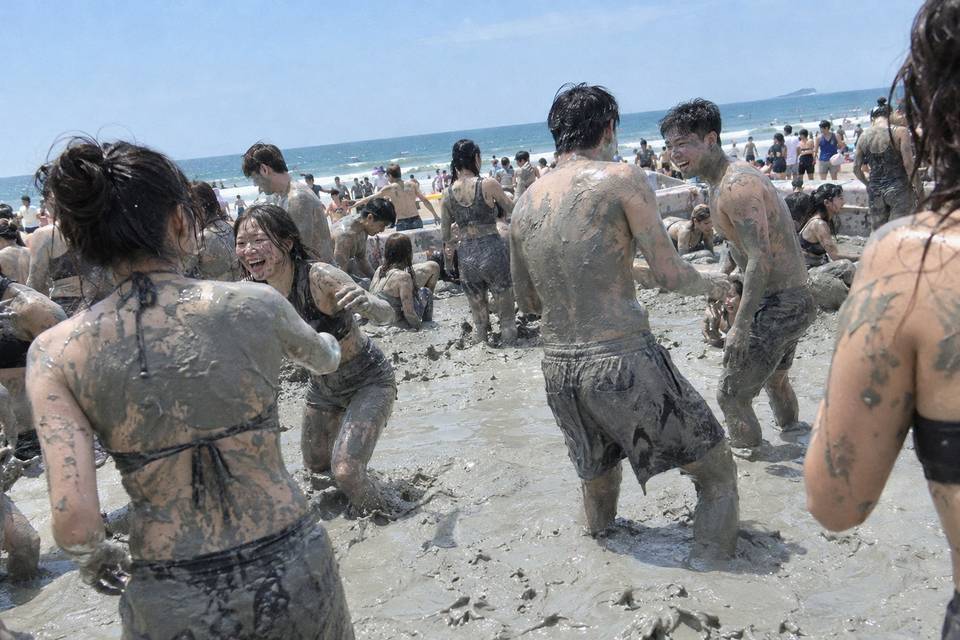
- Boryeong Mud Festival. The big summer festival for foreign visitors ran from 24 July to 9 August 2026 at Daecheon Beach; our Boryeong Mud Festival guide has tickets and buses.
- Summer food. Cold buckwheat noodles (naengmyeon), shaved-ice bingsu and, on the boknal days, ginseng chicken soup (samgyetang). Koreans eat hot soup on the hottest days to “fight heat with heat”.
Which events and holidays affect a summer trip?
Summer 2027 dates and the 2026 patterns to plan around (KASA 2027 almanac, Seoul and MOLIT notices; checked 2 Nov 2026)
| Date | Event | Effect on you |
|---|---|---|
| Sat 17 – Mon 19 Jul 2027 | Constitution Day long weekend (a public holiday again from 2026), 19 Jul a substitute holiday | Busy roads, beaches and KTX |
| Tue 20 Jul 2027 | Chobok, the first boknal | Samgyetang queues at lunch |
| Fri 30 Jul 2027 | Jungbok, the second boknal | Same; often in a heat spell |
| Late Jul – early Aug | Korean summer holiday peak (25 Jul–10 Aug in 2026) | KTX, Jeju flights and beach hotels sell out |
| Mon 9 Aug 2027 | Malbok, the last boknal | Samgyetang queues again |
| Sat 14 – Mon 16 Aug 2027 | Liberation Day (15 Aug) long weekend, with 16 Aug a substitute holiday | One more domestic travel rush |
| Early – mid Aug | Hangang Festival (1–16 Aug in 2026) | Free evening events along the river |
The government’s 2026 summer travel period ran from 25 July to 10 August, with about 6.14 million trips a day, so late July and the two summer long weekends are the dates to book furthest ahead. The most common departure week in the government’s survey was 25–31 July.
KTX tickets go on sale two months before travel; our KTX booking guide covers how. For Jeju, book flights and any rental car as soon as your dates are fixed; our Jeju rental car guide covers licences and insurance.
How do Seoul, Busan and Jeju differ in summer?
Average July and August highs / lows (°C), KMA 1991–2020 normals (checked 2 Nov 2026)
| City | July | August | Summer character |
|---|---|---|---|
| Seoul | 29.0 / 22.3 | 30.0 / 22.9 | Wettest July of the three, then hot, still nights |
| Busan | 27.5 / 22.1 | 29.5 / 23.7 | A little cooler in July; beaches on the subway |
| Jeju City | 29.3 / 23.7 | 30.1 / 24.8 | Hottest August and the warmest nights |
The three cities end up within about half a degree of each other in August, so moving south does not escape the heat; it only adds a beach.
Seoul is the hardest for walking-heavy days but the easiest for indoor backups. Busan gives you a sea breeze and subway-reachable beaches; our Busan 2-day itinerary covers both Gwangalli and Haeundae. Jeju has the warmest nights and the busiest flights in the holiday peak, and many of its sights are outdoors, so a car with air-conditioning or a tight bus plan helps. Gangwon’s highlands around Pyeongchang are Korea’s traditional cool-summer escape, but they need a car or a long bus ride and suit a second trip more than a first.
What should you wear and pack?
For a July–August trip
- Light, loose clothes in cotton or linen, plus one long-sleeved layer for cold trains, cinemas and malls
- Comfortable walking shoes that breathe; sandals are fine almost everywhere
- A hat and a light folding umbrella for sun and showers
- Sunscreen: Korean sunscreens are sold in every Olive Young, so you can buy it on arrival
- A refillable bottle and a small towel for sweat
- Swimwear if you plan on a beach or a Han River pool; check the pool’s own rules before you go
Our Korea packing list covers plugs, cards and the rest, and Olive Young guide covers sunscreen picks.
Notes for your country
- US, Canada and the UK: your summer break lands right on Korea’s hottest weeks and its own holiday rush. Book the KTX and Jeju legs first, and aim for the start of your holiday if it begins in late June.
- Australia: the NSW and Victorian July school holidays fall in the rainy season rather than the heat; the rainy season guide has the 2027 overlap table.
- Singapore, Malaysia and the Philippines: the heat will feel familiar, but Korean days involve far more walking outdoors, and indoor air-conditioning is set colder than you may expect. Singapore’s June holidays (29 May–27 June 2027) mostly fall in the easy early-June weeks. Muslim travellers can use our halal food guide for summer trips.
- India: if your break falls in May or June, the first three weeks of June are Korea’s best early-summer window, before the rain.
- Entry: visitors from the US, UK, Canada, Australia and Singapore are exempt from K-ETA only until 31 December 2026 unless it is extended; check our K-ETA guide before booking a 2027 summer trip.
Bottom line
Summer in Korea works for a first trip if you treat the heat as a timetable: walk early, hide at midday, go out again at dusk. If your dates are flexible, early June or late September give you the same long days without the 33°C afternoons.
Questions people ask
- How hot is Korea in July and August?
- Seoul averages 29.0°C highs in July and 30.0°C in August, with nights around 22–23°C and humidity near 75%. Heatwaves push past 33°C most summers: 2026 had 21.5 heatwave days nationwide, about double the 1991–2020 normal.
- Is summer a bad time for a first trip to Korea?
- No, but it is the hardest season for walking-heavy sightseeing. Late June to late July is the rainy season and late July to mid-August the hottest weeks. Plan outdoor sights for mornings and evenings, and if your dates can move, go in early June or late September.
- When are the boknal days in 2027?
- Chobok is Tuesday 20 July, jungbok Friday 30 July and malbok Monday 9 August 2027. Koreans eat samgyetang (ginseng chicken soup) on these days, so expect long queues at well-known samgyetang restaurants at lunchtime.
- Is air-conditioning everywhere in Korea?
- Almost everywhere indoors: the subway, buses, cafés, malls and museums are cooled, and Seoul Metro keeps normal cars at 24°C (Seoul's 2025 guide). The contrast with 33°C streets is sharp, so carry a light layer. Seoul's 'mild cooling' cars run 1°C warmer if you feel cold.
- Do I need a K-ETA for a summer 2027 trip?
- Visitors from the US, UK, Canada, Australia and Singapore are exempt only until 31 December 2026 unless Korea extends the exemption. No 2027 decision had been announced by 2 November 2026, so check our K-ETA guide before you book flights.
Next in your trip
- Korea rainy season — late June to late July is wet before it is hot
- Best beaches in Korea — lifeguarded swim seasons and how to reach each beach
- Korea packing list — what to bring for heat, humidity and cold air-conditioning
Sources
- 기상청 – 지역별 기후 특성 (서울, 1991–2020 평년값) (Korean)
- 기상청 기상자료개방포털 – 평년값 (1991–2020) (Korean)
- 기상청 – 특보 발표 기준 (폭염주의보·경보·중대경보) (Korean)
- 더팩트 – 기상청 2026년 여름철 기후 특성 (3 Sep 2026) (Korean)
- 뉴시스 – 기상청 53년 폭염·열대야 분석 (24 Jul 2026) (Korean)
- YTN – 2026년 온열질환자 4,066명, 사망 36명 (질병관리청, 12 Oct 2026) (Korean)
- 한강공원 – 한강수영장·물놀이장 (2026 운영기간) (Korean)
- 서울신문 – 한강 수영장·물놀이장 개장, 이용요금 (19 Jun 2026) (Korean)
- 내 손안에 서울 – 서울시 폭염 대책 (무더위쉼터·동행쉼터, Jul 2026) (Korean)
- 내 손안에 서울 – 지하철 약냉방칸 위치 (30 Jul 2025) (Korean)
- 내 손안에 서울 – 2026 한강페스티벌 여름 (27 Jul 2026) (Korean)
- 한강공원 – 달빛무지개분수 운영 (Korean)
- 궁능유적본부 – 관람시간 (경복궁·창덕궁·덕수궁·창경궁) (Korean)
- 세계일보 – 국립중앙박물관 여름 연장 개관 (15 Jul 2026) (Korean)
- 머니투데이방송 – 2026 하계휴가 특별교통대책 (22 Jul 2026) (Korean)
- 세계일보 – 우주항공청 2027년도 월력요항 (공휴일·삼복, 29 Jun 2026) (Korean)
- 정책브리핑 – 2026 하계휴가 특별교통대책 (22 Jul 2026) (Korean)
- K-ETA – 한시 면제 연장 공지 (2026년 12월 31일까지) (Korean)
- Ministry of Education Singapore – 2027 school terms and holidays
- NSW Department of Education – 2027 school term dates
Updates
- Published with KMA 1991–2020 summer normals, summer 2026 heatwave figures, the three heat-alert levels, Han River pool and palace hours and 2027 boknal dates.
About Korea Field Notes
An English guide to the practical side of visiting South Korea. Guides are researched from Korean-language official sources (Korail, T-money, Seoul Metro, the Korea Tourism Organization) and re-checked when rules or prices change. Each guide shows when its facts were last checked and lists its sources. About the site · How we research and update guides · Found something out of date? Tell us.