How to Eat Gluten-Free in Korea: Dishes, Labels, Phrases
Labelling rules checked against MFDS (10 Sep 2026) and franchise allergen rules; product ingredients against Sempio and Costco Korea listings on 27 Oct 2026.
Gluten-free eating in Korea works if you treat soy sauce, ssamjang and most sauces as wheat and build meals on plain rice, salt-grilled meat and checked packs. Korea's 무글루텐 label means 20 mg/kg of gluten or less (MFDS, 10 Sep 2026), but few restaurants can rule out cross-contact, so carry the Korean lines below.
Best forFirst-timersSolo
Your situation → do this
| If you… | Do this |
|---|---|
| You have coeliac disease or a wheat allergy | Show the Korean card before ordering, eat salt-grilled meat with rice, and skip anything marinated, battered or in red sauce |
| You're buying snacks or meals at a convenience store or mart | Read the full 원재료명 list for 밀, 소맥분, 보리 and 호밀, or pick packs labelled 무글루텐 |
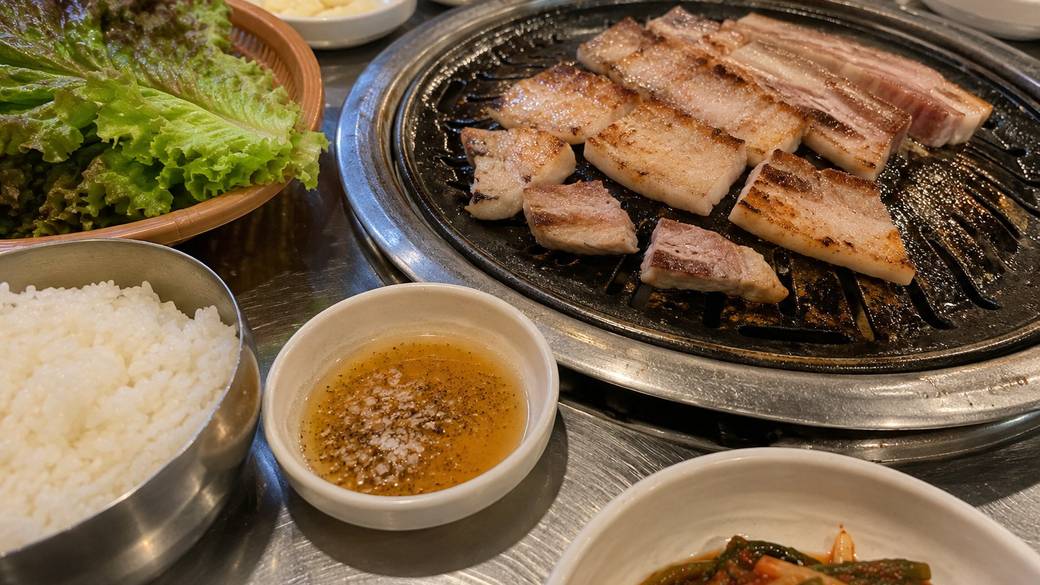
| You're going out for Korean barbecue | Order unmarinated pork belly or neck and dip it in salt and sesame oil instead of ssamjang |
| You're avoiding gluten by choice, not for medical reasons | Order rice-based dishes and ask for sauce on the side; trace amounts won't matter to you |
Key takeaways
- Sempio, a big Korean soy sauce maker, says its brewed and jin soy sauces are made from soybeans and wheat.
- Haechandle ssamjang, the barbecue dip, lists wheat flour and wheat grain; its retail gochujang label lists rice, not wheat.
- CJ's pure-rice (순쌀) tteokbokki kit has rice cakes, but its gochujang sauce contains wheat flour.
- Korea's 무글루텐 (gluten-free) label allows up to 20 mg/kg of gluten, the same line the US FDA uses.
- Franchises with 50+ outlets selling burgers, pizza, bakery or ice cream must show allergens, including wheat.
| 무글루텐 (gluten-free) label | No wheat, rye, barley or oats (or gluten removed) and total gluten ≤ 20 mg/kgSource: MFDS press release, 10 Sep 2026 |
|---|---|
| Brewed and jin soy sauce | Made from soybeans and wheatSource: Sempio |
| Haechandle ssamjang | Contains wheat flour (소맥분) and wheat grain (밀쌀); label: 대두, 밀 함유Source: Costco Korea listing, checked 27 Oct 2026 |
| Korean gluten-free certification | KGFC mark since 2021; verifies ≤ 20 mg/kg; run by the Korea Rice Processed Food AssociationSource: Sidae, 5 Nov 2025 |
| Franchise allergen display | 50+ outlets selling burgers, pizza, bakery, ice cream; 22 allergens incl. wheat; since Jul 2021Source: Kormedi, 13 Jul 2021; Metro Seoul, 9 Nov 2023 |
- Time
- About 20 min to set up before the trip
- Cost
- No extra cost: a saved phrase card and label reading
- What you need
- The Korean lines below saved offline · A translation app with camera mode · Mobile data for map searches · Your own snacks for travel days
This page is for coeliac, wheat-allergic and gluten-avoiding visitors working out what to eat in Korea, what to say and how to read a Korean label. It sits in our Food & Drink section; for kiosks, tablets and paying, see how to order at a Korean restaurant.
What do you need before you start?
Korean food looks rice-based, and it is, but wheat comes in through the seasoning. The main risk is soy sauce, which goes into marinades, stews, side dishes and dipping sauces. Coeliac disease is also very rare among Koreans. Doctors interviewed by Kormedi in 2014 said the gene behind most cases is almost absent in Korea, so many staff have never met the condition, and “no flour” is often heard as “no bread or noodles”.
Have these ready
- The Korean lines from the steps below, saved as a screenshot so they work offline.
- A translation app with a camera mode to read 원재료명 (ingredient) lists on packs. Our Papago vs Google Translate guide compares the two.
- Mobile data: searching 글루텐프리 in Naver Map or Kakao Map finds far more places than English searches. See eSIM vs SIM vs pocket Wi-Fi.
- Your own snacks for long train days and the first evening, when you won’t have found a supermarket yet.
- Any medication you normally carry for accidental exposure; check the import rules in our medication guide.
How strict you need to be decides the plan. If you’re coeliac or allergic, cross-contact matters, so treat the “ask” dishes below as unsafe unless the kitchen clearly understands. If you avoid gluten by preference, most of the “ask” column will be fine with sauce on the side.
Which Korean dishes are safe, and which hide wheat?
Wheat in Korean food rarely shows. The dishes below are the ones visitors meet first, with where the wheat comes from. The ingredient notes come from makers’ own labels and pages, checked on 27 October 2026; restaurant recipes vary, so this is a starting point, not a guarantee.
Common Korean dishes and where wheat hides (maker labels and VisitKorea, checked 27 Oct 2026)
| Dish (Korean) | Where wheat can come from | Verdict |
|---|---|---|
| Plain grilled pork belly or neck (삼겹살, 목살) | Ssamjang dip: Haechandle’s lists wheat flour and wheat grain | Safer: dip in salt and sesame oil (기름장) |
| Plain rice, plain eggs, fruit, roasted sweet potato | Single ingredients | Safer |
| Bibimbap (비빔밥) | Gochujang varies by brand; any soy-based seasoning on the vegetables | Ask: sauce on the side |
| Marinated galbi, bulgogi (갈비, 불고기) | Soy sauce marinade (brewed soy = soybeans + wheat, Sempio) | Avoid |
| Japchae (잡채) | Noodles are sweet potato starch (Ottogi label), but the dish is seasoned with soy sauce | Avoid unless made without soy sauce |
| Tteokbokki (떡볶이) | Rice cakes may be wheat (밀떡) or rice (쌀떡); the sauce in CJ’s pure-rice (순쌀) kit still contains wheat flour | Avoid |
| Jeon, pajeon (전, 파전) | Flour batter (VisitKorea) | Avoid |
| Fried chicken, tempura-style snacks (치킨, 튀김) | Batter and coatings; assume wheat unless the shop says 쌀가루 (rice flour) only | Avoid unless confirmed |
| Milmyeon, kalguksu, jajangmyeon (밀면, 칼국수, 짜장면) | Wheat noodles (밀 means wheat) | Avoid |
| Naengmyeon (냉면) | Buckwheat and starch noodles; recipes vary and we couldn’t confirm a current label | Ask, or avoid if coeliac |
The pattern is simple: the safer meals are plain protein plus rice, and the problems are marinades, batters and red sauces.
Barbecue is the easiest restaurant meal for most gluten-free visitors, because you choose the meat and the dip. Our Korean BBQ guide explains ordering by the serving; just skip the marinated cuts and ask for 기름장 (sesame oil with salt). Free side dishes (banchan) change daily and many are seasoned with soy sauce, so leave anything you can’t identify.
Stews (jjigae) and soups are hard to judge from the table. Many are built on doenjang or gochujang and seasoned with soy sauce, and the paste in the pot isn’t something staff can show you.
How do you order gluten-free at a Korean restaurant?
- Pick a restaurant built around a safer dish. Barbecue houses and plain rice-and-grill places are easier than noodle, fried-chicken or snack (bunsik) shops, where flour is everywhere.
- Show your card before you order. 저는 셀리악병이 있어서 밀, 보리, 호밀, 귀리를 전혀 못 먹어요 (I have coeliac disease, so I can’t eat any wheat, barley, rye or oats). For an allergy: 저는 밀 알레르기가 있어요 (I’m allergic to wheat).
- Name the hidden sources. 간장, 고추장, 쌈장, 된장에도 밀이 들어갈 수 있어요 (Soy sauce, gochujang, ssamjang and doenjang can contain wheat too). This line matters most; without it, staff check only for noodles and bread.
- Ask about the dish you want. 이 음식에 밀가루나 간장이 들어가요? (Does this have wheat flour or soy sauce in it?)
- Ask for it plain. 양념 없이 소금만으로 주세요 (No marinade, just salt, please) and 소스는 빼 주세요 (Please leave out the sauce).
- Say how serious it is. 아주 조금만 먹어도 아파요 (Even a tiny amount makes me ill). This tells the kitchen to use a clean pan, if it can.
- If the answer is unsure, choose something else. A hesitant “probably fine” usually means nobody knows what’s in the paste. Plain rice and grilled meat are the fallback.
Korea doesn’t use tipping, so asking for changes costs nothing. If a busy kitchen can’t do it, staff will usually say so; take that as useful information, not rudeness.
Delivery-app menus from small restaurants seldom list ingredients. If you’re ordering in, see our food delivery guide and stick to the big chains that publish allergen tables.
How do you read a Korean food label?
Packaged food is where you have the most control, because Korean labels list ingredients in full. On packs, look at two places: the 원재료명 (ingredient list) and the line that usually follows it, ending in 함유 (contains). Haechandle’s ssamjang, for example, ends with “대두, 밀 함유”: contains soy, wheat.
Korean label words for gluten grains (checked 27 Oct 2026)
| Korean on the label | Meaning | Gluten? |
|---|---|---|
| 밀 | Wheat | Yes |
| 밀가루 / 소맥분 | Wheat flour (two words for the same thing) | Yes |
| 밀쌀 | Wheat grain | Yes |
| 보리 / 보리쌀 | Barley | Yes |
| 호밀 | Rye | Yes |
| 귀리 | Oats | Contamination risk; counts as a gluten grain under Korea’s rule |
| 맥아 | Malt (usually barley) | Yes |
| 쌀 / 쌀가루 / 찹쌀 | Rice / rice flour / glutinous rice | No (glutinous rice has no gluten) |
| 고구마전분 / 감자전분 | Sweet potato / potato starch | No |
| 무글루텐 / 글루텐프리 | Gluten-free claim | Must meet MFDS rule (≤ 20 mg/kg) |
Read the whole ingredient list, not just the 함유 line. On Costco Korea’s listing for CJ’s rice tteokbokki kit, wheat flour appears only inside the gochujang sub-list, and the “made in the same facility as…” notice below it doesn’t mention wheat at all.
The gluten-free claim. The Ministry of Food and Drug Safety (MFDS) allows 무글루텐 on a pack only if the food uses no wheat, rye, barley or oats (or uses them with the gluten removed) and contains 20 mg/kg of gluten or less. In September 2026 MFDS found 20 misleading online gluten-free ads, mostly “easy on the stomach” or diet claims, and said it would test gluten-free-labelled products. A 무글루텐 label is a legal claim; “건강한” or “속 편한” (healthy, easy to digest) is marketing.
The KGFC mark. The Korea Rice Processed Food Association runs a Korean gluten-free certification (한국글루텐프리인증) launched in 2021. Sidae reported in November 2025 that it checks paperwork, the factory and the product and verifies 20 mg/kg or less; certified firms include Lotte Wellfood, Nongshim Mibun and Ottogi.
Convenience stores are useful but not easy: triangle gimbap, lunch boxes and snacks change often, and most are seasoned. Our convenience store snack guide explains the shelves; use the camera translator on each pack.
Which chain restaurants show allergen information?
Large franchises selling children’s favourite foods have to. Since 13 July 2021, chains with 50 or more outlets that cook and sell hamburgers, pizza, bakery goods or ice cream must show nutrition and allergen information, including wheat among 22 allergens, on menu boards or posters in store and next to items on websites and online order pages (Kormedi, citing the special act on children’s dietary safety). A city inspection in Seongnam in November 2023 checked 330 such outlets of 69 brands against the rule.
That helps when you want to know whether a bun or a sauce contains wheat. It doesn’t make those chains safe for coeliacs, because shared fryers and bakery counters aren’t covered by an allergen list. Ordinary Korean restaurants, including most barbecue, stew and noodle places, have no such duty.
What changes for your country?
Notes for gluten-free visitors by home market (checked 27 Oct 2026)
| If you’re from | What to know |
|---|---|
| United States, Canada | Korea’s 20 mg/kg line matches the FDA’s “less than 20 ppm” rule for gluten-free claims, so a 무글루텐 pack is roughly what you’d trust at home. |
| Australia, New Zealand | Korea is less strict. Coeliac Australia says a gluten-free claim in Australia means “no detectable gluten”; Korea allows up to 20 mg/kg. |
| UK | Don’t expect the labels you know from home; rely on 무글루텐, the KGFC mark and the 원재료명 list, and bring snacks for travel days. |
| Singapore, Malaysia, Philippines | The soy sauce rule you know from home applies here too. For halal checks on top, see our halal food guide. |
| India | Wheat-free and vegetarian together is hard outside Seoul; vegetable dishes are still seasoned with soy sauce and pastes, so use the lines from our vegetarian guide and add the wheat line. |
Whatever your passport, the gap is the same: rules cover packs and big chains, and the rest relies on what you ask.
What can go wrong?
Which approach should you choose?
- Coeliac, first trip: plan around barbecue with 기름장, plain rice and packs labelled 무글루텐; show the card every time and skip street food.
- Wheat allergy: the same as coeliac, plus check the 함유 line and the full ingredient list on every pack, and use big chains’ allergen tables.
- Gluten-free by choice: bibimbap with sauce on the side, rice dishes and grilled meat cover most meals; don’t worry about trace amounts.
- Solo: many barbecue places want at least two servings per table, so ask 1인분 돼요? at the door, or lean on one-person grill shops and supermarket packs.
When this advice is wrong: if a restaurant tells you it cooks with gluten-free soy sauce and shows you the bottle, the “avoid” rows for marinated dishes no longer apply there.
More food planning is in the food section.
Questions people ask
- Is it hard to eat gluten-free in Korea?
- Harder than the rice-heavy food suggests. Soy sauce, made with wheat, seasons marinades, stews, side dishes and japchae, and ssamjang and many red sauces contain wheat too. Coeliacs manage by eating salt-grilled meat, plain rice and checked packs, and by showing a Korean card that names soy sauce and pastes.
- Does Korean soy sauce have gluten?
- Usually yes. Sempio says its brewed (양조) and jin (진) soy sauces are made from soybeans and wheat,, the types sold for everyday cooking. Traditional soup soy sauce (국간장) is made from fermented soybean blocks, but bottled versions vary, so read the label before trusting one.
- Is gochujang gluten-free?
- It depends on the brand. Retail Haechandle and Chungjungone gochujang labels list rice, not wheat, but the gochujang in CJ's tteokbokki kit contains wheat flour, and Canada recalled a Daesang gochujang in 2025 for undeclared wheat. In a restaurant you can't see the tub, so treat red sauces as unsafe.
- Is Korean BBQ gluten-free?
- Plain cuts can be. Unmarinated pork belly (samgyeopsal) or neck (moksal) grilled at the table is just meat; dip it in salt and sesame oil rather than ssamjang, which contains wheat. Skip marinated galbi and bulgogi, which are seasoned with soy sauce.
- How do you say I have coeliac disease in Korean?
- Show 저는 셀리악병이 있어서 밀, 보리, 호밀, 귀리를 전혀 못 먹어요: I have coeliac disease and can't eat any wheat, barley, rye or oats. Add 간장, 고추장, 쌈장, 된장에도 밀이 들어갈 수 있어요, which warns that the sauces may contain wheat too.
- Can I find gluten-free bakeries in Seoul?
- Possibly, but we couldn't confirm any shop from an official source. Directory apps such as Atly list a handful in Seoul, many marked unverified. Search 글루텐프리 in Naver Map or Kakao Map, check the shop's own recent posts, and ask whether the kitchen also uses wheat flour before you trust a gluten-free sign.
Next in your trip
- How to order at a Korean restaurant — kiosks, tablets and call buttons, so your card gets read before you pay
- Papago vs Google Translate — the camera mode is how you read ingredient lists
- What to do if you get sick in Korea — pharmacies, clinics and the hotline if something goes wrong
Sources
- 식품의약품안전처 – 무글루텐 제품 온라인 부당광고 20건 적발 (보도자료, 2026년 9월 10일) (Korean)
- 샘표 – 간장의 종류와 간장 활용법 (양조간장·진간장·국간장) (Korean)
- 코스트코 코리아 – 해찬들 사계절쌈장 원재료명 (checked 27 Oct 2026) (Korean)
- 코스트코 코리아 – 해찬들 태양초고추장 원재료명 (checked 27 Oct 2026) (Korean)
- 코스트코 코리아 – 청정원순창 국산 고추장 원재료명 (checked 27 Oct 2026) (Korean)
- 코스트코 코리아 – CJ 미정당 순쌀떡볶이 원재료명 (checked 27 Oct 2026) (Korean)
- 코스트코 코리아 – 오뚜기 옛날자른당면 원재료명 (checked 27 Oct 2026) (Korean)
- 시대일보 – K글루텐프리, 글로벌 식품 시장 '뉴노멀'로 뜬다 (2025년 11월 5일, 한국글루텐프리인증) (Korean)
- 코메디닷컴 – 가맹점 50개 이상 프랜차이즈, 햄버거·피자 영양성분 표시해야 (2021년 7월 13일) (Korean)
- 메트로신문 – 성남시, 어린이 기호식품 조리·판매 업소 330개소 점검 (2023년 11월 9일) (Korean)
- Canadian Food Inspection Agency – Daesang brand Gochujang recalled due to undeclared wheat (21 Aug 2025)
- VisitKorea – Tips for Vegetarians (jeon flour batter; page last updated Oct 2023)
- US FDA – Questions and Answers on the Gluten-Free Food Labeling Final Rule
- Coeliac Australia – The gluten free diet
- 코메디닷컴 – 한국인은 다른데... '글루텐 프리' 꼭 필요할까 (2014년 9월 29일) (Korean)
Updates
- Published with the MFDS gluten-free definition (10 Sep 2026), soy sauce and paste ingredient checks, and Korean phrases.
About Korea Field Notes
An English guide to the practical side of visiting South Korea. Guides are researched from Korean-language official sources (Korail, T-money, Seoul Metro, the Korea Tourism Organization) and re-checked when rules or prices change. Each guide shows when its facts were last checked and lists its sources. About the site · How we research and update guides · Found something out of date? Tell us.