How to Order at a Korean Restaurant (2026)
Price and penalty rules checked against MFDS rules as reported by News Seoul and Seoul Shinmun, dining customs against VisitKorea and Visit Seoul, on 6 Oct 2026.
Press the table bell or order on the tablet or door kiosk, then pay at the counter as you leave unless the screen charges first. Menu prices include VAT and service by law (since 2013; overcharging means a 5-day closure from 1 Sep 2026), so never tip, and water and side-dish refills are free.
Best forFirst-timersSoloBudget
Your situation → do this
| If you… | Do this |
|---|---|
| There is a button on the table edge | Press it or say “yeogiyo”, point at the menu, pay at the counter when you leave |
| There is a tablet on the table or a kiosk at the door | Look for the English button; the kiosk takes payment before you sit |
| You are eating alone at a barbecue place | Ask “il-inbun dwaeyo?” at the door; if not, order two servings or pick a noodle or soup shop |
| The bill or screen asks for a tip | Skip it: the menu price is the total and tipping is not a Korean custom |
| You are vegetarian or need halal food | Use KTO's Muslim-friendly labels or temple food; show a written Korean line about broth and fish sauce |
Key takeaways
- Four ways to order: call bell (say “yeogiyo”), table tablet, door kiosk or counter. Check the table first.
- Menu price = total: VAT and service included by law since 2013; overcharging means a 5-day closure from 1 Sep 2026.
- No tipping. Extra water and side dishes (banchan) cost nothing.
- Many barbecue places expect two servings per table; solo diners do better at noodle, soup and kimbap shops.
- Usually you pay at the counter as you leave; door kiosks take payment up front.
| Tipping | Not expected anywhere; staff may politely refuse itSource: VisitKorea; Visit Seoul |
|---|---|
| Menu prices | Must be the final price incl. VAT and service charge (rule since 1 Jan 2013)Source: Food Sanitation Act enforcement rule, via Seoul Shinmun |
| Overcharging penalty | 5-day closure on a first offence, 10 days second, 20 days third (from 1 Sep 2026)Source: Ministry of Food and Drug Safety, via News Seoul |
| Meat at barbecue places | Price per 100 g must be shown; servings (1인분) vary by restaurantSource: Food Sanitation Act enforcement rule, via Seoul Shinmun |
| Water and side dishes | Free, refills includedSource: VisitKorea |
| Restaurants with a one-person menu | About 10.4% (March 2025), up from 9.7% a year earlierSource: NICE GeniData, via Hankyung |
| Booking without a Korean number | CatchTable Global: English app, overseas cards for deposits, remote waitlistSource: VisitKorea; Seoul Metropolitan Government–CatchTable agreement |
- Time
- About 2 min to order, pay on the way out
- Cost
- Menu price = total; tip ₩0
- What you need
- An overseas Visa or Mastercard · A little cash for markets and stalls · A camera translation app · Mobile data
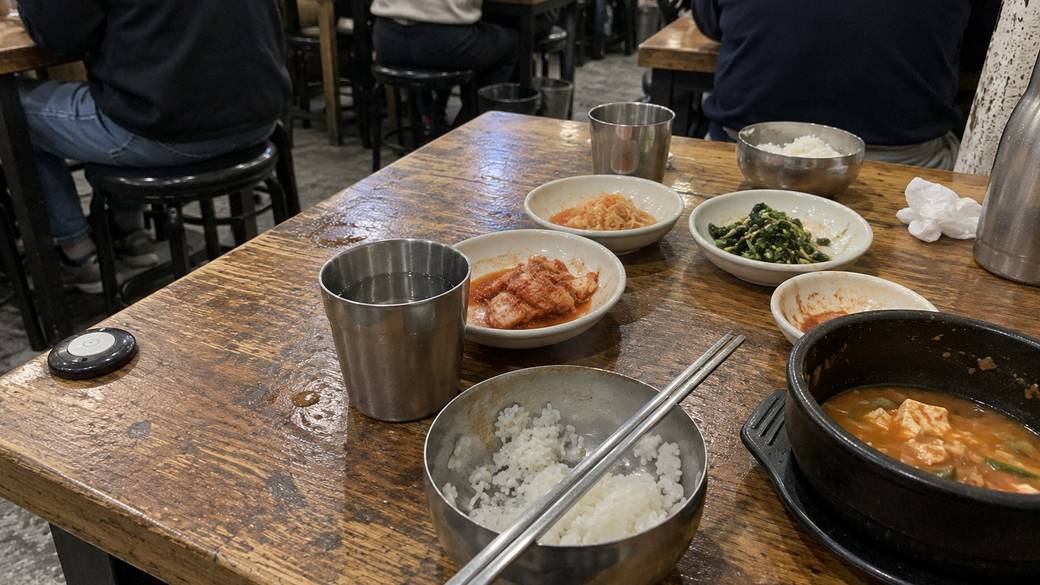
To order at a Korean restaurant, use whichever of four systems is in front of you: a call bell, a table tablet, a door kiosk or a counter. The menu price is the final price, you never tip, and at most sit-down places you pay at the counter on the way out.
The sections below follow the meal from the door to the till.
This page is the starting point of our Food & Drink section. It’s written for a first trip: you’re probably reading it on your phone, at the door or looking at a tablet you can’t read yet. All rules and figures were checked on 6 October 2026.
Which of the four ordering systems are you looking at?
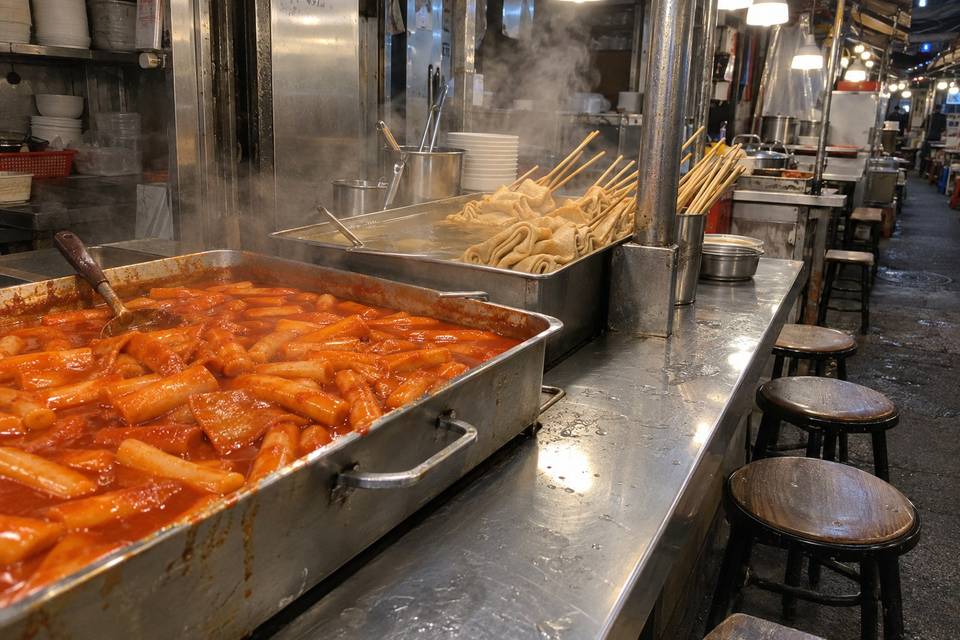
Look at the table and the entrance before you look for a waiter. Korean restaurants have moved fast towards self-ordering: The Korea Herald reports that diners are often asked to order, and frequently pay up front, on a device at each table or a kiosk at the door, and that the leading tablet maker, t’order, has posted record sales. The old system, a bell and a server with a notepad, is still common in small family restaurants.
Ordering systems in Korean restaurants (checked 6 Oct 2026)
| System | How you spot it | How you order | When you pay |
|---|---|---|---|
| Call bell | A small button on the table edge | Press it, or say “yeogiyo”; point at the menu | At the counter as you leave |
| Table tablet | A tablet clipped to the table | Tap dishes, then “order” (주문) | At the counter after, or on the tablet first |
| Door kiosk | A touch screen near the entrance | Order and pay before you sit; take the receipt | Up front, at the kiosk |
| Counter | A menu board above a till | Order and pay at the till; wait for your number | Up front |
Two things help with every system. First, look for a language button: many tablets and kiosks have an English option on the first screen, though not all of them do. Second, a translation app with a camera mode reads the menu board or a Korean-only screen well enough to order. You’ll need mobile data for that; our eSIM vs SIM vs pocket Wi-Fi guide compares the options.
How does a sit-down meal work, step by step?
This is the sequence at a typical small restaurant with a call bell, the kind that serves stews, noodles or rice dishes.
- Walk in and show the number of people with your fingers, or say “han myeong-iyo” (한 명이요, one person). Staff will point you to a table.
- Find the water and cutlery yourself. Water may be on the table, brought in a bottle, or at a self-service corner marked 셀프 (self). Cutlery is in the table drawer.
- Order. Press the bell or say “yeogiyo” (여기요), point at the menu and say “igeo juseyo” (이거 주세요, this one please). Many small places specialise in one or two dishes, so the menu can be very short.
- Eat, and ask for refills freely. Side dishes (banchan) and water are free, and VisitKorea confirms that asking for more costs nothing: “banchan deo juseyo” (반찬 더 주세요).
- Pay at the counter by the door. If a bill was left on your table, take it with you. Say “gyesan halgeyo” (계산할게요, I’ll pay) and hand over a card.
- Leave without a tip. A simple “jal meogeosseumnida” (잘 먹었습니다, I ate well) on the way out is the local habit.
At a barbecue restaurant the steps are the same, except that you order meat by the serving for the whole table (see the minimum-order section below).
What will you pay, and do you tip?
The number on the menu is the number on the bill. Since 1 January 2013, Korea’s Food Sanitation Act rules have required restaurants, cafés and bars to show the final price including VAT and any service charge, rather than “+10% VAT” notes, according to Seoul Shinmun’s report of the change. The same rule makes barbecue places show the price per 100 g of meat, so you can compare restaurants even though a “serving” (1인분) is a different weight at each one.
The rule got teeth in 2026. The Ministry of Food and Drug Safety amended the enforcement rules on 1 September 2026: a restaurant that doesn’t post its prices or charges more than the posted price now faces a 5-day business suspension on a first offence, 10 days for a second and 20 days for a third, where earlier penalties started with a correction order. The change follows the government’s anti-overcharging measures of February 2026.
What ends up on the bill (checked 6 Oct 2026)
| Item | Charged? | Note |
|---|---|---|
| Menu price | Yes, as shown | Must include VAT and service |
| Water | No | Free, refills too |
| Side dishes (banchan) | No | Free, refills too |
| Tip | No | Not a Korean custom |
| Extra serving of meat or rice | Yes | Priced on the menu |
| Hotel restaurants | Check the menu | See the note below |
Tipping isn’t part of Korean dining. VisitKorea says tipping is “not required or expected”, and Visit Seoul adds that some staff may accept a tip and some may refuse it. The Korea Times reported in August 2025 on a few restaurants trying tip jars or kiosk “tip” buttons, and on strong customer pushback against them; you can ignore those buttons.
An extra bowl of rice is listed on the menu as 공기밥 (gonggibap). For average prices of everyday dishes such as kimbap and kimchi stew, see the Korea Consumer Agency figures in our Korea on a budget guide.
Can you eat alone, and is there a minimum order?
Solo dining is common in Korea but uneven by type of restaurant, and this is where first-timers most often get turned away.
- Barbecue, hotpot and stew-for-sharing places sell food by the serving (1인분) and many expect at least two servings per table. The Korea Times reported in November 2025 on a restaurant sign that refused solo diners outright, and Financial News reported in May 2026 on a CNN travel writer turned away twice in Seoul for eating alone. Both drew criticism in Korea, but they show what can happen at peak times.
- One-person menus are growing but still a minority. Big-data firm NICE GeniData counted about 10.4% of Korean restaurants selling a one-person menu in March 2025, up from 9.7% a year earlier (reported by Hankyung). One-person barbecue chains with single grills have opened in central Seoul.
- Noodle, soup, kimbap and rice-bowl shops always serve one person; so do food courts, convenience stores and most kiosk restaurants.
Groups have the opposite question: how much to order. At barbecue places, start with one serving per person and add more; at other restaurants, if you’re unsure whether dishes are meant for sharing, point at the menu and ask “nanwo meogeul su isseoyo?” (나눠 먹을 수 있어요?, can we share this?).
How do you pay and split the bill?
Cards are the default way to pay in Korean restaurants, including small ones. Hand your card to the person at the till. If a kiosk or table tablet won’t take your overseas card, go to the counter and ask: “kadeu dwaeyo?” (카드 돼요?, can I pay by card?). Carry a little cash for markets and street stalls, where some vendors still refuse cards; our Korean street food guide lists what a market snack costs.
Two backups work well. WOWPASS is a prepaid card for foreign visitors that you load with cash or an overseas card and use in shops like a debit card; our T-money vs WOWPASS vs Climate Card comparison explains its two separate balances. Other prepaid tourist cards are spreading in 2026: NewDaily reported on 2 October that Lotte Card’s prepaid-card kiosks grew from about 30 in January to 149, including units at Incheon and Gimpo airports. Check the fees before you load any of them.
Splitting the bill at the till is possible but not the custom. You can ask for “ttaro gyesan” (따로 계산, separate payment), but at a busy lunch counter one card for the table is quicker. Most groups pay together and settle up afterwards.
Do you need a reservation or a waiting-list app?
Popular restaurants in Seoul often run a waiting list instead of a queue at the door: you add your name on a tablet outside or in an app and get called when a table is free. The main app is CatchTable, which says it passed 15 million users and 30,000 restaurants across Korea on 3 September 2026 (Hankyung). For foreign visitors, its English version, CatchTable Global, matters more:
- No Korean phone number needed. Seoul Metropolitan Government signed an agreement with CatchTable’s operator in March 2024 so that foreign tourists can sign up without one (by email, per Financial News); VisitKorea’s guide describes sign-up with a Google or Apple account.
- Overseas cards for deposits. Many reservation-only restaurants ask for a deposit to prevent no-shows, and VisitKorea notes that in CatchTable Global this can only be paid with a foreign-issued card.
- Remote waitlist. You can see how many groups are waiting and join the queue from your phone.
- Smaller selection. At the 2024 launch the global version listed about 1,500 restaurants, far fewer than the Korean app.
For everyday meals you won’t need any of this; it matters for famous restaurants and weekend brunch spots.
How do you order vegetarian or halal?
Ordering “without meat” is harder than it sounds because the meat is often in the broth. VisitKorea’s own advice for vegetarians is to tell the server clearly and list what to leave out, since many dishes use meat or fish stock and most restaurants have no vegetarian menu. It warns that kimchi usually contains salted seafood or fish sauce, and that bibimbap and even vegetable kimbap often come with meat, egg or ham. Its safer picks are temple food (Buddhist cuisine with no meat), bibimbap with meat and egg left out, cold soybean noodles (kongguksu) and acorn jelly (muk). Show a written line in Korean, such as “고기, 생선, 해산물을 못 먹어요” (I can’t eat meat, fish or seafood).
For Muslim travellers, the Korea Tourism Organization sorts restaurants into four labels, and the difference matters when ordering:
KTO Muslim-friendly restaurant labels (VisitKorea, checked 6 Oct 2026)
| Label | What it means | Alcohol |
|---|---|---|
| Halal Certified | Certified by an accredited body such as the Korea Muslim Federation | — |
| Self Certified | All food halal, declared by a Muslim owner | — |
| Muslim Friendly | Some halal dishes on the menu | May be sold |
| Pork Free | No pork used, but no halal menu | May be sold |
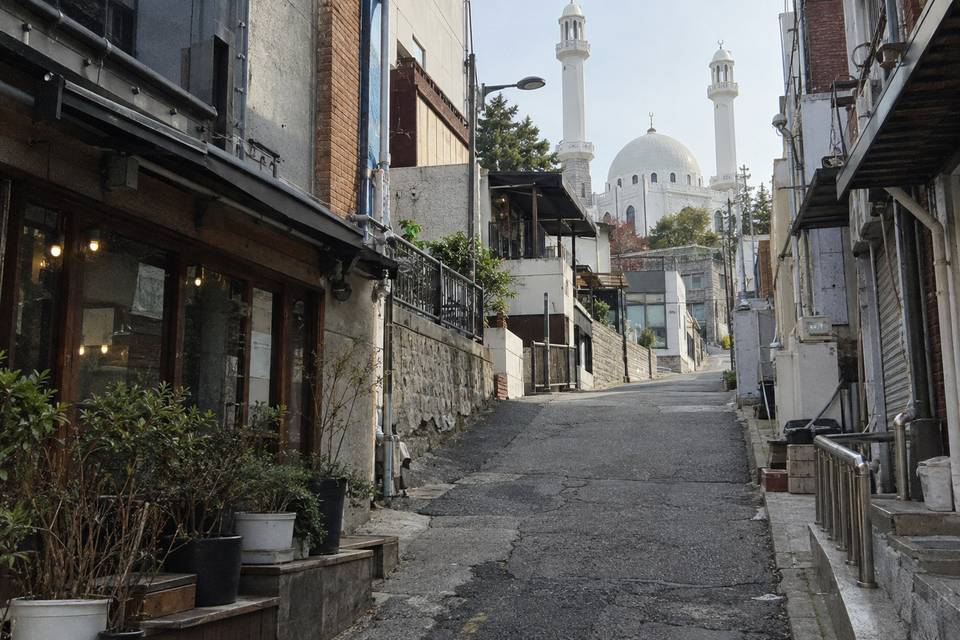
Ordinary Korean restaurants carry none of these labels, and pork appears in many stews and side dishes, so use KTO’s Muslim-friendly restaurant list rather than asking at random. Our guide to finding halal food in Korea lists the certified places near Seoul Central Mosque, mosques outside Seoul and the airport prayer rooms.
What is different from home?
What changes for visitors from our main markets (checked 6 Oct 2026)
| If you’re from | What’s different in Korea |
|---|---|
| US, Canada | No tax added at the till and no tip; the menu price is the total |
| UK, Australia | Similar to home on tipping; no discretionary service line on the bill |
| Singapore, Malaysia | No “++” service and tax on top; look for KTO halal labels, not just “no pork” |
| India | Ask about broth and kimchi even for vegetable dishes; temple food is the safe default |
The short version for every market: read the menu price as the final price and leave nothing extra on the table.
Which Korean phrases cover most meals?
Restaurant phrases: Korean, romanised, meaning (checked 6 Oct 2026)
| Korean | Say it | Meaning |
|---|---|---|
| 여기요 | yeogiyo | Excuse me (to call staff) |
| 한 명이요 / 두 명이요 | han myeong-iyo / du myeong-iyo | One person / two people |
| 이거 주세요 | igeo juseyo | This one, please |
| 1인분 돼요? | il-inbun dwaeyo? | Can I order one serving? |
| 반찬 더 주세요 | banchan deo juseyo | More side dishes, please |
| 안 맵게 해 주세요 | an maepge hae juseyo | Not spicy, please |
| 포장 돼요? | pojang dwaeyo? | Can I take it away? |
| 카드 돼요? | kadeu dwaeyo? | Can I pay by card? |
| 계산할게요 | gyesan halgeyo | I’d like to pay |
| 따로 계산해 주세요 | ttaro gyesan hae juseyo | Separate bills, please |
“Not spicy” is a request, not a guarantee: many dishes are built on chilli paste, so the kitchen may only be able to make them milder. If you’re planning meals into a whole first trip, our 7-day Seoul itinerary shows where markets and food streets fit in.
Questions people ask
- Do you tip in Korean restaurants?
- No. Tipping is not a Korean custom and isn't expected, from street stalls to sit-down restaurants. Menu prices must already include VAT and any service charge, so the price on the menu is the total you pay.
- How do I call the waiter in Korea?
- Press the call-bell button on the table if there is one; VisitKorea notes that most tables have one. Otherwise raise a hand and say “yeogiyo” (여기요, “over here”), which is the normal, polite way to get staff attention.
- Can I eat Korean barbecue alone?
- Sometimes. Barbecue is sold by the serving and many grill restaurants expect at least two servings per table, so ask “il-inbun dwaeyo?” (1인분 돼요?, “can I order one serving?”) before you sit. Dedicated one-person barbecue places exist in Seoul, and noodle, soup and kimbap shops always serve one.
- Do I pay before or after eating in Korea?
- At most sit-down restaurants you pay at the counter by the door after eating; take the bill from your table if one was left there. Where you order on a kiosk, and at many places with table tablets, you pay up front when you order.
- Can I split the bill at a Korean restaurant?
- You can ask for “ttaro gyesan” (따로 계산, separate payment), but one person paying the whole bill at the counter is the norm, and busy places may prefer it. Paying together and settling up afterwards is the easiest option.
- Are side dishes free in Korea?
- Yes. Banchan, the small side dishes that come with most meals, and water are free, and asking for more costs nothing. Some places have a self-service corner marked 셀프 (self) for refills.
Next in your trip
- eSIM vs SIM vs pocket Wi-Fi — Camera translation of menus and kiosks needs mobile data
- T-money vs WOWPASS vs Climate Card — WOWPASS is a backup when a kiosk rejects your overseas card
- Korea on a budget — Average prices of everyday dishes like kimbap and kimchi stew
Sources
- VisitKorea – About Korean Food (dining tips: tipping, refills, call bell)
- Visit Seoul – Money (tipping, service charge, VAT)
- Visit Seoul – Etiquette
- VisitKorea – Tips for Vegetarians
- VisitKorea – Muslim-friendly Travel (restaurant classifications)
- VisitKorea – Catchtable Global (Sep 2024)
- 뉴스서울 – 식약처, 식품영업자 행정절차 간소화…음식점 바가지요금 처분 강화 (Sep 2026) (Korean)
- 서울신문 – 메뉴판에 육류 100g 표시? 처음 듣는데요 (final-price and 100 g rules, 2 Jan 2013) (Korean)
- 한국경제 – 1인 메뉴 판매 음식점 비율, 나이스지니데이타 (Aug 2025) (Korean)
- 파이낸셜뉴스 – 서울시·캐치테이블 외국인 맛집 예약 협약 (11 Mar 2024) (Korean)
- 한국경제 – 캐치테이블 누적 가입자 1500만, 매장 3만 곳 (10 Sep 2026) (Korean)
- The Korea Times – Why tipping culture remains controversial in Korea (7 Aug 2025)
- The Korea Times – Restaurant's ban on solo diners sparks debate (15 Nov 2025)
- 파이낸셜뉴스 – 혼밥 손님 거절 논란, CNN 기자 사례 (May 2026) (Korean)
- 뉴데일리 – 외국인 관광객 지갑 노리는 카드사…결제망·선불카드 확대 (2 Oct 2026) (Korean)
- The Korea Herald – Dining out is going digital: Not everyone is happy
Updates
- Published with the 1 Sep 2026 overcharging penalties and CatchTable's September 2026 figures.
About Korea Field Notes
An English guide to the practical side of visiting South Korea. Guides are researched from Korean-language official sources (Korail, T-money, Seoul Metro, the Korea Tourism Organization) and re-checked when rules or prices change. Each guide shows when its facts were last checked and lists its sources. About the site · How we research and update guides · Found something out of date? Tell us.