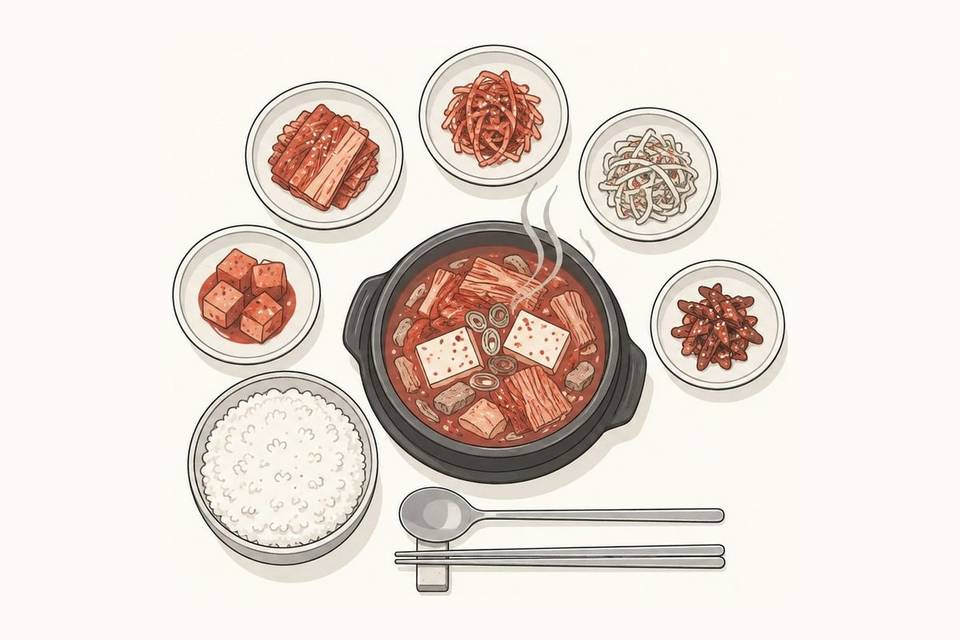
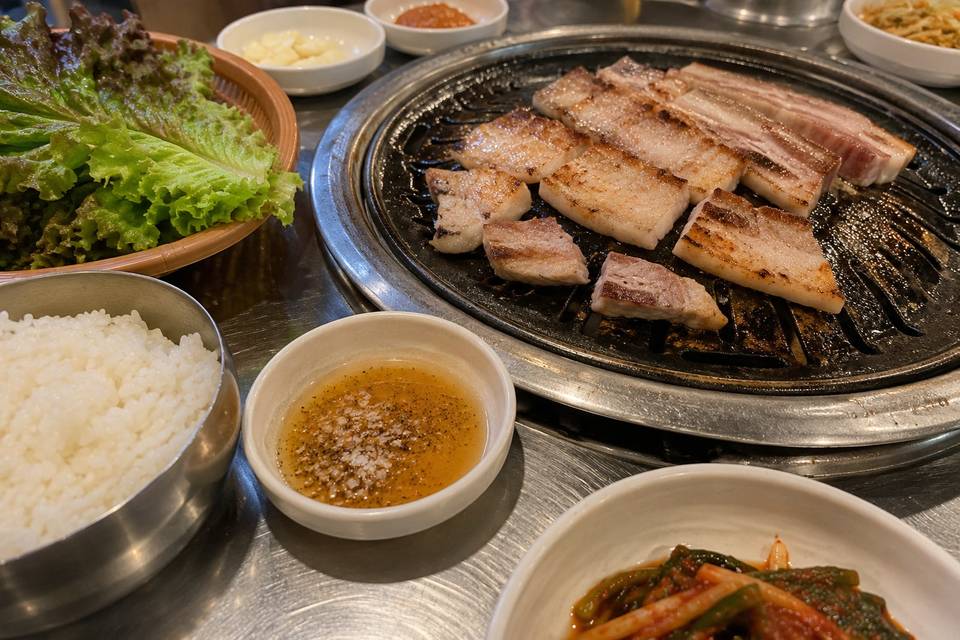
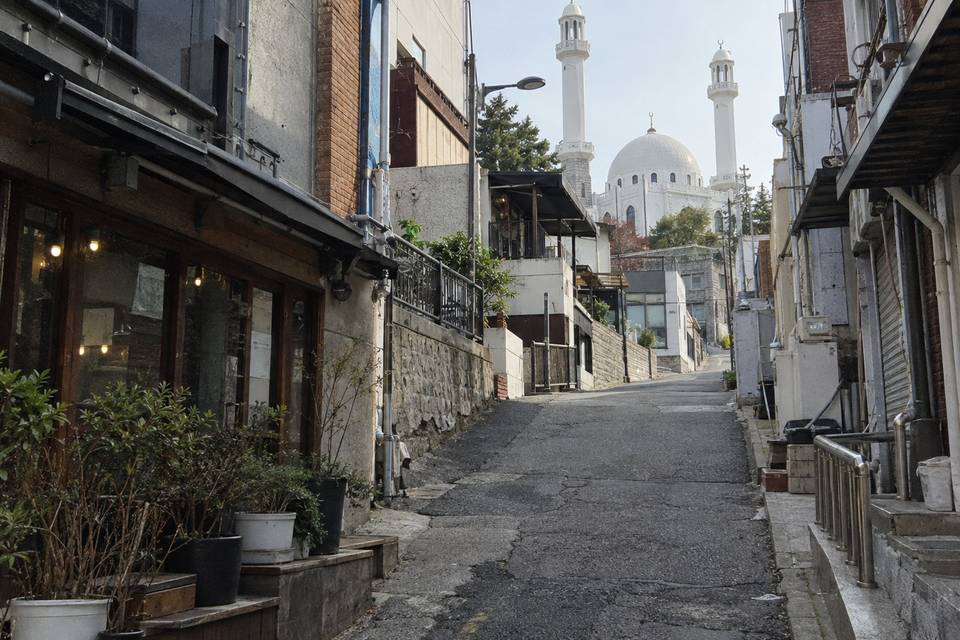
How to Eat Vegetarian or Vegan in Korea (2026)
Dishes and ingredients checked against VisitKorea's vegetarian guide; restaurant hours and prices against Visit Seoul pages edited Jun–Oct 2026; classes against the Korean Temple Food Center on 17 Oct 2026.
Vegetarians can eat at ordinary Korean restaurants by ordering bibimbap, vegetable gimbap, jeon or acorn jelly without meat, egg and fish broth. Vegans should plan around temple food and Seoul's vegan restaurants, such as Balwoo Gongyang (lunch course ₩36,000) and three temple-food places within 420 m of Anguk Station (checked 17 Oct 2026).
Best forFirst-timersSoloBudget
Your situation → do this
| If you… | Do this |
|---|---|
| You eat egg and dairy but no meat or fish | Order bibimbap, vegetable gimbap or jeon at ordinary restaurants and show the Korean line about broth and fish sauce |
| You are vegan | Plan most meals at temple-food or fully vegan restaurants; treat ordinary restaurants as a fallback |
| You avoid onion and garlic too (Jain or Buddhist) | Eat temple food: Balwoo Gongyang leaves out green onion, garlic and chives |
| You have one free Friday or Saturday morning in Seoul | Book the Korean Temple Food Center's ₩20,000 cooking class with English interpretation |
| You are eating street food or convenience-store snacks | Assume fish stock or meat seasoning; stick to hotteok, sweet potatoes and packs you've checked |
Key takeaways
- Kimchi is usually not vegetarian: its seasoning normally contains salted seafood, fish sauce or meat broth (VisitKorea).
- Soft tofu stew and braised tofu usually get salted shrimp; order plain tofu with soy sauce instead.
- Balwoo Gongyang, run by the Jogye Order near Anguk Station, serves temple-food courses from ₩36,000 at lunch.
- The Korean Temple Food Center runs Friday and Saturday 10:00 classes for ₩20,000, booked online only.
- Korean vegan logos come from private bodies with different rules; there is no single national standard.
| Kimchi | Usually not vegetarian: salted seafood, fish sauce or meat broth in the seasoningSource: VisitKorea |
|---|---|
| Balwoo Gongyang | Jogye Order temple food; Seon lunch course ₩36,000, Won course ₩50,000; closed SundaysSource: Visit Seoul (edited Jun 2026) |
| Temple Food Center class | Fri & Sat 10:00–11:30, ₩20,000, English interpretation, online booking onlySource: Korean Temple Food Center (Nov 2026 schedule) |
| Insadong temple-food cluster | Ohsaegyehyang 224 m, Balwoo Gongyang 273 m, Sanchon 420 m from Anguk Station exit 6Source: Visit Seoul |
| Vegan logos | Korea Agency of Vegan Certification and Services, Vegan Society, V-Label, EVE VeganSource: VisitKorea; VeganNews (Jan 2026) |
- Time
- About 15 min to set up before the trip
- Cost
- ₩12,000–₩23,000 per main at Seoul vegan restaurants; temple-food courses from ₩36,000
- What you need
- The Korean lines below saved on your phone · A translation app with camera mode · Mobile data for maps · Restaurant closing days noted
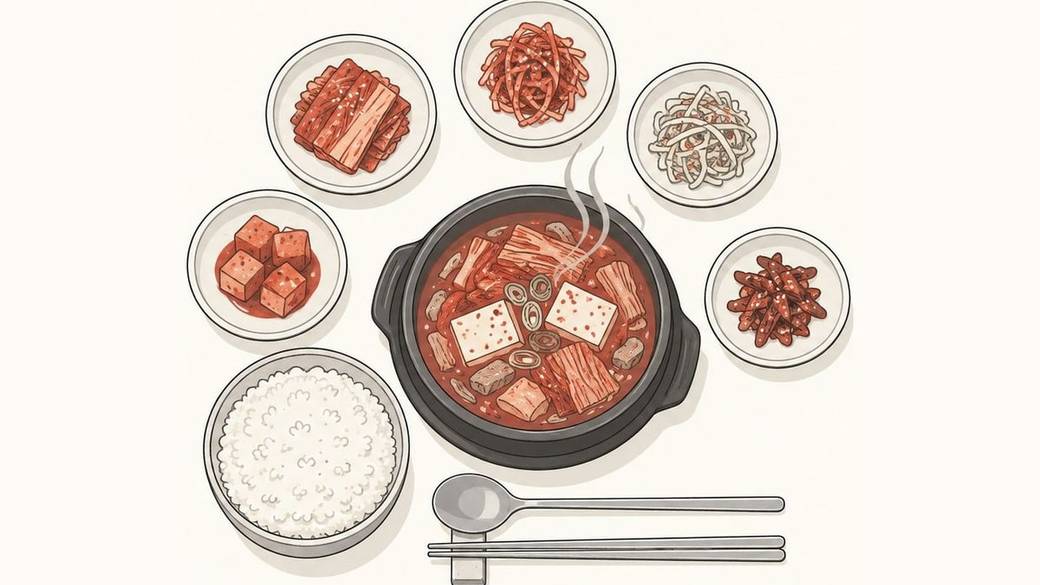
This page is for vegetarian and vegan visitors working out how to eat in Korea: which ordinary dishes are safe, what to say, and where the meat-free kitchens are. It sits in our Food & Drink section; for kiosks, tablets and paying, see how to order at a Korean restaurant.
What do you need before you start?
Most of the work happens before you sit down. Korean menus rarely mark vegetarian dishes, and staff often understand “no meat” as “no visible meat”, so the broth question has to come from you.
Have these ready
- The Korean lines from the steps below, saved as a screenshot so they work offline.
- A translation app with a camera mode for menus and the ingredient list (원재료명) on packs.
- Mobile data: searching 비건 (vegan) or 채식 (vegetarian) in a Korean map app finds far more places than English searches. Our eSIM guide compares the options.
- Closing days: several of the vegan places below close on Sundays, Mondays or midweek.
How strict you are decides the whole plan. Lacto-ovo vegetarians (common among visitors from India, the UK and the US) can eat at ordinary restaurants most days. Vegans, and anyone who also avoids onion and garlic, should treat ordinary restaurants as a fallback and plan most meals around the places listed further down.
Which Korean dishes can vegetarians order?
These are the dishes the Korea Tourism Organization (KTO) suggests for vegetarians in its VisitKorea guide. Each one hides something you’ll need to ask about. The page itself says it was last updated in October 2023, but the recipes haven’t changed.
Vegetarian-friendly Korean dishes and their hidden ingredients (VisitKorea, checked 17 Oct 2026)
| Dish (Korean) | What it is | What to watch for | Vegan if you ask? |
|---|---|---|---|
| Bibimbap (비빔밥) | Rice with mixed vegetables and gochujang | Meat and a fried egg on top | Often, without meat and egg |
| Yachae gimbap (야채김밥) | Rice rolled in seaweed with carrot, burdock, spinach, radish | Ham, egg or crab stick inside | Sometimes; ask |
| Kongguksu (콩국수) | Noodles in cold soybean soup, mostly a summer dish | Egg garnish | Often |
| Jeon (전): vegetable, potato, green onion, mushroom | Pan-fried pancakes | Egg in the batter; seafood in pajeon | Rarely |
| Dotori muk muchim (도토리묵무침) | Acorn jelly salad with vegetables and soy sauce | Fish sauce in some dressings | Often |
| Plain tofu (두부) | Soft tofu with soy sauce or pan-fried | Salted shrimp in tofu stew and braised tofu | Plain tofu, yes |
| Temple food (사찰음식) | Buddhist monastic cooking | Nothing animal | Yes |
Bibimbap, kongguksu and acorn jelly are the easiest to make vegan by leaving things out; jeon and the tofu dishes are where egg and shrimp sneak in.
Gimbap is named after its filling: chamchi gimbap has tuna and cheese gimbap has cheese, so yachae (vegetable) is the one to ask for. Side dishes (banchan) arrive free and change daily, and many include anchovies, fish sauce or kimchi. Leave anything you can’t identify.
How do you order vegetarian at an ordinary restaurant?
- Pick a restaurant that serves a safe dish. Bibimbap, gimbap, kongguksu or jeon specialists are easier than barbecue or stew houses, where nearly everything uses meat stock.
- Show your diet first, before ordering. Vegetarian: 저는 채식주의자예요 (I’m vegetarian). Vegan: 저는 비건이에요 (I’m vegan).
- List what to leave out. 고기, 생선, 해산물을 못 먹어요 (I can’t eat meat, fish or seafood). Vegans add 계란, 우유도 못 먹어요 (no egg or milk either).
- Ask about the broth and seasoning. 멸치 육수나 고기 육수 들어가요? (Is there anchovy or meat stock in it?) 젓갈이나 액젓 들어가요? (Salted seafood or fish sauce?)
- Ask for the toppings to come off. 고기하고 계란 빼 주세요 (Please leave out the meat and egg). This is what turns standard bibimbap vegetarian.
- If the answer is unsure, choose another dish. A shrug about the stock usually means it contains some. Rice, plain tofu and the vegetable side dishes you can identify are the fallback.
- Check the banchan when they arrive. Leave the kimchi and anything with small fish; ask for 김 (seaweed) or extra vegetables if the table looks thin.
VisitKorea gives the same advice: tell the server your diet before you order, list the ingredients to leave out, and prepare the Korean lines in advance.
Korea doesn’t use tipping, so asking for changes costs nothing extra. If a restaurant can’t do it, it will usually say so rather than try.
Where can you eat fully vegan in Seoul?
Visit Seoul, the city’s official tourism site, has a “Vegan” filter on its restaurant guide. Not every place under it is vegan: it also lists an Indian restaurant whose signature dish is chicken tikka. The places below are the ones whose pages say they are vegan, vegetarian or temple food.
Vegan, vegetarian and temple-food restaurants in Seoul (Visit Seoul pages edited May–Oct 2026, checked 17 Oct 2026)
| Place | Area | Food | Price example | Closed |
|---|---|---|---|---|
| Balwoo Gongyang | Jongno, by Jogyesa | Temple-food courses | Seon lunch ₩36,000; Won ₩50,000 | Sun, 1 Jan, Seollal, Chuseok |
| Sanchon | Insadong | Temple food from a former monk | Not listed | Seollal, Chuseok |
| Ohsaegyehyang | Insadong | Vegetarian Korean, Chinese, Western | Not listed | Thursdays |
| ALT.a | Yongsan (Bogwang-ro) | Vegan Korean-Chinese; Michelin Bib Gourmand 2025 | Black-bean noodles ₩10,000 | 3 days at Seollal and Chuseok |
| byTOFU | Yongsan (Haebangchon side) | Vegan tofu bowls and sandwiches | Bowl ₩12,000 | Tue and Wed |
| Mahina Vegan Table | Sinsa-dong, Gangnam | Vegan, all bread and sauces made in-house | Not listed | Sun |
| platåo | Yangjaecheon, Seocho | Vegan brunch | Burger ₩18,000 | Mon and Tue |
For a first trip, the Insadong group is the practical choice because it sits next to Gyeongbokgung and Bukchon, where most visitors spend a day anyway.
Opening hours (Visit Seoul): Balwoo Gongyang serves lunch from 11:30 and dinner from 18:00 with a 15:00–18:00 break. Its two Visit Seoul pages give different last orders (19:10 and 19:40), so book or check its site for dinner. Sanchon is open 11:30–21:00. Ohsaegyehyang serves 11:30–16:00 and 17:00–21:00. ALT.a is open daily 11:30–22:00 with a 15:00–17:00 break. byTOFU opens 09:00–19:30, Mahina Monday–Saturday 12:00–21:00, and platåo Wednesday–Saturday 11:30–21:00 and Sunday 11:00–16:00.
Balwoo Gongyang is the restaurant run by the Jogye Order, Korea’s largest Buddhist order. Visit Seoul says it uses no meat, seafood or other animal ingredients, and no green onion, garlic or chives. That makes it the safest meal in Seoul for Jain travellers and anyone else avoiding the pungent vegetables. Courses change with the season and staff explain each dish.
Balwoo Gongyang (발우공양)Naver MapGoogle MapsOutside Seoul, the same rules apply with fewer choices. In Busan, Jeju or Gyeongju, use HappyCow plus a Korean map search for 비건 to find places, and check the hours before you go, because small restaurants close and move often.
Can you learn temple food in English?
Yes. The Korean Temple Food Center, run by the Jogye Order’s Cultural Corps of Korean Buddhism, holds sessions for international visitors on Friday and Saturday mornings with English interpretation.
Korean Temple Food Center classes for international visitors (November 2026 schedule, checked 17 Oct 2026)
| Detail | What the centre says |
|---|---|
| When | Fridays and Saturdays, 10:00–11:30 (November: 6, 7, 13, 14, 21, 27) |
| Price | ₩20,000, “may vary depending on program date and participant” |
| Format | A monk demonstrates, then you cook in groups of four; two dishes per class |
| Booking | Online on the centre’s website only; November’s classes opened 1 Oct at 10:00 |
| Size | 16 places per class |
| Refund | Up to 3 days before the class |
| Bring | Two dishcloths and a 600 ml container for each dish |
| Centre hours | Tue–Sun 09:00–18:00; closed Mondays and public holidays |
If you’re in Seoul in December, check the centre’s notices around 1 November, since November’s sessions went on sale a month ahead.
November’s menus are seasonal and plant-based: aged pumpkin porridge, burdock root japchae, acorn jelly and persimmon salad. Classes are 10:00–11:30, so you can walk to Balwoo Gongyang for its 11:30 lunch or spend the afternoon at Gyeongbokgung. If temple food is full or your free day is a weekday, our Seoul cooking class guide compares the English-taught schools that offer vegetarian or vegan menus.
What changes for your country?
Notes for vegetarian and vegan visitors by home market (checked 17 Oct 2026)
| If you’re from | What to know |
|---|---|
| India | Egg is common (bibimbap topping, jeon batter, gimbap), so say 계란 빼 주세요 every time. For Jain diets, temple food is the only reliable onion- and garlic-free option. |
| Singapore, Malaysia | Many vegetarian places sell alcohol; for halal meals use the KTO labels in our halal food guide. |
| UK, US, Canada, Australia | Fully vegan cafés are concentrated in Seoul; outside it, plan on temple food, bibimbap without egg and supermarket tofu. |
| Philippines | Vegetable dishes still use fish sauce or salted shrimp, as at home, so ask about seasoning too. |
The common thread is that “vegetable” dishes in Korea, as in much of Southeast Asia, often get their savoury depth from seafood.
Korea’s tourism sector is aware of the gap. VeganNews reported in June 2026 that KTO added a vegetarian and vegan customer-service course for tourism workers this year. The same report says the main problem remains information about stock, sauces, salted seafood, dairy and egg, more than a lack of restaurants.
What can go wrong?
Which approach should you choose?
- Lacto-ovo vegetarian, first trip: eat at ordinary restaurants with the Korean lines, and book one temple-food meal as the highlight.
- Vegan: plan lunch at a vegan or temple-food place each day, and keep bibimbap without meat or egg as your fallback.
- Budget: vegetable gimbap and kongguksu are cheap fallbacks; ALT.a’s ₩10,000 noodles and byTOFU’s ₩12,000 bowls are the cheapest vegan restaurant meals in the table.
- Solo: gimbap shops and counter restaurants take single diners easily; Balwoo Gongyang’s courses suit a planned meal.
When this advice is wrong: if you’re coeliac or have a serious allergy, a phrase card isn’t enough. Soy sauce and gochujang often contain wheat, and few kitchens can rule out cross-contact; our gluten-free guide covers the dishes, label words and Korean lines for that.
More food planning is in the food section.
Questions people ask
- Is it hard to be vegetarian in Korea?
- Harder than in most of Asia's big cities, mainly because broth, fish sauce and salted shrimp hide in dishes that look like vegetables. Lacto-ovo vegetarians manage at ordinary restaurants with a few safe dishes and a written Korean line. Vegans do best by planning meals around temple food and Seoul's vegan restaurants.
- Is bibimbap vegetarian?
- Not as served. VisitKorea says most bibimbap comes with meat and a fried egg on top, so ask for both to be left out: 고기하고 계란 빼 주세요. The gochujang sauce itself is normally plant-based, but ask about any broth served alongside.
- Is kimchi vegan?
- Usually not. VisitKorea notes that kimchi seasoning most often contains salted seafood, fish sauce or meat broth, and some regional recipes add abalone, cutlass fish or pork. Temple-food restaurants make kimchi without them; elsewhere, assume it isn't vegan and leave the side dish.
- What is temple food?
- Korean Buddhist monastic cooking: no meat or fish, and traditionally none of the five pungent vegetables such as garlic and green onion. In Seoul you can eat it at Balwoo Gongyang, run by the Jogye Order, or at Sanchon in Insadong, and learn it at the Korean Temple Food Center.
- How do you say I'm vegan in Korean?
- Say or show 저는 비건이에요 (jeoneun bigeon-ieyo). Because many staff read vegan as just no meat, add 고기, 생선, 해산물, 계란, 우유 다 못 먹어요: no meat, fish, seafood, egg or milk. Then ask about broth: 멸치 육수 들어가요? (Is there anchovy stock in it?)
Next in your trip
- How to order at a Korean restaurant — kiosks, tablets, call buttons and paying at the counter
- eSIM vs SIM vs pocket Wi-Fi — you need data for the translation camera and map searches
- Seoul 7-day itinerary — put the Insadong temple-food lunch on your palace day
Sources
- VisitKorea – Tips for Vegetarians (page last updated Oct 2023)
- Visit Seoul – Balwoo Gongyang (edited 30 Jun 2026)
- Visit Seoul – Balwoo Gongyang (edited 8 Jun 2026)
- Visit Seoul – Seoul Restaurant Guide for Muslim Tourists (Balwoo Gongyang ingredients)
- Visit Seoul – Ohsaegyehyang (edited 3 Jun 2026)
- Visit Seoul – Sanchon (edited 5 May 2026)
- Visit Seoul – ALT.a (edited 30 Jun 2026)
- Visit Seoul – byTOFU (edited 29 Jun 2026)
- Visit Seoul – Mahina Vegan Table (edited 15 Oct 2026)
- Visit Seoul – platåo (edited 30 Jun 2026)
- Korean Temple Food Center – About the center (hours, address)
- Korean Temple Food Center – Short experience programmes (November 2026)
- 한국사찰음식문화체험관 – 11월 프로그램 안내 (2026년 9월 30일) (Korean)
- 비건뉴스 – [심층] 비건 관광의 빈칸, 메뉴 표시와 응대 체계 (2026년 6월 16일) (Korean)
- 비건뉴스 – [비건 Q&A]⑩ 인증과 푸드테크까지 (2026년 1월 24일) (Korean)
Updates
- Published with Visit Seoul vegan listings (edited Jun–Oct 2026) and the Temple Food Center's November 2026 class schedule.
About Korea Field Notes
An English guide to the practical side of visiting South Korea. Guides are researched from Korean-language official sources (Korail, T-money, Seoul Metro, the Korea Tourism Organization) and re-checked when rules or prices change. Each guide shows when its facts were last checked and lists its sources. About the site · How we research and update guides · Found something out of date? Tell us.