How to Exchange Money in Korea: Airport vs Myeongdong
Cash rates read from Hana Bank's rate table at 11:16 KST on 10 Nov 2026; counters, rules and fees checked the same day against Incheon Airport, Woori Bank, Visit Seoul, VisitKorea, WOWPASS and Korea Customs notices.
Change only a first day's cash at the airport, then exchange the rest at a city bank or a certified Myeongdong changer. On 10 Nov 2026 Hana Bank bought US, Australian, Canadian and Singapore dollars and pounds about 2% under the base rate, ringgit and pesos 7–8% under, and rupee notes not at all.
Best forFirst-timersBudgetLate arrival
Your situation → do this
| If you… | Do this |
|---|---|
| You land with US dollars, pounds, or Australian, Canadian or Singapore dollars | Change about a day's spending at the airport, then the rest at a bank or certified changer in town |
| You are carrying ringgit or pesos | Expect to lose 7–10% at a Korean bank; switch to US dollars before you fly or use a card and ATM |
| You are carrying Indian rupees | Bring US dollars or a forex card instead: Hana Bank posts no cash rate for rupees |
| You are standing at a Myeongdong changer's board | Compare its 'we buy' rate with a bank's cash rate for that day, and only change if the board is higher |
| You have won left on your last day | Re-exchange at an airport bank counter before security, with your exchange receipt and passport |
Key takeaways
- Hana Bank's 10 Nov 2026 cash spread was 1.75% for US dollars and about 2% for pounds and AUD, CAD, SGD.
- Ringgit lost 7.4% and pesos 8.2% against Hana's base rate; rupee notes had no cash rate at all.
- Incheon Terminal 1 has 24-hour KB and Woori exchange counters on the arrivals and departures floors.
- SBS Biz reported airport counters charging a 4.2% spread on US dollar cash in 2024.
- Declare more than US$10,000 in combined cash and cheques when you enter or leave Korea.
| Bank cash spread, US dollars | 1.75% under the base rate (₩1,322.35 per US$1 vs base ₩1,345.90)Source: Hana Bank, 10 Nov 2026 11:16 KST |
|---|---|
| Bank cash spread, GBP, AUD, CAD, SGD | About 2% under the base rateSource: Hana Bank, 10 Nov 2026 11:16 KST |
| Bank cash spread, ringgit and pesos | 7.4% (MYR) and 8.2% (PHP) under the base rateSource: Hana Bank, 10 Nov 2026 11:16 KST |
| Indian rupee notes | No cash rate postedSource: Hana Bank, 10 Nov 2026 |
| 24-hour counters at Incheon T1 | KB and Woori, on 1F arrivals and 3F departuresSource: Incheon Airport banks list |
| Cash declaration threshold | More than US$10,000 in combined cash and chequesSource: Korea Customs Service notice, Feb 2026 |
- Time
- About 10 min at a counter, plus 2 min to check the day's rate
- Cost
- About 1.75–2% under the base rate at a city bank for USD, GBP, AUD, CAD, SGD (10 Nov 2026)
- What you need
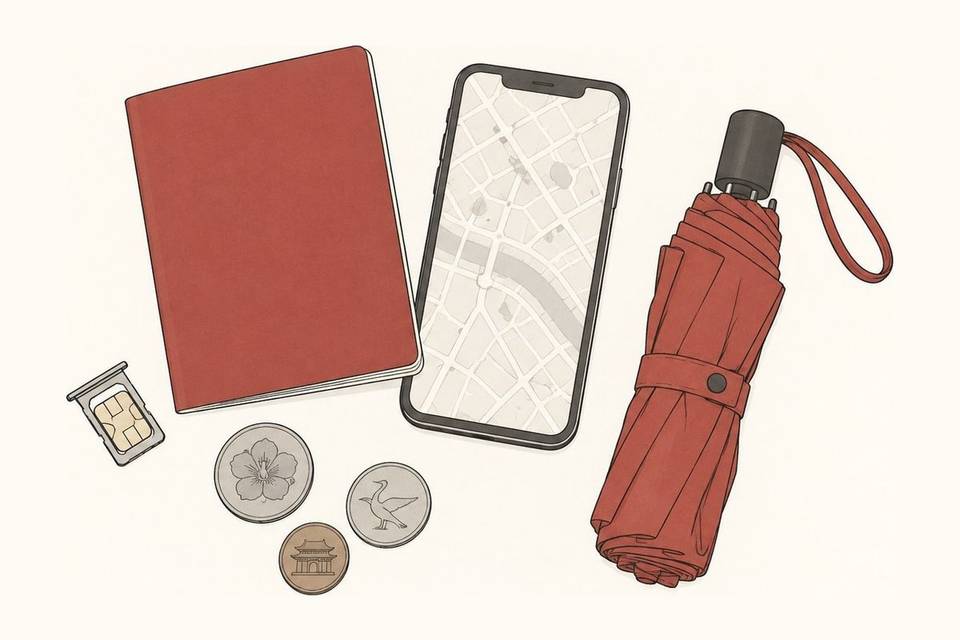
- Your passport · Clean, undamaged banknotes · The day's bank cash rate on your phone · Somewhere to keep the receipt
To exchange money in Korea, bring clean notes in a major currency and change most of it in the city, not at the airport. This page compares the airport, banks, Myeongdong changers and kiosks with real cash rates, then covers leftover won. More money basics are in Planning Guides.
Where should you exchange money in Korea?
You have five places to turn foreign cash into won. They differ less in safety than in how much of your money they keep, and in when they are open.
Ways to exchange cash in Korea, what each costs and when it is open (checked 10 Nov 2026)
| Option | Typical cost | Hours | Best for |
|---|---|---|---|
| Airport bank counter | 4.2% on US dollars (SBS Biz, 2024) | 24 h (KB, Woori at Incheon T1) | A first day’s cash |
| City bank branch | 1.75–2% on major currencies | Weekdays 09:00–16:00 | Larger sums on a weekday |
| Certified Myeongdong changer | Posted on a board; compare it | Evenings and weekends | Larger sums outside bank hours |
| Convenience-store kiosk | Not published | Store hours | Small amounts, no queue |
| WOWPASS kiosk | No exchange fee; ₩6,000 card fee | Kiosk hours | Spending by card, not cash |
The pattern is simple: pay a little more for convenience at the airport, then do the bulk of your exchange in town, where banks and changers compete.
Visit Seoul says banks usually give the best rates. The catch is their hours, which end at 16:00 on weekdays. Outside those hours, its advice is to use a booth that shows a Certified sign with currency symbols and to avoid uncertified ones.
If you would rather not carry cash at all, a debit card at a Global ATM is the other route; our guide to withdrawing cash with a foreign card covers which machines work and their fees.
How much do you lose on each currency?
What matters is the bank’s cash buying rate (현찰 파실때, “when you sell cash”). That is what you get for your notes. Here is Hana Bank’s, one of the three banks with counters at Incheon, for the currencies our readers bring.
Hana Bank cash buying rates vs base rate, 10 Nov 2026 11:16 KST
| Currency | Base rate | You get per unit | Below base |
|---|---|---|---|
| US dollar | ₩1,345.90 | ₩1,322.35 | 1.75% |
| British pound | ₩1,809.23 | ₩1,773.59 | 1.97% |
| Australian dollar | ₩931.50 | ₩913.15 | 1.97% |
| Canadian dollar | ₩953.29 | ₩934.52 | 1.97% |
| Singapore dollar | ₩1,052.80 | ₩1,031.85 | 1.99% |
| Euro | ₩1,510.10 | ₩1,480.05 | 1.99% |
| Malaysian ringgit | ₩331.91 | ₩307.35 | 7.40% |
| Philippine peso | ₩21.35 | ₩19.60 | 8.20% |
| Indian rupee | ₩14.33 | No cash rate | Not exchanged |
US, Australian, Canadian and Singapore dollars and pounds all cost about 2% to change at a bank; ringgit and pesos cost four times as much, and rupee notes can’t be changed there at all.
In won, changing US$500 at Hana’s cash rate gives ₩661,175. At the 4.2% airport spread SBS Biz reported in 2024, the same notes would give about ₩644,700, roughly ₩16,500 less. That gap is why you change only a day’s worth at the airport.
How do I exchange money, step by step?
- Look up the day’s bank cash rate. Note your currency’s 현찰 파실때 figure on a Korean bank’s rate page before you go; it is your benchmark.
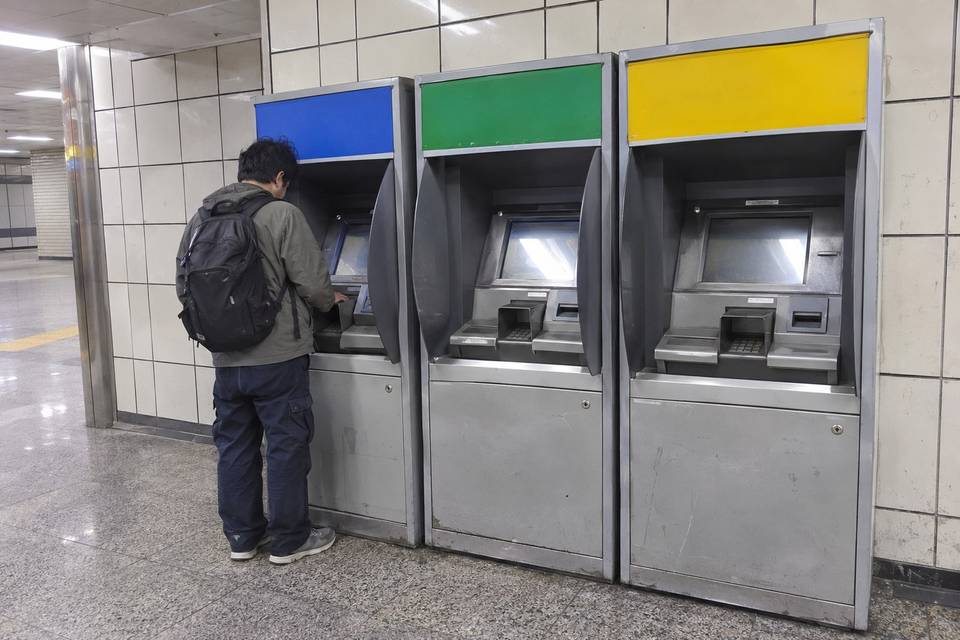
- Change a first day’s cash at the airport. Enough for a transit card, the train into town and a meal. Skip this if your card works at an ATM.
- Find a bank or a certified changer in town. Use a bank on a weekday before 16:00, or a booth with a Certified sign in the evening or at the weekend.
- Read the “we buy” rate on the board. That is what you get for your notes. If it is above your benchmark, the changer beats the bank.
- Hand over your passport and the notes. Use clean, untorn notes; say which currency and that you are selling it for won.
- Count the won and keep the receipt. Count at the counter, not outside. The receipt is what lets a bank re-exchange your leftover won later.
- Spend down before your last day. Change back any leftover won at the airport bank counter before security.
Is the airport a bad place to exchange?
It is the most expensive place, but not a bad one for a small amount. On 13 Sep 2024, SBS Biz reported airport counters charging a 4.2% spread on US dollar cash, and noted that exchanging at the airport means relatively high fees. KB, Woori and Hana run the counters, and Incheon Airport’s notice bans unlicensed money changing in the terminal.
If you land late, the 24-hour counters mean you never need to leave without won. Change enough for a T-money card, your fare into town and the next morning; our Incheon Airport to Seoul guide lists the late-night routes and what they cost.
How do Myeongdong money changers work?
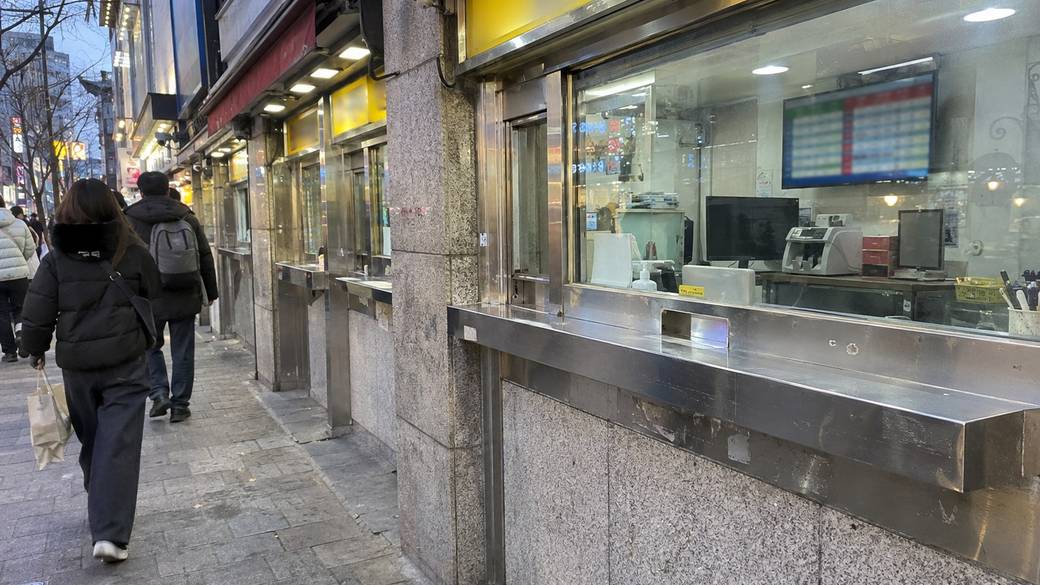
Myeongdong is Seoul’s cluster of private exchange booths, and in July 2026 Newsis reported queues of foreign visitors at some of them reaching the pavement. Booths post their buying and selling rates on a board, so you can compare a few in five minutes. If you are shopping there anyway, our Myeongdong shopping guide covers the rest of the street.
Two things make a booth worth using:
- The Certified sign. Visit Seoul names it as the thing to look for. Korea Customs checked 104 of about 1,320 registered changers in the first half of 2026 and found 47 breaking the rules, mostly over missing or false ledgers and poor exchange records (Financial News, 7 Jul 2026).
- A rate above the bank’s. Take the day’s bank cash rate as the floor. A booth’s “we buy” figure above it is a better deal than the bank; below it, walk to the next booth.
We could not read a booth’s live rate board online on 10 Nov 2026: the one changer with a public web board showed numbers that matched a September snapshot, so we have not quoted it. That board lists only US dollars, yen, yuan, euros and Hong Kong and Taiwan dollars, so ask before you queue with any other currency.
What about exchange kiosks and WOWPASS?
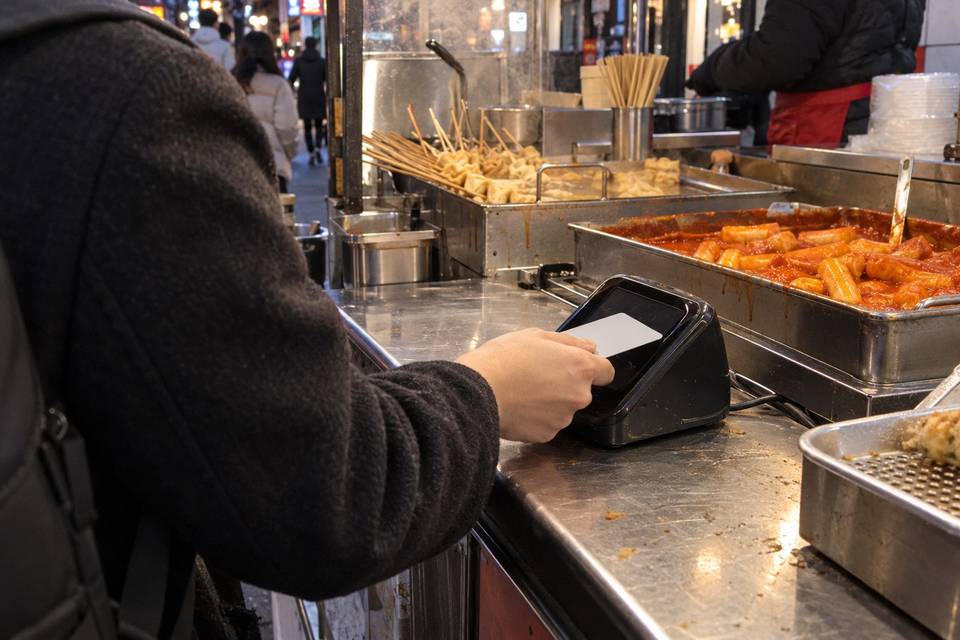
Convenience-store kiosks. VisitKorea lists CU kiosks at CU Myeongdong Main Branch and CU Yongsan I’PARK Mall: pick a language and currency, scan your passport, insert notes and take your won. They handle 15 currencies. Etoday reported a cap of US$2,000 per person per day when they launched in November 2023. Neither source publishes a rate or fee, so compare the screen with your benchmark before you confirm. VisitKorea also lists emart24 machines in Myeongdong and Samcheong-dong, which ask you to create an account first.
WOWPASS. This prepaid card for foreign visitors lets you put foreign cash on the card at a kiosk and pay by card in shops. Its FAQ lists:
- a ₩6,000 first registration fee, non-refundable
- no fee for exchange or for paying in shops
- kiosks that take 16 currencies (the FAQ doesn’t list them)
- withdrawals of leftover balance in won, up to ₩100,000 at a time, for ₩1,000
The Incheon kiosks in the CU stores in T1 and T2 issue cards and take won only: they don’t exchange foreign cash. If you want WOWPASS to do the exchange, use a city kiosk. How it compares with T-money and the Climate Card is in our transit card comparison.
What if you bring ringgit, pesos or rupees?
This is where your home market changes the answer.
- US, Canada, UK, Australia, Singapore: bring your own currency. At about 2% it is cheap to change at a Korean bank, and you avoid paying two spreads by converting to US dollars first.
- Malaysia: ringgit lost 7.4% at Hana on 10 Nov 2026. Compare what a changer at home charges to buy US dollars; if it is well under 5%, bring dollars. Otherwise use a card and an ATM.
- Philippines: pesos lost 8.2%, and 10% if you buy pesos back from Hana. US dollars, or a card, are the cheaper route for most people.
- India: Hana posts no cash rate for rupees at all, and we found no Korean changer that lists them. Bring US dollars or a multi-currency forex card.
For everyday spending, a Visa or Mastercard works almost everywhere; our guide to how to pay in Korea covers where cash still counts and how much to carry.
What do you do with leftover won?
Spend it, or change it back at a bank before you fly. Woori Bank says non-residents can buy foreign currency up to the amount they converted into won since their latest entry, with a passport and, where needed, the certificate from the original exchange (외국환매입증명서). Keep every exchange receipt for that reason.
At Incheon, use a counter in the public area before security; it is hard to get back once you have gone through. Terminal 1’s 3F departures floor has KB and Woori counters open 24 hours and Hana counters open 06:00–22:00.
On the money you carry: Korea Customs requires you to declare more than US$10,000, counting foreign cash, won, won cashier’s cheques and traveller’s cheques together. On arrival, tick the currency item on the declaration or use the 여행자 세관신고 app; when leaving, go to the customs currency desk before security. Undeclared amounts up to US$30,000 bring a 5% fine; larger ones can mean prosecution.
What can go wrong?
Questions people ask
- Is it better to exchange money before going to Korea?
- Usually not for major currencies. Korean banks took about 2% on US, Australian, Canadian and Singapore dollars and pounds on 10 Nov 2026, which is hard to beat at home. For ringgit, pesos or rupees, buying US dollars at home and changing those in Korea can work out cheaper.
- Are Myeongdong money changers safe?
- Registered ones are. Visit Seoul tells visitors to use booths showing a Certified sign and avoid the rest. Korea Customs inspected 104 changers in early 2026 and found 47 breaking the rules, mostly over record-keeping, so ask for a receipt and count your won at the counter.
- Do I need my passport to exchange money in Korea?
- Yes. Banks list a passport as the document non-residents need, and the exchange kiosks in convenience stores scan it before they take your notes. Carry the original, not a photo.
- Can I exchange Indian rupees in Korea?
- Not at Hana Bank, one of the airport banks: its 10 Nov 2026 table had no cash rate for rupees. We found no Korean changer that lists them. Bring US dollars or a forex card loaded with dollars instead.
- Can I change won back into my currency when I leave?
- Yes, at a bank, up to the amount you converted into won since you arrived. Woori Bank asks non-residents for the passport and, where needed, the receipt from the original exchange. Do it at an airport counter before security.
Next in your trip
- Withdraw won with a foreign card — The alternative to carrying cash: which ATMs work and what they charge
- Pick a transit card — The first thing most visitors spend their won on
- Incheon Airport to Seoul — Your route into the city once you have cash
Sources
- 하나은행 – 실시간 환율조회 (현찰 살때·팔때, 2026-11-10 11:16 고시) (Korean)
- 우리은행 – 외화 환전 안내: 비거주자 환전 및 재환전 (외국환매입증명서) (Korean)
- SBS Biz – 공항 환전 수수료 (2024-09-13) (Korean)
- 파이낸셜뉴스 – 관세청 환전영업자 점검 결과 (2026-07-07) (Korean)
- 뉴시스 – 명동 환전소 외국인 관광객 줄 (2026-07-04) (Korean)
- KB Think – 인천공항 환전 위치와 운영시간 (2025-12-11) (Korean)
- 뉴스서울 – 관세청: 1만 달러 초과 외화 반입·반출 신고 (2026-02-19) (Korean)
- 이투데이 – CU 외화 환전 키오스크 도입 (2023-11-27) (Korean)
- Incheon Airport – Banks and exchange counters with hours
- Visit Seoul – Money: banks, ATMs, exchange and tipping
- VisitKorea – Korea Travel Cheat Sheet: CU and emart24 exchange kiosks (updated Dec 2023)
- WOWPASS – FAQ (fees and kiosks)
- Seoul Money Brokerage – USD/KRW base rate (9 Nov 2026)
Updates
- Published with Hana Bank cash rates for nine currencies (10 Nov 2026, 11:16 KST), Incheon counter hours and the non-resident re-exchange rule.
About Korea Field Notes
An English guide to the practical side of visiting South Korea. Guides are researched from Korean-language official sources (Korail, T-money, Seoul Metro, the Korea Tourism Organization) and re-checked when rules or prices change. Each guide shows when its facts were last checked and lists its sources. About the site · How we research and update guides · Found something out of date? Tell us.