How to Withdraw Cash in Korea with a Foreign Card
Checked on 5 Nov 2026 against the Incheon Airport facility lists (Korean and English), Visit Seoul, VisitKorea, the Wise UK and US fee pages, the Wise ATM help page and Revolut's Australian fee schedule. Korean ATM fees come from travel guides, not banks.
Use a bank ATM marked Global or showing Visa or Mastercard logos, and enter a 4-digit PIN. Travel guides report about ₩2,000–6,000 per withdrawal, though no bank we found publishes a table, so take out ₩200,000–300,000 at once and always choose won (checked 5 Nov 2026).
Best forFirst-timersLate arrivalBudgetSolo
Your situation → do this
| If you… | Do this |
|---|---|
| You just landed and have no won | Use a bank ATM by the 1F arrivals exits at Incheon; if it declines your card, walk to another bank's machine |
| You can choose between machines | Pick a bank ATM marked Global or showing your card's logo over a convenience-store ATM, which often costs more |
| You want the lowest total fees | Use a debit card, take ₩200,000–300,000 at a time and pick won whenever the screen offers your home currency |
| Your PIN has 5 or 6 digits | Ask your bank for a 4-digit PIN before you fly; Wise says longer PINs don't usually work in Korea |
| Every machine has refused your card | Check your bank app for a block, try your second card, then exchange cash at a bank or licensed counter |
Key takeaways
- Foreign cards work only at some Korean ATMs: look for a Global sign or Visa, Plus, Mastercard or Cirrus logos.
- Korean card PINs have 4 digits, and Wise warns that 5- or 6-digit PINs don't usually work.
- A flat ₩3,600 fee takes 3.6% of ₩100,000 but only 1.2% of ₩300,000, so withdraw less often.
- Credit-card withdrawals usually count as cash advances, so bring a debit card for the ATM.
- Incheon lists ATMs by the 1F exits in both terminals, but not which of them accept foreign cards.
| Which machines take foreign cards | ATMs marked Global or showing the logos of international banks and networksSource: Visit Seoul, checked 5 Nov 2026 |
|---|---|
| ATM hours | Typically until 23:00; many open 24 hoursSource: Visit Seoul, checked 5 Nov 2026 |
| PIN length | 4 digits; 5- or 6-digit PINs don't usually workSource: Wise guide to ATMs in South Korea, 19 Jan 2026 |
| Common machine limits | ₩1,000,000 per withdrawal and ₩6,000,000 a day; your bank's lower limit applies firstSource: Wise guide to ATMs in South Korea, 19 Jan 2026 |
| Korean ATM fee per withdrawal | About ₩2,000–6,000 reported; no bank-published table found; shown on screen before you confirmSource: Travel guides Hani Seoul and InnerKorea; Wise help |
- Time
- About 5 min at the machine, plus 10 min of setup before you fly
- Cost
- Travel guides report ₩2,000–6,000 a withdrawal, plus your own bank's fee
- What you need
- A Visa or Mastercard debit card with a 4-digit PIN · A second card from a different bank · Your bank app with alerts on · Your card's overseas ATM fee, looked up in advance
Getting won from a Korean ATM is simple once you know which machine to use and what makes foreign cards fail. This page covers both, plus fees, Incheon Airport and your fallbacks. More money and planning basics are in Planning Guides.
Which ATM should you use?
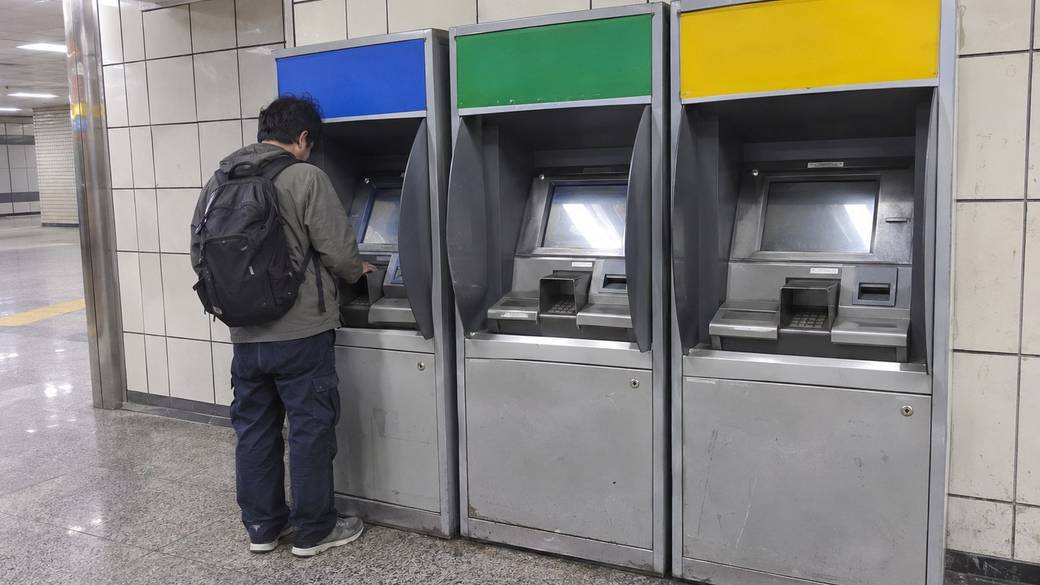
Use a bank ATM with a Global sign or your network’s logo (Visa, Plus, Mastercard or Cirrus). Visit Seoul says ATMs that take international cards are common and carry those marks, and that most offer English menus. It also warns that convenience-store ATMs often charge higher fees, so treat those as a backup.
Types of Korean ATM for a foreign card, from official and travel-guide sources, checked 5 Nov 2026
| Machine | Reported fee | Reported limit per withdrawal | When to use it |
|---|---|---|---|
| Bank branch or bank-branded ATM | ₩2,000–4,000 (travel guides) | Up to ₩1,000,000 (Wise, Hani Seoul) | Your first choice whenever one is open |
| Machine in a subway station | Not confirmed; read the screen | Not confirmed | When it shows a Global sign or your logo and no bank is near |
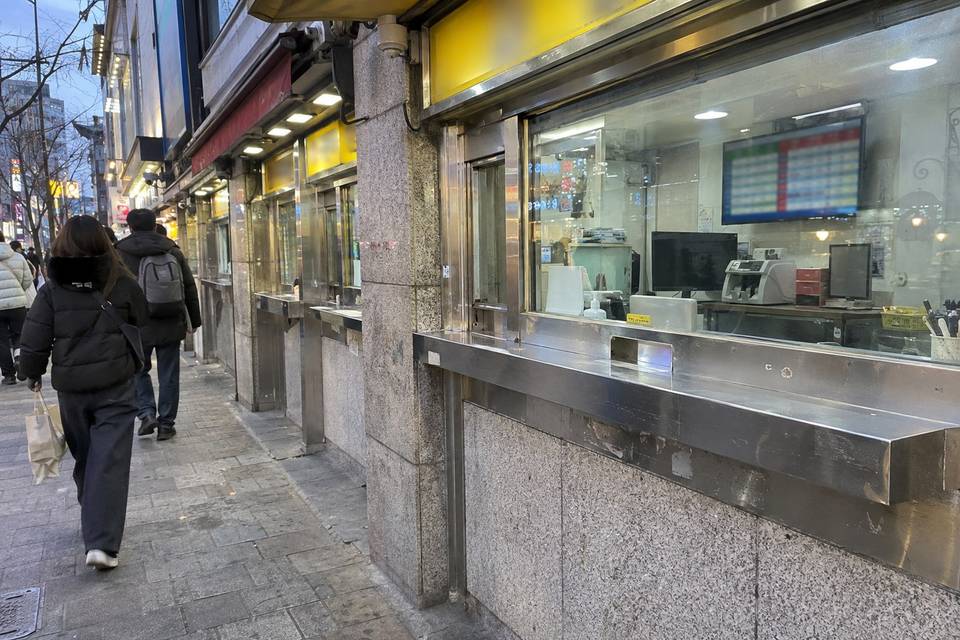
| Convenience-store ATM | ₩3,000–6,000 (travel guides) | ₩100,000–300,000 (travel guides) | Late at night, or when nothing else takes your card |
The table shows why a bank machine comes first: guides report a lower fee and a higher limit there, though both figures vary by machine and by card. Wise reports that even marked machines sometimes refuse a foreign card, and a Korean community wiki adds that unmarked ones sometimes accept it. So a logo improves your odds but doesn’t guarantee anything. The wiki adds a useful test: after you pick a language, a foreign-card option on the menu means the machine should take your card.
How much will a withdrawal cost, and how much should you take out?
Plan on two separate charges: the Korean machine’s flat fee and whatever your home bank adds. Wise notes that the ATM’s fee is usually visible on the screen before you agree, so you can cancel and try another. The flat fee is the part you control, because a larger withdrawal spreads it further.
Worked example of a flat ATM fee as a share of the withdrawal, using assumed fees, checked 5 Nov 2026
| You take out | About in US$ | With an assumed ₩3,600 fee | With an assumed ₩6,000 fee |
|---|---|---|---|
| ₩100,000 | US$75 | 3.6% | 6.0% |
| ₩200,000 | US$149 | 1.8% | 3.0% |
| ₩300,000 | US$224 | 1.2% | 2.0% |
| ₩500,000 | US$373 | 0.7% | 1.2% |
These are our own sums using fees reported by Hani Seoul and InnerKorea, not a bank’s prices, and they leave out your home bank’s charge. ₩200,000–300,000 at a time is a sensible default. It keeps the fee near 1–2% at a bank machine and fits the ₩300,000 limit guides report at convenience stores.
You probably need less than you think. Cards work in most shops, and our payment guide suggests carrying ₩50,000–100,000 at a time for market stalls, street food and T-money top-ups. One or two withdrawals will cover most week-long trips, and the Korea travel budget guide can help you size the rest.
How do you withdraw, step by step?
Most English menus follow the same order, though wording varies by bank.
- Find a marked machine. Look for Global, Visa, Plus, Mastercard or Cirrus on the ATM or its booth.
- Insert your card and choose English. If you can’t find a foreign-card option on the menu, try the next machine.
- Choose a withdrawal. Pick the checking or debit account if the screen asks.
- Enter your 4-digit PIN. Cover the keypad with your other hand.
- Enter the amount in won. Start with ₩200,000–300,000. If it is refused, try ₩100,000 less.
- Read the fee screen. Cancel if the fee looks high and another machine is nearby.
- Choose won if asked about currency. Wise calls home-currency conversion poor value, because the ATM operator sets a marked-up rate.
- Take your card, cash and receipt. Then check the amount in your bank app.
Where are the ATMs at Incheon Airport?
Head for the arrivals level (1F) before you go down to the train. The airport’s own list is below, though it doesn’t say which machines accept foreign cards and it calls its information for reference only. If you land late, the Incheon Airport to Seoul guide covers the last trains and buses.
Incheon Airport ATMs on the 1F arrivals level, from the airport list checked 5 Nov 2026
| Terminal | Unbranded ATM | Bank-branded ATM |
|---|---|---|
| Terminal 1 | Near exits 4, 6, 9, 11 | Hana exit 4; Woori exits 6, 11; KB exit 9 |
| Terminal 2 | Near exits 3, 7 | Hana exits 4, 10; Woori exit 7 |
If one bank’s machine refuses your card, the table shows another within the same hall. There are more on 3F by the check-in counters, and on B1 near the all-stop train ticket machines in Terminal 1.
Hours matter if you land late. The Terminal 1 list shows the unbranded ATMs as 24 hours and most bank-branded machines as 06:00–22:00, and we couldn’t confirm the Terminal 2 hours. Some KB and Woori machines are labelled as including a “foreign currency ATM”. The list doesn’t explain the term, and it may mean a machine that dispenses foreign notes, so don’t read it as a sign that your card works there.
Exchange counters are the backup. VisitKorea says airport exchange offices usually run 06:00–22:00, some for 24 hours, while bank branches inside the airport keep weekday hours of 09:00–16:00.
Why was your card declined, and what do you try next?
Most refusals have a simple cause, and a different machine fixes many of them. The causes below are the most likely ones rather than official error codes. Korean ATM messages vary by bank, so match them to the moment the machine stopped.
Likely causes when a Korean ATM refuses a foreign card, compiled from Wise and travel guides, checked 5 Nov 2026
| When it stops | Likely cause | What to try |
|---|---|---|
| Right after you insert the card | The machine doesn’t take your card or network | Try another bank’s ATM, even a nearby one |
| After you enter the PIN | Your PIN is not 4 digits, or it is wrong | Stop after two tries to avoid a lock; call your bank about a 4-digit PIN |
| After you enter the amount | Over the machine’s limit or your bank’s daily limit | Try a lower amount, or raise the limit in your bank app |
| On every machine, with a fraud alert | Your bank blocked an unexpected overseas use | Approve it in the app or call the number on your card |
| On every machine, with no alert | Overseas ATM use may be switched off on the card | Check card controls in the app, then use your second card |
Work down the table in order, and don’t retry the same machine repeatedly. Wise warns that unsuccessful attempts may count against your limits and free allowance.
If you still can’t get won, you have three fallbacks. Pay by card where you can, using our guide to where cards are accepted. Exchange any banknotes you brought at a bank or licensed counter; our guide to exchanging money in Korea compares the options. Or load foreign cash on a WOWPASS: its FAQ lists no fee for topping up with cash at the kiosk, a ₩6,000 registration fee, and balance withdrawals of up to ₩100,000 at a time for ₩1,000 at a WOW Exchange machine.
Which card should you bring, and what do home-country fees look like?
Bring a Visa or Mastercard debit card, which Wise describes as the most widely accepted networks, and a second card from a different bank. A credit card works as a backup, but issuers usually treat an ATM withdrawal as a cash advance, with its own fee and interest. Your limit and fee depend on where the card was issued, so look yours up before you fly.
- US: Wise’s US page lists free withdrawals up to US$250 (about ₩335,000) a calendar month, then US$1.95 + 1.95% per withdrawal. Ask your own bank about its overseas ATM fee and whether it refunds the operator’s fee.
- UK: Wise’s UK page lists £250 free a month, then 2.69% on the excess. Check whether your bank adds a non-sterling fee.
- Australia: Revolut’s Australian Standard plan lists A$350 or 5 withdrawals per rolling month, whichever comes first, then 2% with an A$1.50 minimum.
- Canada, Singapore, the Philippines, Malaysia and India: look for an overseas ATM setting or limit in your bank app’s card controls, and switch it on before you leave. Your allowance on Wise or Revolut, if you use them, differs by country, so read the fee page for your own region.
These allowances cover only the card provider’s fee. Both Wise pages warn that the ATM operator may charge on top.
Before you fly
- A 4-digit PIN that you’ve confirmed with your bank
- A debit card, plus a second card from another bank
- Your bank’s overseas ATM fee and daily withdrawal limit
- Overseas use and alerts switched on in your bank app
- Your bank’s overseas phone number, saved somewhere other than your card
- Some home-currency banknotes in case every ATM fails
Once you have won, the next stop is usually a transit card: T-money, WOWPASS or Climate Card each suit a different trip, and the Korea on a budget guide shows how far your cash will go.
Questions people ask
- Which bank's ATM is cheapest for a foreign card in Korea?
- We can't name one reliably. We found no bank-published fee table for foreign cards, and travel guides disagree. InnerKorea lists Woori at ₩2,000–3,000 and KB and Hana at ₩3,000. Compare the fee on the screen, and cancel if it looks high.
- Can I use my credit card at a Korean ATM?
- Often yes, if the machine takes your network, but issuers usually treat it as a cash advance, with its own fee and interest. Use a debit or multi-currency card for cash, and keep the credit card for shops.
- Should I get won from an ATM or exchange cash at the airport?
- Either works. Exchange cash if you are carrying banknotes, since Visit Seoul says banks usually offer the best rates. Use an ATM if your debit card has low overseas fees. Bring a little home-currency cash in case your card fails.
- Are Korean ATMs open at night?
- Many are. Visit Seoul says ATMs typically run until 23:00 and many are open 24 hours. Incheon lists 24-hour machines in Terminal 1, but its bank-branded machines there are mostly listed as 06:00–22:00.
- Do declined attempts cost money?
- They can. Wise warns that unsuccessful attempts may count towards your limits and free allowance. Your bank may treat them differently, so check your app after a failed try, and don't keep retrying the same machine.
Next in your trip
- How to pay in Korea — Where cards work, where cash still counts, and what WOWPASS does
- T-money vs WOWPASS vs Climate Card — The first thing most visitors spend their won on
- Incheon Airport to Seoul — Your route into the city once you have cash
Sources
- 인천국제공항 – 편의시설 목록: 공용·은행 ATM 위치 (제1·제2여객터미널) (Korean)
- InnerKorea – 한국 ATM 해외카드 가이드 (travel guide, checked Oct 2026) (Korean)
- 나무위키 – 현금 자동 입출금기: 한국의 글로벌 ATM 현황 (community wiki, undated) (Korean)
- Incheon Airport – Banks and ATMs with hours
- Incheon Airport – Facilities list
- Visit Seoul – Money: banks, ATMs, exchange and tipping
- VisitKorea – Foreign exchange banks in airports
- Wise – ATMs in South Korea (updated 19 Jan 2026)
- Wise – Card fees for UK residents
- Wise – Card fees for US residents
- Wise Help – How much does it cost to withdraw cash?
- Revolut – Standard plan fees, Australia (PDF)
- Hani Seoul – ATMs in Korea (travel guide)
- WOWPASS FAQ
- European Central Bank – Euro reference rates, 4 Nov 2026 (used for the USD/KRW cross rate)
Updates
- Published with Incheon Airport ATM locations and the Wise and Revolut allowances listed on 5 Nov 2026.
About Korea Field Notes
An English guide to the practical side of visiting South Korea. Guides are researched from Korean-language official sources (Korail, T-money, Seoul Metro, the Korea Tourism Organization) and re-checked when rules or prices change. Each guide shows when its facts were last checked and lists its sources. About the site · How we research and update guides · Found something out of date? Tell us.