How to Book a Temple Stay in Korea (2026 Prices)
Prices, schedules and refund rules checked against the program pages and FAQ on templestay.com (English and Korean) on 27 Oct 2026.
Book a temple stay on the official templestay.com English site, choosing a temple, date and program, then paying per person. Seoul overnights cost ₩80,000–₩120,000 and day programs ₩5,000–₩50,000, mountain temples like Bulguksa charge ₩70,000–₩130,000, and each temple sets its own refund deadline (prices checked 27 Oct 2026).
Best forFirst-timersSoloBudget
Your situation → do this
| If you… | Do this |
|---|---|
| Have one free morning or afternoon in Seoul | Book a day program: Jogyesa, Myogaksa or Bongeunsa, ₩5,000–₩50,000 |
| Want the full overnight with the 4 a.m. service, but no long trip | Book a 1-night stay in Seoul: Jogyesa ₩80,000, Hwagyesa or Myogaksa ₩90,000–₩95,000 |
| Are going to Gyeongju, Busan or the east coast anyway | Stay at Bulguksa, Golgulsa, Beomeosa or Naksansa, ₩70,000–₩130,000 |
| Are ready to book now | Use the English site, read the refund line, pay online or note pay-on-arrival |
| Might change your dates | Check the refund rule first: some temples refund nothing inside 7 days |
Key takeaways
- Book on templestay.com's English site; Google, Facebook or guest checkout works, no Korean account needed.
- Seoul overnights: Jogyesa ₩80,000, Hwagyesa ₩90,000, Myogaksa ₩95,000, Bongeunsa weekend ₩120,000 per adult.
- Cheapest taste: Bongeunsa BONG-PASS, Tuesdays 10:00–16:00, ₩5,000 for a drop-in tea and meditation.
- Overnight rhythm: arrive about 13:30–15:00, bed around 21:00, dawn service near 04:00.
- Refund deadlines differ: Jogyesa needs 7 days' notice, Geumsunsa 4 days, Bulguksa 3 days for a full refund.
| Where to book | templestay.com English site, run by the Cultural Corps of Korean BuddhismSource: templestay.com |
|---|---|
| Seoul overnight (adult) | ₩80,000 Jogyesa to ₩120,000 Bongeunsa weekendSource: templestay.com program pages, 27 Oct 2026 |
| Day programs (adult) | ₩5,000 Bongeunsa BONG-PASS to ₩50,000 Jogyesa tea ceremonySource: templestay.com program pages |
| Rooms | Shared and single-sex by default; private rooms cost extra where offeredSource: templestay.com FAQ |
| Meals | Vegetarian: no meat, eggs or the five pungent vegetables such as garlic and onionSource: templestay.com FAQ |
| Visitors in 2025 | 55,515 foreign participants, a record, out of 349,219 in totalSource: Herald Business, Jan 2026 |
- Time
- 10 min to book; day program 2–6 h; overnight about 20 h
- Cost
- ₩5,000–₩50,000 day; ₩70,000–₩130,000 per night
- What you need
- Passport name and email · A card, or cash if the temple takes payment on arrival · Socks, a T-shirt and a warm layer
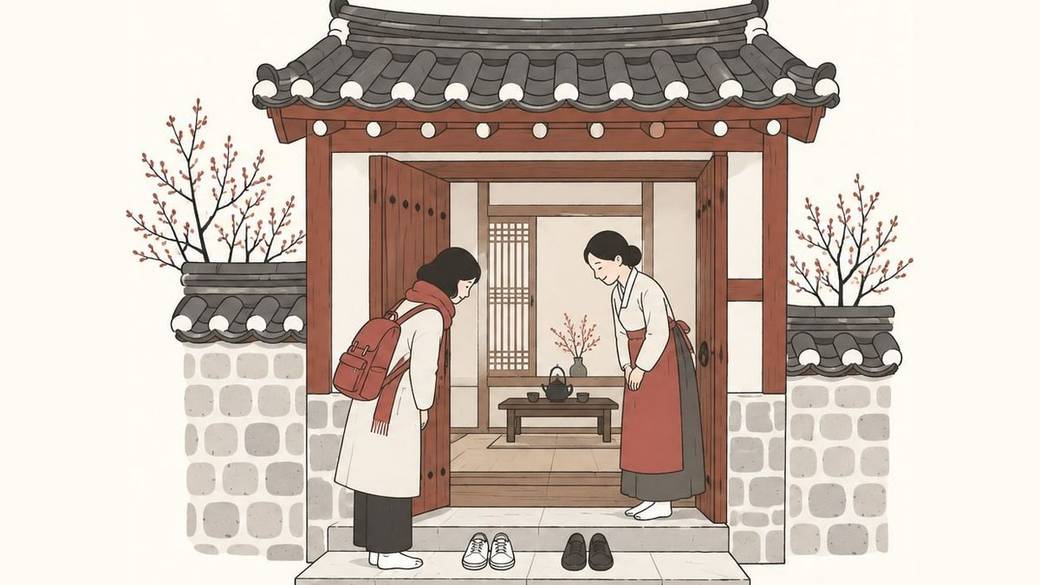
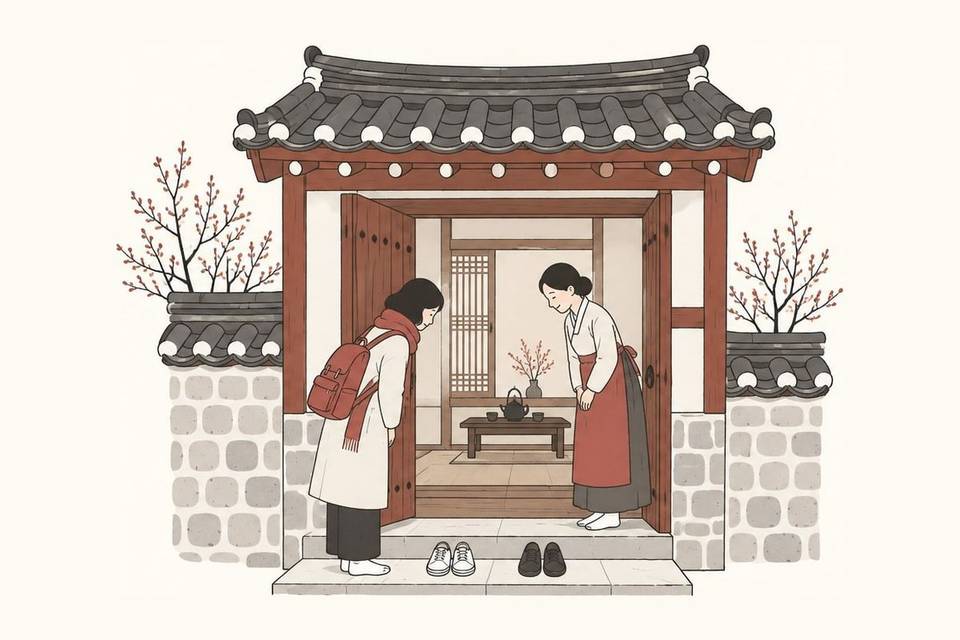
A temple stay puts you inside a working Korean Buddhist temple for a few hours or a night: meals with the monks’ schedule, meditation, and the dawn service. This page covers booking, prices and rules on the official site. More experiences and etiquette are in Culture & Etiquette.
Should you do a day program or stay overnight?
Decide this first, because it decides the price, the temple and how much of your trip it takes.
A day program lasts two to six hours and usually starts at 10:00 or 13:00. You get a temple tour, seated meditation, tea with a monk, and often a craft such as a lotus lantern or a string of 108 beads. You sleep at your hotel.
An overnight (listed as 1N2D, one night and two days) is the version people mean when they say “temple stay”. The official site splits it into two kinds:
- Experience programs fill the time: temple etiquette, the evening service, 108 bows, meditation, a formal monastic meal at some temples, then the dawn service, breakfast, a short spell of communal work and tea with a monk.
- Relaxation programs give you a room, the meals and the services, and leave the rest of the day free.
Day program vs overnight at a Seoul temple, prices checked 27 Oct 2026
| Day program | Overnight (1N2D) | |
|---|---|---|
| Time | 2–6 hours | About 13:30 one day to 10:00–13:00 the next |
| Adult price in Seoul | ₩5,000–₩50,000 | ₩80,000–₩120,000 |
| Dawn service around 04:00 | No | Yes, optional |
| Meals | Lunch at some temples | Dinner, breakfast, sometimes lunch |
| Uniform | Sometimes | Vest and trousers lent at check-in |
| Book how far ahead | 1–3 days’ cutoff | 1–3 days’ cutoff; a month for weekends |
The overnight is the better buy if you have a free afternoon and morning, because the quiet evening and the early service are what a day visit can’t give you. Pick a day program if your nights are already paid for or you’re not sure you’ll like it.
Which temple should you pick?
Pick by where you already are on your trip. A mountain temple four hours away costs you a day of travel; a city temple costs a subway ride.
In Seoul. The official FAQ lists seven temples you can reach by subway or bus: Bongeunsa, Geumsunsa, Hwagyesa, Jinkwansa, Jogyesa, Myogaksa and the International Seon Center.
- Jogyesa is the head temple of the Jogye Order, in central Jongno near Insadong. Its regular overnight is the cheapest in the city.
- Bongeunsa sits opposite COEX in Gangnam. Its overnight runs on weekends only.
- Hwagyesa and Geumsunsa are on the forested slopes of Bukhansan, which is the closest Seoul gets to a mountain temple.
- Myogaksa has English-language programs, but it reserves the English site for foreigners and Koreans travelling with them.
Outside Seoul. The FAQ names four UNESCO-listed temples with English programs: Bulguksa in Gyeongju, Haeinsa near Daegu, Beopjusa and Magoksa. Golgulsa, east of Gyeongju, is known for Sunmudo martial arts. Naksansa on the east coast looks over the sea, and Beomeosa is on a Busan metro line. If Gyeongju is already on your route, our Gyeongju area guide covers the Bulguksa side of town. If you only want to visit for a few hours, our guide to the best temples beyond Seoul sorts them by the city you’re already in.
Overnight temple stays by region, adult price per night, checked 27 Oct 2026
| Temple | Where | Program | Adult price |
|---|---|---|---|
| Jogyesa | Central Seoul | Regular 1N2D | ₩80,000 |
| Hwagyesa | Bukhansan, Seoul | Experience or relaxation | ₩90,000 |
| Myogaksa | Jongno, Seoul | “Where is your mind?” 1N2D | ₩95,000 |
| Bongeunsa | Gangnam, Seoul | Regular, Sat–Sun | ₩120,000 |
| Bulguksa | Gyeongju | 1N2D | ₩120,000–₩130,000 |
| Golgulsa | Near Gyeongju | Sunmudo or relaxation | ₩120,000 |
| Beomeosa | Busan | Relaxation / weekend | ₩70,000 / ₩100,000 |
| Naksansa | Yangyang, east coast | “Wave in the Wind” | ₩120,000 |
| Woljeongsa | Odaesan, Gangwon | Relaxation | ₩100,000 |
Seoul is cheaper than the famous mountain temples by ₩20,000–₩40,000 a night, and that’s before you pay the train or bus to reach them. Prices are per adult; teen and child rates are usually the same or slightly lower.
Seasonal programs come and go. Hwagyesa lists a Christmas Templestay at ₩50,000 for stays between 23 October and 26 December 2026, the cheapest Seoul overnight on the site this autumn.
How do you book, step by step?
- Open the English site. Go to templestay.com, switch to English and choose Reservation. Filter by region, temple, program type (day, experience, relaxation) and date.
- Read the program page before you pick a date. Each page shows the schedule, the price list (adult, teenager, child, pre-school), what to bring, the refund policy and the booking cutoff, which ranges from one to three days before the start.
- Choose the date, headcount and room. Rooms are shared and single-sex by default. Where a temple sells a private room, it appears as an extra charge such as “Adult Single Occupancy”.
- Sign in or book as a guest. You can sign in with Google or Facebook, make an account, or continue as a guest with an email and password. You use those to find the booking later under “Confirm Reservation”.
- Pay the way the program page says. Jogyesa asks for online card payment and cancels unpaid bookings after a set time. Bulguksa, Golgulsa and Bongeunsa’s day programs take card or cash when you arrive.
- Check your email, then stop worrying. You don’t need to print anything; each temple keeps its own list. Some temples don’t send a confirmation at all, so email the temple or support@templestay.com if nothing arrives within a day or two.
Weekend dates at the Seoul temples fill first. Myogaksa says its dates usually open about a month ahead, so a Saturday there is worth booking as soon as it appears.
What happens during an overnight?
The schedule below is Jogyesa’s regular program; other temples follow the same shape with different times.
| Time | What happens |
|---|---|
| 13:30 | Check in, change into the temple vest and trousers |
| Afternoon | Orientation, temple tour, meditation or a craft |
| 16:30–17:45 | Dinner |
| 17:55 | Drum and bell, then the evening service (optional) |
| 19:00 | 108 bows (optional) |
| 21:00 | Lights out |
| 04:00 | Wake-up; dawn service at 04:25 (optional) |
| 07:00 | Breakfast |
| 10:00 | Check-out |
Mountain temples start earlier. Haeinsa’s group leaves for the main hall at 03:10, and Beomeosa’s weekend program wakes at 03:30.
The rules are short. No alcohol, no smoking, no loud talk, and no displays of affection between couples. Rooms lock, and the official site says outsiders are kept out after 22:00. Meals are vegetarian and served without meat, eggs, instant food or the five pungent vegetables, which include garlic and onion. That matters if you keep a strict vegetarian diet, as many travellers from India do: temple meals are among the easiest in Korea to eat safely, and our vegetarian Korea guide covers where to find the same food in town.
What should you bring?
Most temples lend a vest and trousers and provide soap and toothpaste, but little else. The Korean “What is Templestay” page and the program pages list the rest.
Pack for one night
- Socks. Bare feet aren’t allowed in the halls.
- A plain T-shirt to wear under the temple vest.
- Towel, shampoo and a toothbrush. Jogyesa and Bongeunsa supply more than most; mountain temples often supply less.
- A warm layer. The official page says mornings and evenings are cold except in midsummer.
- A water bottle or tumbler. Geumsunsa asks guests to bring one.
- Passport. Some temples, Jinkwansa among them, ask for ID at check-in.
If you’re coming from Singapore, Malaysia, the Philippines or India, take the warm-layer line seriously. A 04:00 service in a mountain valley in late autumn is cold, and halls are not heated the way hotel rooms are. Our Korea packing list has the layers by month.
What are the cancellation rules?
There is no site-wide rule. Each temple sets its own, and it is printed on the program page under “Refund Policy”. Read it before you pay, because some are strict.
Refund rules for overnight programs, from templestay.com program pages, checked 27 Oct 2026
| Temple | Full refund if you cancel | After that |
|---|---|---|
| Jogyesa | 7+ days before | Nothing from 6 days out |
| Bongeunsa (weekend) | 14 days before | 70% at 7 days, then nothing |
| Geumsunsa | 4+ days before | Nothing from 3 days out |
| Myogaksa | 3 days before | 50% at 2 days, then nothing |
| Bulguksa | 3 days before | 70% at 2 days, 50% at 1 day |
| Naksansa | 7 days before, minus ₩1,000 | Falls step by step to 0% on the day |
If your plans could shift, book a temple with a short cutoff such as Bulguksa or Myogaksa rather than Jogyesa or Bongeunsa. To cancel or change dates, contact the temple directly or support@templestay.com.
Is there a discount for foreigners in 2026?
Not for the rest of the year. The Korea Times reported a ₩30,000-a-night rate for foreigners at 19 temples, Jogyesa and Haeinsa among them, but it covered September 2026 only. The Happy Double Templestay in November 2026 also costs ₩30,000 at 104 temples, but Yonhap reported it is for Korean nationals only. A ₩30,000 offer you see now probably isn’t open to you.
These offers have returned each year: one ran from August to October 2025, and another in May 2026 was open to foreigners too. If you’re planning for 2027, watch the English site’s notices from late summer.
Templestay Information Center (템플스테이 통합정보센터)Naver MapGoogle MapsWhat do first-timers get wrong?
- Booking the wrong ₩30,000 offer. Read who it’s for; the November one excludes foreigners.
- Expecting a private room. Shared single-sex rooms are the default. Couples sleep apart.
- Missing the cutoff. Jogyesa closes online booking three days before; you can’t walk in for an overnight.
- Skipping the refund line. A Jogyesa booking cancelled five days out gets nothing back.
- Arriving late. Check-in is fixed, and the afternoon schedule starts without you. Geumsunsa asks guests to arrive by 14:30, and the temple sits up a hillside trail from the road.
- Thinking you must join everything. You don’t. The official FAQ says every activity is optional.
Travelling alone? A temple stay is one of the easier group activities to join solo; our solo Korea guide has more. The Lotus Lantern Festival at Jogyesa in spring is in Korea festivals by month.
Questions people ask
- Do I need to be Buddhist to do a temple stay?
- No. Every activity, including the 108 bows and the dawn service, is optional, and you can sit quietly instead. Asia Economy reported that 43.4% of foreign participants in 2025 had no religion, against 9.9% who were Buddhist.
- Can couples share a room at a temple stay?
- No. The official FAQ says men and women do not share a room, couples included. The exception is parents with young children. Some temples sell private rooms for two to four people of the same sex at an extra charge.
- Is there a discount for foreigners in 2026?
- Not right now. The ₩30,000 foreigner rate ran only in September 2026 at 19 temples, and November's ₩30,000 Happy Double Templestay is for Korean nationals. Foreign visitors pay the listed price.
- Do I need to print my confirmation?
- No. The official FAQ says each temple keeps its own reservation list, and some temples never send a confirmation email. If yours doesn't arrive, email the temple or support@templestay.com.
- Can I bring children to a temple stay?
- Yes, with an adult. Many price lists have teen, child and pre-school rates, but some programs exclude pre-schoolers, such as Haeinsa's. The official site asks you to call the temple first when booking for children.
- What food is served at a temple stay?
- Temple food: rice, soup and vegetable side dishes with no meat, eggs or instant food, and no garlic, onion or the other pungent vegetables. It suits vegetarians. Vegans should ask about dairy before booking.
Next in your trip
- Vegetarian food in Korea — temple food restaurants if you like the meals
- Korea packing list — the warm layer and socks a 4 a.m. service needs
- Where to stay in Gyeongju — if you pair Bulguksa or Golgulsa with a night in town
Sources
- templestay.com – Reservations and program pages (English)
- templestay.com – FAQ (English)
- 템플스테이 – 템플스테이란? (프로그램 유형과 일정, 준비물) (Korean)
- Korea Times – Discounted temple stays for foreigners in September (30 Jul 2026)
- 아시아경제 – 외국인 템플스테이 3만원 (31 Jul 2026) (Korean)
- 헤럴드경제 – 지난해 템플스테이 참가자 역대 최다 (17 Jan 2026) (Korean)
- 연합뉴스 via Supple – 11월 해피 더블 템플스테이, 내국인 대상 (11 Sep 2026) (Korean)
Updates
- Published with 2026 prices for Seoul, Gyeongju, Busan and Gangwon temples from templestay.com program pages.
About Korea Field Notes
An English guide to the practical side of visiting South Korea. Guides are researched from Korean-language official sources (Korail, T-money, Seoul Metro, the Korea Tourism Organization) and re-checked when rules or prices change. Each guide shows when its facts were last checked and lists its sources. About the site · How we research and update guides · Found something out of date? Tell us.