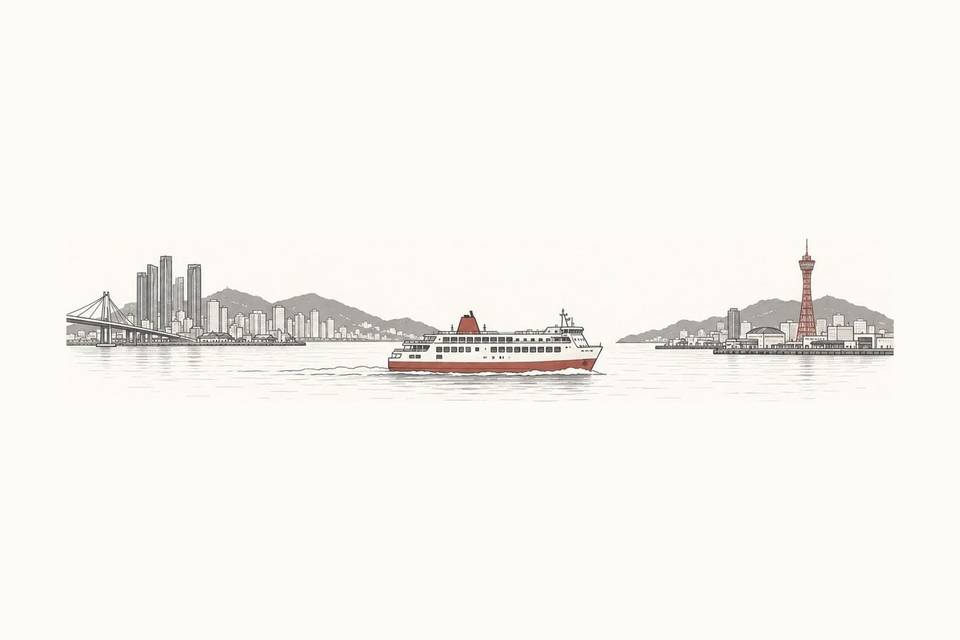
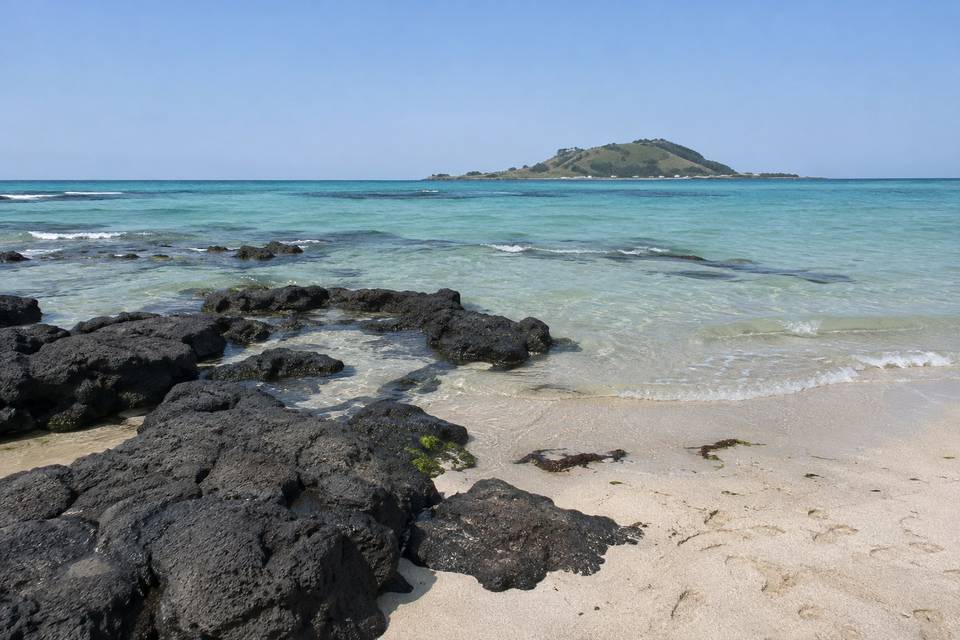
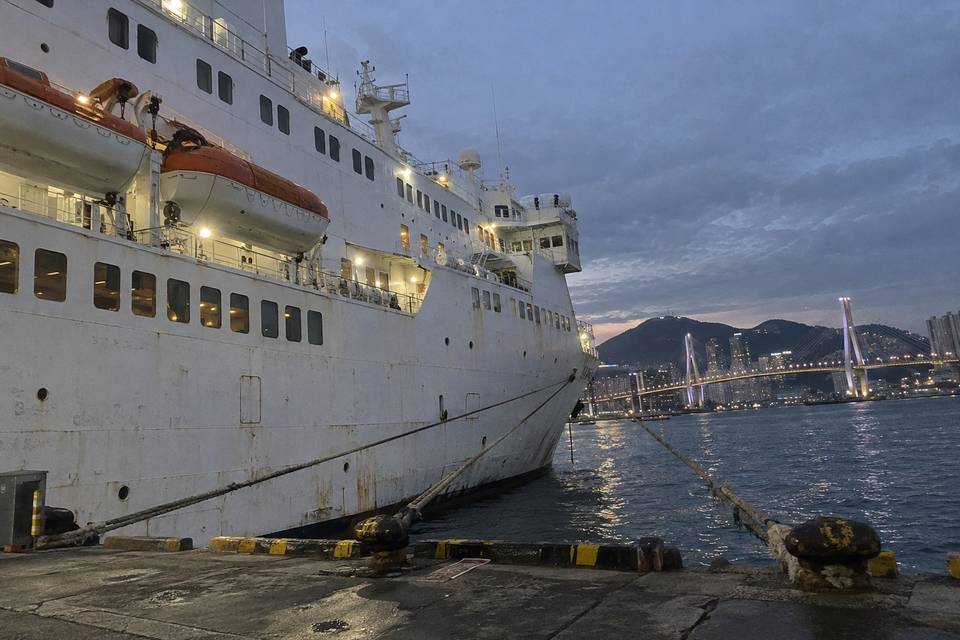
How to Plan a Korea and Japan Trip: Route, Days, Costs
Fares, taxes and entry rules checked against Japan Rail Pass, JNTO, Japan Customs, Korea's culture ministry (korea.kr), Camellia Line via our ferry guide and the K-ETA portal on 18 Nov 2026.
This guide contains affiliate links. If you book through them we may earn a commission at no extra cost to you. How this works.
Book an open-jaw flight into Seoul and out of Tokyo (or the reverse), give Korea 5–6 of 14 days, and cross Busan–Fukuoka on the overnight ferry (₩150,000 plus ₩21,000 taxes) or a roughly one-hour flight. Skip the nationwide JR Pass for a one-way run to Tokyo: the bullet trains cost ¥30,740 against ¥50,000 (checked 18 Nov 2026).
Best forFirst-timersBudgetSolo
Your situation → do this
| If you… | Do this |
|---|---|
| You have 7 days or fewer | Pick one country; two border crossings eat a full day of a short trip. |
| You have 10 days | Seoul 4 nights, fly to Osaka, then 3 nights Kyoto/Osaka and 2 nights Tokyo. |
| You have 14 days and like slow travel | KTX to Busan, overnight New Camellia ferry to Fukuoka, bullet train east to Tokyo. |
| You hold a Philippine or Indian passport | You need two visas; apply for Korea's first, at least a month ahead. |
| You travel over Christmas or New Year | Reserve Nozomi seats: every Nozomi is all-reserved from 25 Dec 2026 to 5 Jan 2027. |
Key takeaways
- Fly into one country and out of the other; backtracking to your arrival airport wastes a day and a fare.
- The New Camellia leaves Busan at 22:30 and lets you off in Hakata from 07:30, so the crossing doubles as a night.
- Japan's departure tax is ¥3,000 since 1 Jul 2026; Korea's air departure fee is ₩7,000, its ferry levy ₩1,000.
- Hakata–Shin-Osaka (¥16,020) plus Shin-Osaka–Tokyo (¥14,720) costs less than a 7-day JR Pass (¥50,000).
- Korea's K-ETA exemption for US, UK, Canadian, Australian and Singapore passports ends 31 Dec 2026.
| Ferry Busan → Hakata | Dep. 22:30, off from 07:30; 2nd class ₩150,000 + about ₩21,000 taxesSource: Camellia Line, via our ferry guide (checked 4 Oct 2026) |
|---|---|
| Bullet trains Hakata → Tokyo | ¥16,020 to Shin-Osaka + ¥14,720 to Tokyo (Nozomi, reserved, regular season)Source: tabiris fare tables, 2026 |
| Japan Rail Pass, 7 days | ¥50,000 on the official site (¥53,000 from overseas agents); Nozomi needs an extra ticketSource: japanrailpass.net, read 18 Nov 2026 |
| Departure charges | Japan ¥3,000 (since 1 Jul 2026) · Korea ₩7,000 by air, ₩1,000 by ferrySource: JNTO; korea.kr; Camellia Line |
| Korea entry | K-ETA exemption for US, UK, CA, AU, SG passports ends 31 Dec 2026Source: K-ETA portal; our K-ETA guide (15 Nov 2026) |
- Time
- About 2 hours to plan and book
- Cost
- Ferry ₩171,000 + bullet trains ¥30,740
- What you need
- Passport valid for the whole trip · Visa or K-ETA if your passport needs one · A card that works abroad · Open-jaw flight search
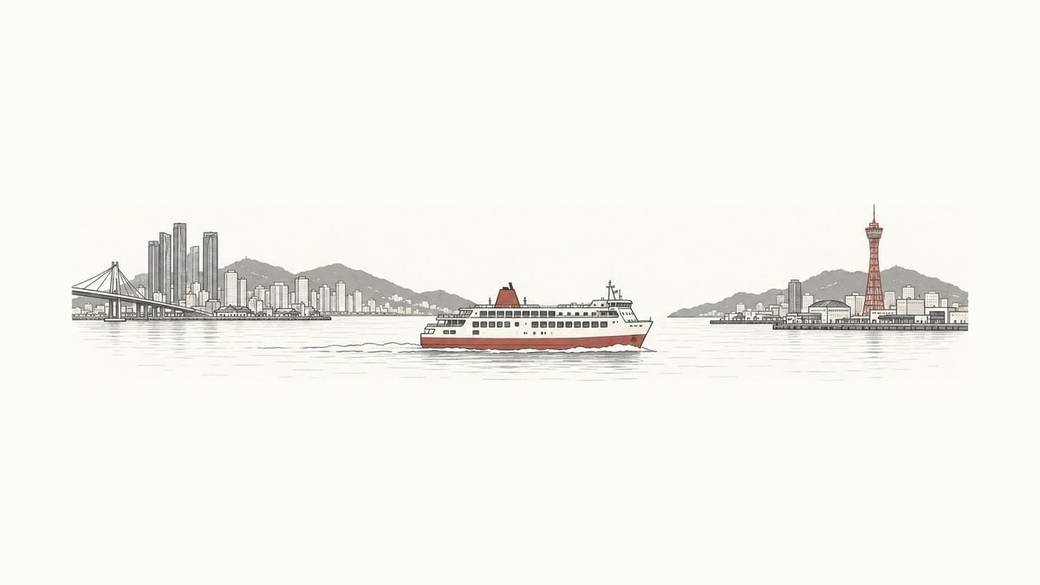
This page plans one trip through both countries: which way round to go, how to split the days, how to cross the strait and what the border legs cost. The rest of our cross-border guides are in the Korea ↔ Japan section.
Which way round should you go?
Fly into one country and out of the other on an open-jaw ticket (also called multi-city). Returning to your arrival airport costs a travel day and a second short flight. Search multi-city fares for both directions, Seoul in and Tokyo out and the reverse, and let the price decide.
When the fares are close, the route decides:
- Korea first suits the overland trip. The overnight ferry runs Busan → Hakata, and from Fukuoka you travel east through Osaka and Kyoto to a Tokyo flight home. Each leg moves you forward.
- Japan first suits a flying trip ending in Korea. Seoul’s tax refund is taken off at the till in many shops (under ₩1,000,000 per purchase, up to ₩5,000,000 per trip), so ending with a shopping day in Seoul is easy.
- From the US and Canada, check both Incheon and Tokyo (Haneda or Narita) as the long-haul end; our cheap flights to Korea guide covers when fares drop.
- From Singapore, Malaysia, the Philippines and India, both countries are a short flight away. Price two separate return trips against one open-jaw before you commit to a long combined trip.
Our Seoul vs Tokyo comparison covers which country suits you better if you are still deciding whether to combine them at all.
How many days should each country get?
Japan is the bigger country with more long legs, so give it the larger share. Korea’s highlights for a first trip sit on one line: Seoul, then Busan by KTX.
Suggested split of a Korea and Japan trip by length (checked 18 Nov 2026)
| Trip length | Korea | Crossing | Japan | Verdict |
|---|---|---|---|---|
| 7 days | Seoul 3 nights | Fly Seoul–Tokyo (about 2.5 h) | Tokyo 3 nights | Rushed; pick one country |
| 10 days | Seoul 4 nights | Fly Seoul–Osaka (about 2 h) | Kyoto/Osaka 3, Tokyo 2 | Works, flying both ends |
| 14 days | Seoul 4, Busan 1 + a full day | Overnight ferry Busan–Hakata | Fukuoka 1, Kyoto/Osaka 3, Tokyo 3 | The classic overland route |
| 21 days | Seoul 5, Gyeongju 1, Busan 2 | Ferry or 1-hour flight | Fukuoka 2, Hiroshima 1, Kyoto/Osaka 4, Tokyo 4 | Relaxed, room for day trips |
The table counts hotel nights. On the 14-day plan you check out in Busan, sightsee all day and sleep on the ferry, so 12 hotel nights plus the ferry make 13 nights.
For the Korean half, copy an existing plan: our Seoul 3-day itinerary plus a day trip fills four nights, and the Busan 3-day itinerary trims to one night and a full ferry day by dropping its last day. If Korea is the main event and Japan the add-on, start from our 7-day Korea itinerary instead.
Should you take the ferry or fly between Korea and Japan?
Take the ferry on a 14-day trip, because it saves a hotel night and a morning. Fly on a 10-day trip, or when your Japan leg starts in Osaka or Tokyo rather than Fukuoka.
Busan to Fukuoka: ferry vs flight (ferry fares Oct–Dec 2026, checked 4 Oct 2026; flight times approximate)
| New Camellia ferry | Flight Busan (Gimhae)–Fukuoka | |
|---|---|---|
| Leaves | Busan Port 22:30 | Gimhae Airport; check current airlines |
| Arrives | Hakata Port, off from 07:30 | About 55–70 min later |
| Fare | ₩150,000 (2nd class), ₩170,000 for a bunk | Varies by airline; check on booking |
| Taxes | About ₩21,000 from Busan | In the ticket |
| Bags | Carry-ons up to 30 kg each | Airline allowance |
| Best for | Saving a hotel night, big luggage | Short trips, seasickness |
The ferry costs more than its fare suggests, but it includes your bed for the night, so compare it with a flight plus a hotel.
The Busan terminal sits behind Busan Station, so you can arrive on the KTX from Seoul in the afternoon and walk over. Our Fukuoka–Busan ferry guide has check-in times, the full fare table, baggage rules and the route to each terminal. JR Kyushu’s Queen Beetle, the old fast ferry, stopped in August 2024 and JR Kyushu decided that December to leave the route.
How do I plan the trip, step by step?
- Check entry for both countries first. Visas and K-ETA rules decide whether the trip is possible; see the entry table below.
- Choose your length and split from the table above, then pick the crossing: ferry or flight.
- Book the open-jaw flight. Search both directions as multi-city, and check that the arrival time works with your first night’s hotel.
- Book the crossing. Book the ferry or the intra-Asia flight once your long-haul dates are fixed; the ferry runs once a day each way.
- Book the KTX to Busan when seats open, and keep a buffer of a few hours before the ferry. Our KTX booking guide walks through it.
- Decide on rail passes with a calculator. Add your actual bullet-train fares and compare them with the pass price (see the next section).
- Sort data and money. Get an eSIM or a plan per country, and a card without foreign transaction fees that works in both.
How much do the border legs cost?
Transport legs on the 14-day overland route, adult one way (checked 18 Nov 2026; Japan fares are regular-season reserved Nozomi seats)
| Leg | Time | Cost | Note |
|---|---|---|---|
| KTX Seoul–Busan | 2 h 18 min to about 3 h 25 min | ₩54,400 | Economy since 1 Sep 2026 |
| Ferry Busan–Hakata | Overnight, 22:30 → 07:30 | ₩150,000 + about ₩21,000 | Includes the ₩1,000 Korean levy |
| Nozomi Hakata–Shin-Osaka | About 2.5 h | ¥16,020 | ¥200–400 more in peak periods |
| Nozomi Shin-Osaka–Tokyo | About 2.5 h | ¥14,720 | Kyoto is a stop on this line |
| Departure tax, Japan | — | ¥3,000 | Added to your flight home |
For the whole route that is ₩225,400 on the Korean side plus ¥30,740 in Japan, before your flights in and out.
Our KTX Seoul to Busan guide lists the departures. Fares on Nozomi reserved seats rise for tickets bought from 1 July 2027, so these numbers hold for trips booked before then.
Is a rail pass worth it?
Not on this route. The 7-day nationwide Japan Rail Pass is ¥50,000 on the official site (¥53,000 from overseas agents), against ¥30,740 for the two bullet-train tickets above. The pass also excludes the Nozomi, the fastest trains, unless you buy a special ticket on top, which is ¥4,960 for Shin-Osaka–Hakata. It pays off only if you add long side trips, such as Tokyo to northern Japan.
On the Korean side the answer is the same: one KTX ride does not justify a Korail Pass, as our Korail Pass verdict shows.
What entry papers do you need for both countries?
Korea and Japan have separate rules, and one doesn’t help you with the other.
Entry rules by passport for a Korea and Japan trip (Korea checked 15 Nov 2026, Japan per MOFA)
| Passport | Korea | Japan |
|---|---|---|
| US, UK, Canada, Australia, Singapore | No K-ETA until 31 Dec 2026; K-ETA (₩10,000) from 1 Jan 2027 | Visa-free, up to 90 days |
| Malaysia | K-ETA required | Visa-free up to 90 days with an ICAO e-passport |
| Philippines | Tourist visa (C-3-9) | Visa required |
| India | Tourist visa (C-3-9) | Visa required |
The two visa-free groups need almost no paperwork for Japan; the work is on the Korean side, and from January 2027 it applies to more passports.
- Australians travelling in the summer holidays: if you land in Korea on or after 1 January 2027, apply for the K-ETA in early December. Our K-ETA guide tracks whether the exemption gets extended; none had been announced by 15 November 2026.
- Filipinos and Indians: apply for the Korean visa first. Manila quotes 14 working days, and our Korea tourist visa guide has the filing routes. Japan’s eVISA for residents of the Philippines goes through an accredited agency and allows a 15-day stay, so fit the Japan leg inside that.
- Japan’s own e-authorisation (JESTA) is planned for later in the decade and is not needed in 2026.
How do money, data and tax refunds differ?
Cards work almost everywhere in Korea; Japan still takes more cash, so withdraw some yen on arrival. Use Naver Map or Kakao Map in Korea, where Google Maps gives no walking or driving directions, and switch to Google Maps in Japan. Our guide to paying in Korea covers which cards work.
Tax refunds work differently in each country:
- Korea: many shops take the tax off at the till, for purchases under ₩1,000,000 each and up to ₩5,000,000 in total per trip. Larger refunds are claimed at the airport (how the Korean refund works).
- Japan, since 1 November 2026: you pay the full price, then scan your passport at the Customs kiosk before you leave and get the tax back afterwards. Keep the goods in your hand luggage, since they may be inspected. The minimum is ¥5,000 per shop per day, and the check must happen within 90 days of purchase.
For data, one regional eSIM covering both countries saves a swap at the border; compare it with two single-country plans in our Korea eSIM guide.
What can go wrong?
Common mistakes
Avoid these
- Booking two separate returns when an open-jaw costs the same and saves a day.
- Buying a 7-day JR Pass for one trip from Fukuoka to Tokyo.
- Forgetting the K-ETA for a Korea arrival on or after 1 January 2027.
- Planning the ferry on your last day before a flight.
- Budgeting Japan’s departure tax at the old ¥1,000.
- Expecting Google Maps to give directions in Korea.
Travel insurance should cover both countries and the sea crossing; our insurance guide explains what to check in the policy.
Questions people ask
- Is it better to visit Korea or Japan first?
- Go with whichever open-jaw fare is cheaper; the trip works both ways. Korea first suits the overland route, because the overnight ferry runs Busan to Hakata and then you travel east through Japan toward a Tokyo flight home.
- How many days do you need for Korea and Japan together?
- Ten days is the practical minimum for both, with about 4 in Korea and 6 in Japan. Fourteen days lets you add Busan and the ferry. With 7 days or fewer, pick one country.
- Can you take a ferry from Korea to Japan?
- Yes. Camellia Line's New Camellia is the only passenger ferry between Busan and Fukuoka in 2026. It leaves Busan at 22:30 and lets passengers off in Hakata from 07:30; 2nd class is ₩150,000 one way plus about ₩21,000 in taxes.
- Is the Japan Rail Pass worth it on a Korea and Japan trip?
- Usually not, if you ride once from Fukuoka to Osaka and once to Tokyo. Those two Nozomi tickets cost ¥30,740, while the 7-day pass is ¥50,000 and does not cover Nozomi without an extra ticket.
- Do I need a visa for both Korea and Japan?
- US, UK, Canadian, Australian and Singapore passports need neither visa, but need a K-ETA for Korea from 1 Jan 2027. Malaysians need a K-ETA for Korea only. Philippine and Indian passport holders need a visa for each country.
Next in your trip
- Check if you need a K-ETA — The exemption for five of our reader markets ends 31 Dec 2026
- Book the Busan–Fukuoka ferry — Timetable, fares, taxes and the walk to each terminal
- Book the KTX to Busan — Seoul–Busan is ₩54,400 in economy since September 2026
Sources
- Japan Rail Pass – Prices (official site, read 18 Nov 2026)
- Japan Rail Pass – Special ticket for Nozomi and Mizuho
- JNTO – Japan's international tourist tax is increasing (11 May 2026)
- Japan Customs – New tax-free system for travellers (purchases from 1 Nov 2026)
- JR Central and JR West – Nozomi all-reserved periods, 2026–27 (21 May 2026, Japanese)
- tabiris – 新大阪〜博多 新幹線料金 2026 (30 Apr 2026, Japanese)
- tabiris – 東京〜新大阪 新幹線料金 2026 (23 Dec 2025, Japanese)
- Ministry of Foreign Affairs of Japan – Exemption of visas (short-term stay)
- K-ETA – Official portal (exemption list and notices)
- 대한민국 정책브리핑 – 출국납부금 1만 원→7천 원 인하, 면제 대상 12세 미만 확대 (문화체육관광부, 28 Jun 2024) (Korean)
- 헤럴드경제 – 출국납부금 2만원 인상 법안 계류 (29 Mar 2026) (Korean)
- 세정일보 – 외국인 관광객 즉시환급 한도 (1회 100만원 미만, 총 500만원) 크루즈 승객 확대 (3 Apr 2026) (Korean)
- 메트로신문 – KTX·SRT 통합, 서울–부산 일반실 5만9800원→5만4400원 (1 Sep 2026) (Korean)
- KNN – 퀸비틀 결국 철수 (JR규슈, 한일 항로 사업 철수 결정, 24 Dec 2024) (Korean)
Updates
- Published, with the ¥3,000 Japanese departure tax, JR Pass prices read on 18 Nov 2026, 2026 Nozomi fares and the K-ETA exemption end date.
About Korea Field Notes
An English guide to the practical side of visiting South Korea. Guides are researched from Korean-language official sources (Korail, T-money, Seoul Metro, the Korea Tourism Organization) and re-checked when rules or prices change. Each guide shows when its facts were last checked and lists its sources. About the site · How we research and update guides · Found something out of date? Tell us.