How to Get from Seoul to Tokyo in 2026
Routes, fares and transfer times checked against Korean Air fares reported by Busan Ilbo, Narita and Haneda airport pages, Go Tokyo, Keisei, smartEX, Japan's tourism agency and Camellia Line on 11 Nov 2026.
This guide contains affiliate links. If you book through them we may earn a commission at no extra cost to you. How this works.
Fly: Gimpo–Haneda is closest to both city centres, while Incheon–Narita has about 42 flights a day and usually costs less (Korean Air quoted ₩466,000 vs ₩310,000 one way for mid-December). The overland ferry-and-bullet-train route costs roughly ₩425,000 and takes a full day (checked 11 Nov 2026).
Best forFirst-timersBudgetWith luggageSolo
Your situation → do this
| If you… | Do this |
|---|---|
| You're staying in central Seoul and value time over money | Fly Gimpo–Haneda: subway to Gimpo, about 30 minutes from Haneda to Tokyo Station. |
| You want the cheapest or most flexible flight | Fly Incheon–Narita, the busiest route, with low-cost carriers such as Peach. |
| You're already in Busan, or want to see more than two cities | Take the overnight ferry to Fukuoka, then the shinkansen or a domestic flight to Tokyo. |
| You hold a Philippine or Indian passport | Get your Japanese visa before you book anything non-refundable. |
Key takeaways
- Seoul to Tokyo is about 2 to 2.5 hours in the air from Gimpo or Incheon.
- Incheon–Narita had 42 round-trip flights on 20 Sep 2026; Gimpo–Haneda had 12 a day.
- Haneda is about 30 minutes from Tokyo Station; the Narita Express takes about 60.
- Korean Air and Asiana fly as one airline from 17 Dec 2026; check your terminal and flight number.
- Leaving Japan later costs ¥3,000 departure tax per person, already included in the ticket.
| Flight time | About 2–2.5 h, Gimpo or Incheon to Haneda or NaritaSource: Airline schedules |
|---|---|
| Daily flights | Incheon–Narita 42 · Gimpo–Haneda 12 · Incheon–Haneda 3 (20 Sep 2026)Source: AeroRoutes, from OAG filings |
| Korean Air one-way, 3rd week of Dec | Gimpo–Haneda ₩466,000 · Incheon–Narita ₩310,000Source: Busan Ilbo, 10 Nov 2026 |
| Haneda to Tokyo Station | About 30 min by train or monorailSource: Haneda Airport |
| Narita to the city | Skyliner 41 min to Ueno · Narita Express ≈ 60 min to Tokyo StationSource: Keisei, Go Tokyo |
| Japan departure tax | ¥3,000 per departure from 1 Jul 2026, in the fareSource: Japan Tourism Agency |
- Time
- About 4–5 h door to door by air
- Cost
- ≈ ₩310,000–466,000 one way (Korean Air, mid-Dec quote)
- What you need
- Passport valid for your stay · Japanese visa if your passport needs one · Visit Japan Web QR codes · Hotel address in Tokyo
- Where
- Visit Japan Web
Seoul to Tokyo is one of the easiest international hops in Asia: a two-hour flight with dozens of departures a day. This page helps you pick the airport pair, shows what the trip costs door to door and covers the slower sea-and-rail route. It sits in our Korea ↔ Japan section.
What do you need before you book?
Have these ready
- A passport valid for your whole stay, plus a Japanese visa if your passport needs one (table below)
- Your Japan arrival details for Visit Japan Web, Japan’s official site for immigration and customs QR codes
- Your Tokyo hotel’s address and nearest station
- A card that works for foreign online payments (Korean Air, JAL, ANA and Peach all sell in English)
- If you return to Korea after 31 Dec 2026: a K-ETA check (see the warning further down)
Entry is the step that can break the plan, so check it first. This table is copied from our Seoul vs Tokyo comparison, where we checked it against the K-ETA portal and Japan’s MOFA and embassy pages.
Japan entry for short tourist stays by passport (MOFA and embassy pages, checked 26 Oct 2026)
| Passport | Japan | Back to Korea afterwards |
|---|---|---|
| US, UK, Canada, Australia, Singapore | Visa-free, up to 90 days | No K-ETA until 31 Dec 2026 |
| Malaysia | Visa-free up to 90 days with an ICAO e-passport | K-ETA required |
| Philippines | Visa required (eVISA through an accredited agency) | Visa required |
| India | Visa required; check the Japanese embassy | Visa required |
For five of our eight reader markets, Japan needs no paperwork beyond Visit Japan Web. Filipino and Indian travellers should get the Japanese visa before booking a non-refundable flight.
Which route should you take?
There are four realistic ways to get from Seoul to Tokyo. Three are flights; the fourth goes overland to Busan and by sea to Fukuoka.
Seoul to Tokyo routes compared (flight counts for 20 Sep 2026; fares as quoted 10 Nov 2026)
| Route | Flights a day | Seoul side | Tokyo side | Best for |
|---|---|---|---|---|
| Gimpo → Haneda | 12 | Subway (AREX, Line 5, Line 9) | ≈ 30 min to Tokyo Station | Short trips, time over money |
| Incheon → Narita | 42 | AREX Express 43 min, ₩13,000 | 41–60 min by express train | Lowest fares, most choice |
| Incheon → Haneda | 3 | AREX Express 43 min | ≈ 30 min to Tokyo Station | Late or early timings |
| KTX + ferry + shinkansen | 1 sailing | KTX to Busan, ₩54,400 | Shinkansen from Hakata | Seeing Busan and Fukuoka on the way |
In short: Gimpo–Haneda saves time on both ends, Incheon–Narita gives you the widest choice of times and prices, and the overland route only makes sense if you want stops along the way.
Gimpo–Haneda is the city-to-city route. Gimpo Airport station is on the AREX, Line 5 and Line 9, so you reach it on an ordinary subway fare, and Haneda’s trains reach Shinagawa in about 15 minutes. AeroRoutes counted 12 daily flights in September 2026. Korean Air runs three of them a day, and Japanese full-service carriers fly the route too.
Incheon–Narita is the volume route. With 42 round trips on 20 September 2026, it was the world’s busiest international route by seats that month, according to AeroRoutes’ reading of OAG schedules. Low-cost carriers compete hard here; Peach, for example, started a daily Narita–Incheon service on 20 September 2026, using Narita Terminal 1.
Incheon–Haneda has only three daily flights. It’s useful when the timing suits you, for example if you’re connecting from a long-haul arrival at Incheon.
How do I get from Seoul to Tokyo, step by step?
- Check your entry status for Japan in the table above, and for Korea if you’ll fly back. Apply for any visa first.
- Choose the airport pair with the route table: Gimpo–Haneda for speed, Incheon–Narita for price.
- Book on the airline’s own site or a comparison site, and note the terminal. From 17 Dec 2026 Asiana flights run as Korean Air.
- Fill in Visit Japan Web a few days before you fly and save the QR codes as screenshots.
- Claim any Korean tax refund at the airport kiosk before security, with the goods unopened in your carry-on.
- Pack power banks in your carry-on, at most two of 160 Wh or less, and don’t use them on board.
- On arrival, show the Visit Japan Web codes at immigration and customs, then buy an IC card or airport rail ticket into Tokyo.
Allow about four to five hours door to door: 30–60 minutes to the airport, the usual check-in and security time, a two-hour flight and up to an hour into central Tokyo. Our tax refund guide covers the airport kiosk, and the power bank rules explain the 20 April 2026 change on flights from Korea.
How much does it cost?
Fares move with dates and demand, so treat these as one dated sample, not a promise. Busan Ilbo searched Korean Air’s own website on 10 November 2026 for the third week of December, a busy holiday week.
One-way cost per adult, Seoul to central Tokyo (Korean Air quotes for the 3rd week of Dec, transfers checked 11 Nov 2026; ≈ US$ at ECB rates of 10 Nov 2026)
| Item | Gimpo → Haneda | Incheon → Narita | Overland via Busan |
|---|---|---|---|
| Getting to the airport or port | Subway fare | AREX Express ₩13,000 (≈ US$10) | KTX ₩54,400 (≈ US$41) |
| Main leg | ₩466,000 (≈ US$348) | ₩310,000 (≈ US$232) | Ferry ₩150,000 + ₩21,000 taxes (≈ US$128) |
| Into Tokyo | Subway Ticket combo ¥1,600–2,600 | Skyliner combo ¥3,100–6,100 | Shinkansen ¥23,610 (≈ US$149) |
| Rough total | ≈ US$360 | ≈ US$270 | ≈ US$320 |
The pattern holds beyond this one sample: Gimpo–Haneda costs more because both airports are close to the city, as Busan Ilbo noted, while Incheon–Narita is where low-cost fares appear.
A few notes on the numbers. The Tokyo airport combos bundle the airport train with a 24- to 72-hour Tokyo Subway Ticket, per the Tokyo Metropolitan Government’s March 2026 prices, so they also cover your first days in the city. A Korean Air fare includes checked baggage; a low-cost fare may not, so add the bag fee before you compare. The shinkansen price is the regular-season smartEX reserved fare for Hakata–Tokyo; smartEX’s Hayatoku 7 advance fare was ¥18,620 from 27 February 2026.
How do you get from Haneda or Narita into Tokyo?
This is where the two airport choices really differ. Haneda Airport gives about 15 minutes to Shinagawa, 30 to Tokyo Station and 50 to Shinjuku by train or monorail. Narita is further out.
Airport to central Tokyo, fastest common options (Haneda Airport, Go Tokyo and Keisei pages, checked 11 Nov 2026)
| From | Option | Time | Goes to |
|---|---|---|---|
| Haneda T3 | Keikyu Rapid Express | 11 min | Shinagawa (Yamanote Line) |
| Haneda T3 | Tokyo Monorail | 13 min | Hamamatsucho (JR Yamanote Line) |
| Narita | Keisei Skyliner | 41 min | Keisei Ueno |
| Narita | JR Narita Express | ≈ 60 min / ≈ 90 min | Tokyo Station / Shinjuku |
| Narita | TYO-NRT bus, ¥1,500 | ≈ 68 min | Tokyo Station |
If your hotel is in Ueno or Asakusa, Narita plus the Skyliner is nearly as quick as Haneda; for Shinjuku or Shibuya, Haneda wins clearly.
Go Tokyo lists the TYO-NRT bus at ¥1,500, rising to ¥3,000 late at night and early in the morning. Fares on the airport trains change from time to time and the operators’ fare pages don’t load outside a browser, so check them on arrival; the airport-plus-subway combo tickets above are the simplest dated prices we found.
Can you go overland by ferry and bullet train?
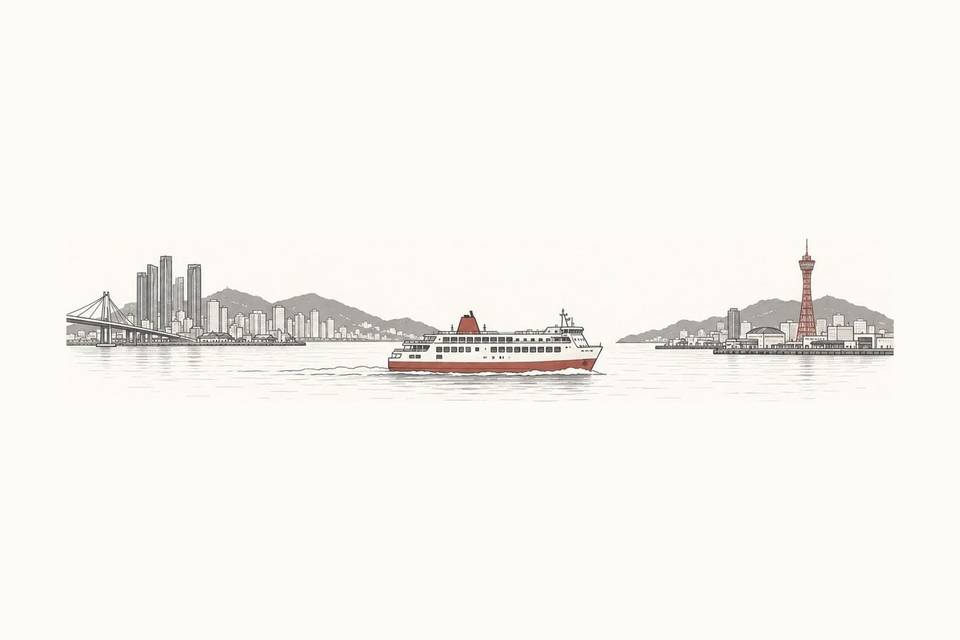
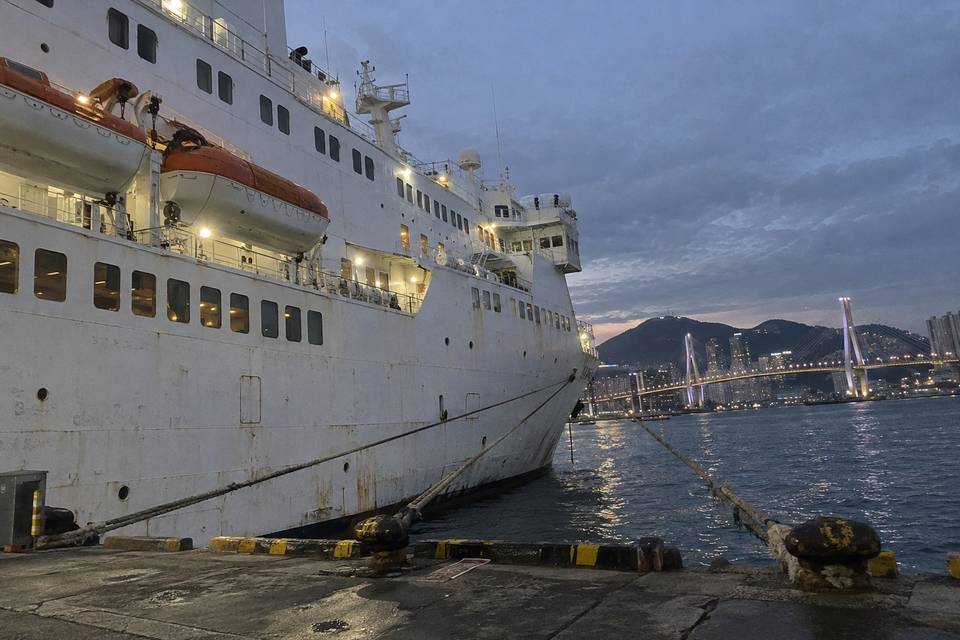
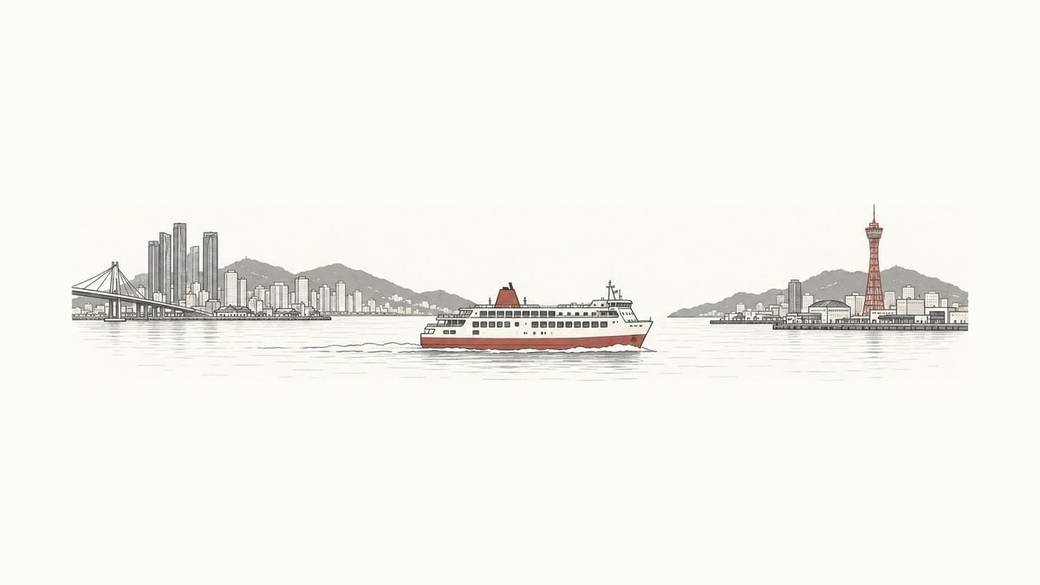
Yes, but it’s a two-day journey with a night on a ship, not a shortcut. The route is KTX from Seoul to Busan, Camellia Line’s New Camellia from Busan to Hakata in Fukuoka, and then the shinkansen to Tokyo.
- Seoul Station: then KTX, ₩54,400 to Busan Port
- Busan Port: then New Camellia ferry, ₩150,000 + taxes to Hakata (Fukuoka)
- Hakata (Fukuoka): then Nozomi shinkansen, ¥23,610 to Tokyo
- Tokyo
- KTX Seoul–Busan: ₩54,400 in economy since the 1 Sep 2026 fare cut. The international ferry terminal is behind Busan Station, within walking distance.
- Ferry: leaves Busan at 22:30 and lets passengers off in Hakata from 07:30. The published adult fare is ₩150,000 one way plus about ₩21,000 in taxes for October–December 2026.
- Shinkansen: Nozomi Hakata–Tokyo costs ¥23,610 reserved in the regular season on smartEX. The national Japan Rail Pass rose to ¥53,000 for 7 days from 1 October 2026, per JNTO, so it pays off only if you also ride a lot inside Japan.
If you’re starting from Busan, there are also direct flights: Korean Air flies Gimhae–Narita twice a day, Busan Ilbo reported, and Trinity Airways starts charter flights from Busan to Haneda in December. Our Fukuoka–Busan ferry guide has the full timetable, baggage rules and booking steps.
Which one should you choose?
- First-timers on a short trip: Gimpo–Haneda. You’ll spend less time on airport trains at both ends, which matters most on a five- to eight-day trip split between two cities.
- Budget travellers: Incheon–Narita on a low-cost carrier, booked early, with your bag fee included in the comparison. Then take the Skyliner or the ¥1,500 bus.
- Big luggage: a full-service fare with bags included. Avoid the overland route, which means hauling bags through Busan Station, the ferry terminal and Hakata.
- Solo travellers with time: the overland route turns the transfer into two extra stops, Busan and Fukuoka. See Seoul vs Tokyo for how to split the days.
When this advice is wrong: if a sale fare makes Gimpo–Haneda cheaper than Incheon–Narita on your date, take it; there’s no other reason to choose Narita over Haneda for central Tokyo.
What can go wrong?
Common mistakes
Avoid these
- Comparing a low-cost fare without the bag fee against a full-service fare with bags
- Leaving the Korean tax refund until after security, where the slip can’t be claimed
- Packing power banks in checked luggage, which isn’t allowed on flights from Korea
- Assuming the ferry is a quick crossing: it’s an overnight sailing and runs from Busan only
- Buying a 7-day Japan Rail Pass just for Hakata–Tokyo, when a single ticket costs less than half
For a fuller picture of combining the two countries, start with Seoul vs Tokyo and the rest of the Korea ↔ Japan section. If you’ll fly into Korea through Incheon first, our Incheon Airport to Seoul guide covers the AREX and buses in the other direction.
Questions people ask
- How long is the flight from Seoul to Tokyo?
- About 2 to 2.5 hours, whether you fly Gimpo–Haneda or Incheon–Narita. Door to door it's closer to 4 or 5 hours once you add the trip to the airport, check-in, security and the train into Tokyo.
- Is Gimpo–Haneda worth the higher fare?
- Often, for a short trip. Both airports sit inside their cities, so you save about an hour of transfers on the Tokyo side alone. Korean Air's mid-December one-way quote was ₩466,000 against ₩310,000 for Incheon–Narita, so compare that gap with the value of your time.
- Which is closer to central Tokyo, Haneda or Narita?
- Haneda. Haneda Airport says Tokyo Station is about 30 minutes away and Shinjuku about 50. From Narita, the Skyliner reaches Ueno in 41 minutes, but the Narita Express takes about 60 minutes to Tokyo Station and 90 to Shinjuku.
- Can you take a ferry from Korea to Japan?
- Yes, from Busan only. Camellia Line's New Camellia leaves Busan at 22:30 and arrives at Hakata in Fukuoka at 07:30. From Fukuoka, Tokyo is a long shinkansen ride or a domestic flight, so this works best if you plan stops on the way.
- Do I pay Japan's departure tax when flying from Seoul to Tokyo?
- No. The ¥3,000 international tourist tax applies when you leave Japan, from 1 July 2026. It's added to your onward ticket out of Japan, so you won't pay it at the airport.
Next in your trip
- Seoul vs Tokyo — Decide how many days each city gets
- Fukuoka–Busan ferry — Timetable and fares for the sea route
- Incheon Airport to Seoul — AREX and buses for the same airport in reverse
Sources
- 부산일보 – '승승장구' 일본 노선… 부산~하네다 정기편도 뜰까 (Korean Air fares, Busan–Tokyo flights, 10 Nov 2026) (Korean)
- 나리타 국제공항 – Peach항공 나리타-인천 노선 신규 개설 (daily from 20 Sep 2026) (Korean)
- 고려훼리 – 여객 운임 개정 안내 (ferry fares from 1 Oct 2026) (Korean)
- 고려훼리 – 2026년 10~12월 유류할증료 및 제반 세금 안내 (Korean)
- AeroRoutes – Tokyo Narita – Seoul Incheon 20SEP26 flight schedule
- AeroRoutes – Korean Air – Asiana Airlines NW26 international service changes
- Haneda Airport – Train & Monorail (time to major stations)
- Go Tokyo – Haneda Airport access
- Go Tokyo – Narita Airport access
- Keisei – Skyliner tickets
- Tokyo Metropolitan Government – Tokyo Subway Ticket prices from 14 Mar 2026
- Japan Tourism Agency – For travelers departing Japan (international tourist tax ¥3,000)
- smartEX – Reserved seat prices (Nozomi, Tokyo–Hakata)
- smartEX – Hayatoku 7 prices from 27 Feb 2026
- JNTO – Japan Rail Pass price increase from 1 Oct 2026
- MOFA Japan – Exemption of visa (short-term stay)
- Frankfurter (ECB reference rates), 10 Nov 2026
Updates
- Published with winter 2026–27 flight counts, December fare quotes, Tokyo airport transfer times and the overland ferry route.
About Korea Field Notes
An English guide to the practical side of visiting South Korea. Guides are researched from Korean-language official sources (Korail, T-money, Seoul Metro, the Korea Tourism Organization) and re-checked when rules or prices change. Each guide shows when its facts were last checked and lists its sources. About the site · How we research and update guides · Found something out of date? Tell us.