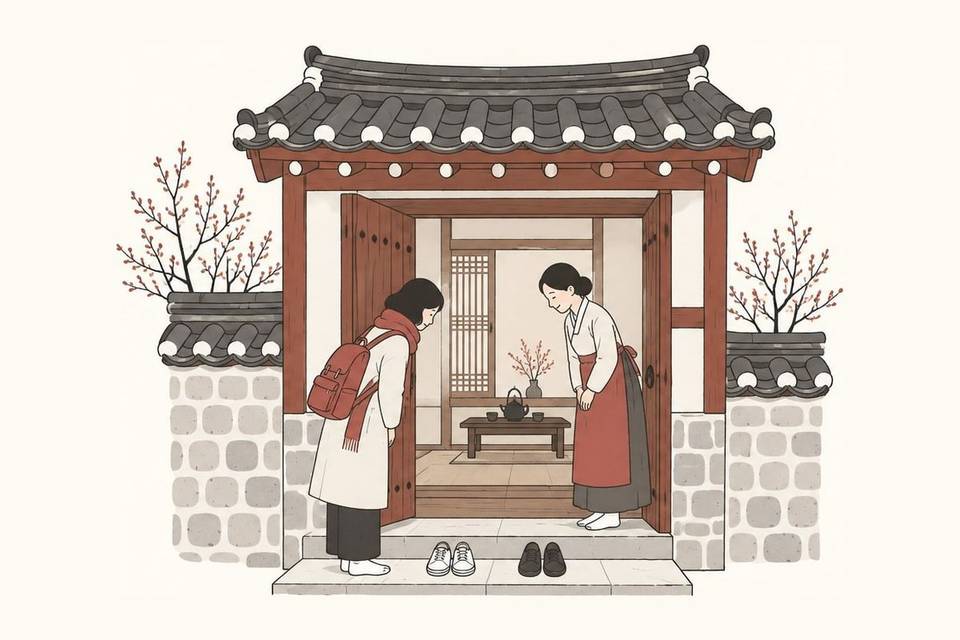
How to Drink Soju in Korea: Etiquette, Prices and Rules
Age rule checked against the government Bokjiro notice (8 Jan 2026); alcohol-free zone fines against the National Health Promotion Act Art. 34 and Jongno-gu reporting; taxi fares against Seoul's transport site (14 Oct 2026); ABV against June 2026 Hite Jinro reporting, all on 3 Nov 2026.
Receive soju with two hands, turn your head away from elders and refill other people's glasses, not your own. In 2026 only people born in 2007 or earlier may buy alcohol, restaurants charge about ₩4,000–6,000+ a bottle, and Seoul taxis add 20–40% from 22:00 (checked 3 Nov 2026).
Best forFirst-timersSoloBudget
Your situation → do this
| If you… | Do this |
|---|---|
| You're at dinner with Korean friends, a guide or colleagues | Follow the table rules: two hands, head turned, refill others; leave your glass full to stop |
| You're 19 or 20 and from the US, or 18 from the UK or Australia | Check your birth year: in 2026 born 2007 or earlier can buy; born 2008 cannot, birthday or not |
| You don't drink, for religion or health | Say so at the start and keep a soft drink in your glass for toasts; pressure to drink is fading |
| You want to drink outdoors | It's not banned nationwide, but designated zones such as Tapgol Park fine you ₩100,000 |
| The night runs past the last train | Take a taxi and expect the 20–40% night surcharge; never drive, the limit is 0.03% |
Key takeaways
- In 2026 the buying age goes by birth year: born 2007 or earlier can buy alcohol, born 2008 or later cannot.
- Chamisul Fresh dropped from 16% to 15.7% ABV in June 2026; Chum Churum is 16%, Saero 15.7%.
- Restaurants charge roughly ₩4,000–6,000 or more a bottle of soju, depending on the area (Segye, Aug 2026).
- Drinking in a designated alcohol-free zone costs up to ₩100,000; Tapgol Park in Seoul has fined since 1 Apr 2026.
- Seoul taxis add 20% from 22:00 and 40% from 23:00 to 02:00; the base fare rises from ₩4,800 to ₩6,700.
| Who can buy alcohol (2026) | People born in 2007 or earlier; birth year counts, not birthdaySource: Bokjiro / Ministry notice, 8 Jan 2026 |
|---|---|
| Chamisul Fresh strength | 15.7% ABV (was 16%), on sale from mid-June 2026Source: BizWatch and SBS Biz, 2 Jun 2026 |
| Soju price at restaurants | About ₩4,000–5,000 at some, ₩6,000+ at others (not an official average)Source: Segye Ilbo, 1 Aug 2026 |
| Fine in an alcohol-free zone | Up to ₩100,000; Tapgol Park ₩100,000 from 1 Apr 2026Source: National Health Promotion Act Art. 34; Dailian, 1 Apr 2026 |
| Seoul taxi night surcharge | 20% at 22–23 and 02–04; 40% at 23–02 (base ₩5,800 / ₩6,700)Source: Seoul Metropolitan Government transport site, 14 Oct 2026 |
| Drink-driving limit | Blood alcohol 0.03% (since June 2019)Source: Korean National Police Agency via The Korea Times |
- Time
- About 10 min to learn the table rules
- Cost
- ₩4,000–6,000+ per bottle at restaurants
- What you need
- Passport as ID · Born 2007 or earlier (2026 rule) · A way home after 23:00
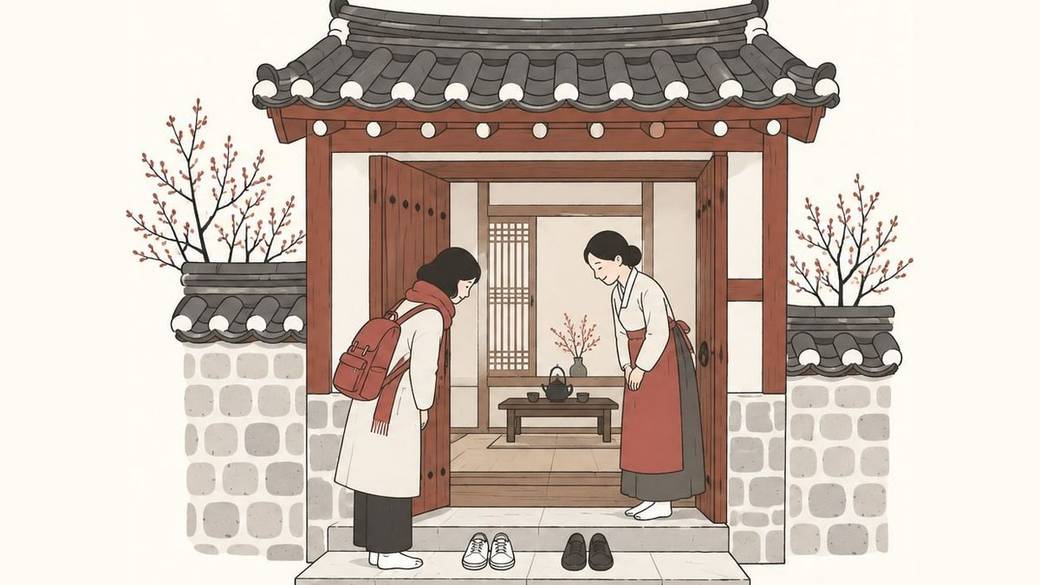
This page covers how to drink at a Korean table, who is allowed to buy, what a night costs, where you can’t drink and how to get home. For other customs, see our Culture & Etiquette section.
What do you need before you start?
Have these ready
- Your passport. Since April 2025 the Youth Protection Act requires customers to show ID when a shop or bar asks. A passport is the ID that proves your birth year.
- A birth year of 2007 or earlier. That’s the 2026 rule; the next section explains why your birthday doesn’t matter.
- A card or some cash for the bill, which normally covers the whole table. Our guide to paying in Korea covers which foreign cards work.
- A plan for getting home if dinner starts after 21:00. Seoul’s last trains leave your station before about 01:00, often well before; the Seoul subway guide explains how to check.
How old do you have to be to drink in Korea?
Korea counts the drinking age by birth year, not birthday. A government notice on the Bokjiro portal (8 January 2026) puts it plainly: in 2026, people born in 2007 or earlier may buy alcohol and tobacco, and people born on or after 1 January 2008 may not, “regardless of whether their birthday has passed”.
That rule surprises visitors in both directions:
Who can buy alcohol in Korea in 2026, by birth year (Bokjiro notice, checked 3 Nov 2026)
| Your situation | Born in | Can you buy in Korea in 2026? |
|---|---|---|
| 19- or 20-year-old from the US (home age 21) | 2006 or 2007 | Yes |
| 18-year-old from the UK, Australia or Singapore (home age 18) | 2008 | No, even after your birthday |
| Turning 19 in December 2026 | 2007 | Yes, from 1 January 2026 |
| Group with one member born 2008 | Mixed | That person can’t be served |
So the cut-off is the same for everyone in a calendar year, and it moves forward by one birth year every 1 January (in 2027 it will be born 2008 or earlier).
The ban falls on the seller, who faces penalties for serving an underage customer, so staff who are unsure will ask. If anyone in your group is close to the line, carry the passport itself.
How do you drink soju at a Korean table, step by step?
Most soju is drunk with food: barbecue, stews, fried chicken or pancakes. The rules below come from the traditional etiquette the Korea Herald described in August 2025; they matter most with older people, hosts or colleagues and relax a lot among friends of the same age. Our Korean BBQ guide covers the ordering and grilling side of the same evening.
- Order a bottle for the table, not a glass. Soju comes in 360 ml green bottles with small shot glasses; beer comes by the bottle or as draft.
- Let someone else pour the first glass. Hold yours up with two hands, or one hand with the other touching your wrist, while an older person pours.
- Pour for others with two hands too. A tip the Herald quotes: cover the neck of the bottle with one hand while pouring.
- Toast with “geonbae” (건배) and keep your glass a little lower than an older person’s when you clink.
- Turn your head slightly away from senior people when you drink, at least for the first glass.
- Refill other people’s empty glasses, not your own. Pouring for yourself, called jajak, is traditionally avoided.
- Stop by leaving your glass full. An empty glass invites a refill; if you can’t finish one an elder poured, touching it to your lips is enough.
The Herald also notes that penalty drinks (beolju) are now widely seen as outdated and that younger Koreans are moving away from forcing drinks on anyone. You won’t offend a Korean table by pacing yourself.
What is in the bottle, and how strong is it?
Green-bottle soju is a diluted spirit at about 16% alcohol, roughly three times the strength of beer, and the small glasses go down fast. Makers have been lowering the strength year by year; the latest change came in June 2026.
Strength of the main soju brands, % ABV (2 Jun 2026 reporting, checked 3 Nov 2026)
| Brand | Korean name | ABV | Note |
|---|---|---|---|
| Chamisul Fresh | 참이슬 후레쉬 | 15.7% | Was 16% from Feb 2024; new bottles from mid-June 2026 |
| Chum Churum | 처음처럼 | 16% | Lotte Chilsung |
| Saero | 새로 | 15.7% | Lotte Chilsung |
| Jinro Is Back | 진로이즈백 | 15.7% | Hite Jinro |
All four sit within half a percentage point of each other, so pick by taste and what the restaurant stocks; older bottles of Chamisul Fresh at 16% may still be on shelves.
Fruit-flavoured soju and makgeolli (cloudy rice wine, often drunk with savoury pancakes) are the common alternatives. Somaek, a glass of beer with a shot of soju in it, is the classic barbecue mix. Strengths of fruit soju and makgeolli vary by product, so read the label rather than assuming they’re mild.
How much does a night out cost?
Restaurants set their own drink prices, and there’s no official survey of them. Segye Ilbo, costing a Seoul barbecue dinner in August 2026, found some restaurants charging ₩4,000–5,000 a bottle and others ₩6,000 or more, depending on the area. The paper used ₩6,000 in its own sums.
Typical costs of a soju night in Seoul, ₩ (Segye Aug 2026 and Seoul taxi tariff, checked 3 Nov 2026)
| Item | Price | Source and note |
|---|---|---|
| Soju at a restaurant | ₩4,000–6,000+ a bottle | Segye Ilbo, 1 Aug 2026; varies by area |
| Taxi, daytime base fare | ₩4,800 for 1.6 km | Seoul medium taxi tariff |
| Taxi base fare, 22–23 and 02–04 | ₩5,800 (+20%) | Seoul medium taxi tariff |
| Taxi base fare, 23–02 | ₩6,700 (+40%) | Seoul medium taxi tariff |
| Leaving the city by taxi | +20%, up to +60% combined at night | Seoul medium taxi tariff |
At US$1 ≈ ₩1,343 (ECB, 2 Nov 2026), a ₩6,000 bottle is about US$4.50, and the late-night base fare about US$5.
Convenience stores and supermarkets sell the same bottles for a fraction of the restaurant price, which is why picnic drinking is common. For what a whole day costs, see our Korea on a budget guide.
Where can you drink, and where can’t you?
Korea has no nationwide ban on drinking in public, but it isn’t allowed everywhere. Under the National Health Promotion Act, local governments can designate alcohol-free zones (금주구역), and Article 34 sets a fine of up to ₩100,000 for drinking in one.
- Tapgol Park, Jongno (Seoul): designated in November 2025, fines of ₩100,000 since 1 April 2026, inside and outside the park within the yellow heritage line. Seoul Shinmun reported that holding an open bottle counts, and so does pouring alcohol into another cup.
- Other zones: cities and districts designate their own; Goyang, for example, covers children’s parks and playgrounds. Check for 금주구역 signs before you open a can, especially in parks.
- Karaoke rooms (noraebang): they may not sell or serve alcohol at all; see our noraebang guide for the difference between a karaoke room and a singing bar.
If you want a busy outdoor drinking street, the tent bars in Jongno 3-ga are the classic choice.
What if you don’t drink alcohol?
You don’t need to drink to join a Korean table. The Korea Herald’s 2025 piece on younger Koreans describes alcohol-free university trips and a generation that either doesn’t drink or drinks by choice, not because someone insisted.
- Say it at the start, simply: “I don’t drink” (술 안 마셔요, sul an masyeoyo). It’s easier than refusing every refill.
- Keep a soft drink or water in your glass so you can still toast, and pour soju for others if you’re comfortable handling the bottle.
- Travellers from Malaysia, Indonesia, India or Singapore keeping halal or vegetarian should also check the food: barbecue and stews are mostly pork-based. Our halal food guide and vegetarian guide list safer restaurants.
How do you get home after drinking?
Plan the ride before the second bottle. The last subway leaves most stations between midnight and 01:00, and taxis get more expensive from 22:00.
Seoul’s taxi tariff (updated on the city’s site on 14 October 2026) adds 20% from 22:00 to 23:00 and 02:00 to 04:00, and 40% from 23:00 to 02:00. Leaving the city limits adds another 20%. Our taxi apps guide explains how to call a cab when the street is empty and which apps take foreign cards.
Where can you taste traditional Korean liquor?
The Sool Gallery (전통주갤러리), set up by the Ministry of Agriculture, Food and Rural Affairs and the state agency aT, is the official showroom for Korean traditional liquor. It’s at 18 Bukchon-ro, Jongno-gu (ground floor of the Korean Traditional Food Culture Center), a short walk from Anguk Station.
- Hours: 10:00–19:00; closed Mondays, 1 January, and Lunar New Year and Chuseok days.
- Tastings: a new “liquor of the month” theme each month, with programmes in English, Japanese and Chinese; book through the Naver booking link on thesool.com.
- Price: the official pages don’t list a 2026 tasting fee, so check it when you book.
It’s a calmer way to try makgeolli and distilled soju than a bar, and a good stop between the palaces and Bukchon.
What can go wrong?
Common mistakes
Avoid these
- Pouring your own glass in front of older Koreans; refill theirs and they’ll refill yours.
- Emptying your glass when you want to stop; leave it full.
- Assuming your home-country drinking age applies; in 2026 the line is born 2007.
- Treating soju like beer; at about 16% the small glasses add up quickly.
- Packing soju in hand luggage to fly home; liquids over 100 ml go in checked bags, and allowances differ by country (see our Korean souvenirs guide).
For where to spend the rest of the night, compare Hongdae and Itaewon.
Questions people ask
- What is the drinking age in Korea?
- Korea counts by birth year, not birthday. In 2026 anyone born in 2007 or earlier may buy alcohol, and anyone born in 2008 or later may not, even after their birthday. Shops and bars can ask for ID, and since April 2025 customers must cooperate, so carry your passport.
- Is it legal to drink in public in Korea?
- Generally yes, but not everywhere. Local governments can designate alcohol-free zones, and drinking in one costs up to ₩100,000. Tapgol Park in Jongno, Seoul, has fined drinkers since 1 April 2026, including people holding an open bottle. Look for 금주구역 signs.
- How strong is soju?
- Mainstream green-bottle soju is about 16%. Chamisul Fresh went from 16% to 15.7% in June 2026, and Chum Churum is 16%, Saero and Jinro Is Back 15.7%. That's roughly three times the strength of beer, served in small glasses that get refilled often.
- Can I pour my own drink in Korea?
- With friends your own age, nobody minds much. With older Koreans, hosts or colleagues, pouring your own glass (jajak) is traditionally avoided: refill other people's glasses and let them refill yours. Leave your glass full when you want to stop.
- How much is soju at a restaurant in Korea?
- Usually ₩4,000 to ₩6,000 or more a bottle, depending on the area and the restaurant, according to Segye Ilbo in August 2026. There is no official average. Supermarkets and convenience stores charge much less.
Next in your trip
- Korean BBQ guide — Where most soju is drunk: ordering, grilling and the bill
- Noraebang (karaoke) guide — The usual second round, and why it sells no alcohol
- Korea taxi apps — How to get a ride home after the last train
Sources
- 복지로 – 2026년 '청소년 보호법' 상 청소년 연령은? (8 Jan 2026) (Korean)
- 비즈워치 – 하이트진로, 참이슬 후레쉬 도수 16도→15.7도 (2 Jun 2026) (Korean)
- SBS Biz – 하이트진로, '참이슬 후레쉬' 도수 낮춘다…16도→15.7도 (2 Jun 2026) (Korean)
- 경향신문 – 참이슬 후레쉬 15.7도, 처음처럼·새로 도수 (2 Jun 2026) (Korean)
- 세계일보 – 서울 외식 물가, 삼겹살 2인분과 소주 (1 Aug 2026) (Korean)
- 데일리안 – '금주구역 선언' 탑골공원, 과태료 부과 시작 (1 Apr 2026) (Korean)
- 서울신문 – 술병만 들고 있어도 10만원…탑골공원 단속 (1 Dec 2025) (Korean)
- 국민건강증진법 제34조 (과태료) – 금주구역 음주 10만원 이하 (Korean)
- 서울특별시 교통분야 누리집 – 택시요금 (수정 14 Oct 2026) (Korean)
- The Sool Gallery (MAFRA and aT) – visit and booking
- The Korea Herald – Politeness without pressure: How Korean Gen Zers rewrite drinking norms (16 Aug 2025)
- The Korea Times – Tougher drunk-driving law set to come into force (23 Apr 2019)
Updates
- Published with the 2026 birth-year age rule, the June 2026 Chamisul Fresh ABV change, Tapgol Park fines from 1 Apr 2026 and Seoul taxi night surcharges.
About Korea Field Notes
An English guide to the practical side of visiting South Korea. Guides are researched from Korean-language official sources (Korail, T-money, Seoul Metro, the Korea Tourism Organization) and re-checked when rules or prices change. Each guide shows when its facts were last checked and lists its sources. About the site · How we research and update guides · Found something out of date? Tell us.