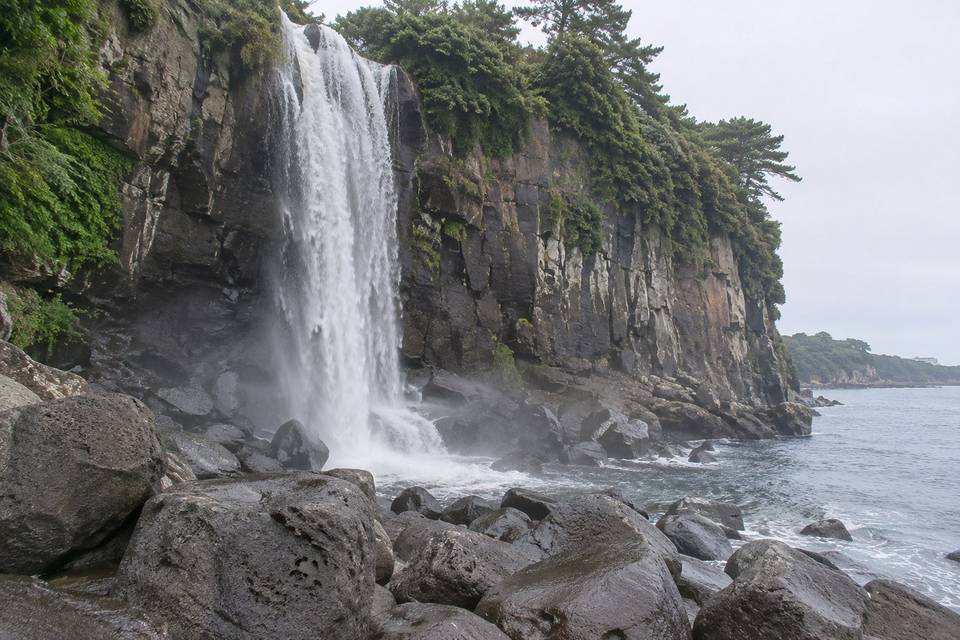
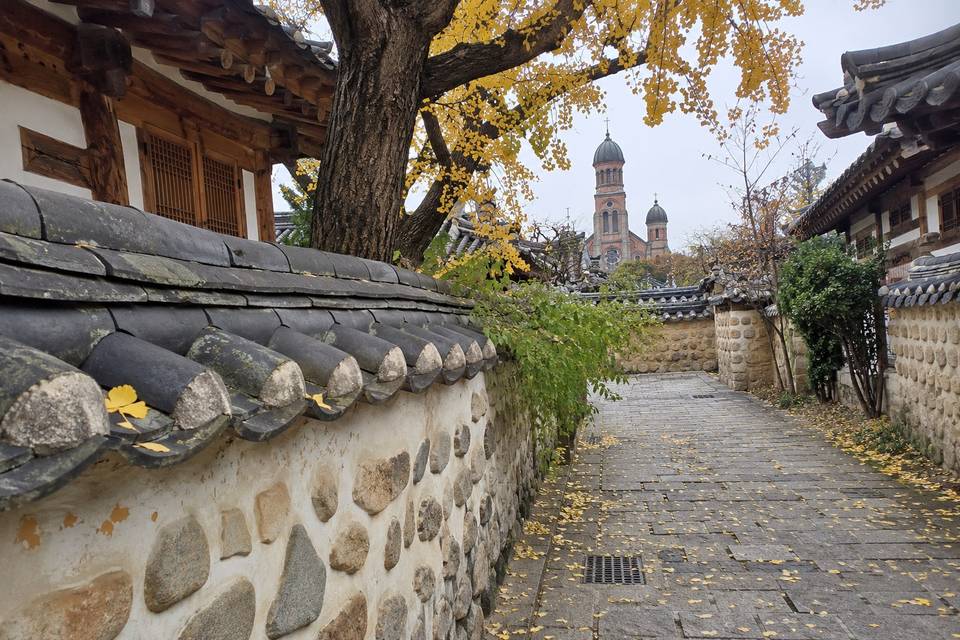
How to Slow Travel in Korea: 3 Routes, Fewer Hotel Moves
Ferry times, trail figures, rail changes and fares checked on 4 Nov 2026 against Wando County, Cittaslow International, Jeju Province open data, the Korean transport ministry and Korean press from 2025 and 2026.
To slow travel in Korea, use two bases a week and stay at least three nights in each. Choose the east coast by rail, Cheongsando island via Gwangju, or Jeju's Olle trail; Cheongsando's last winter boat leaves Wando at 17:00 (checked 4 November 2026).
Best forFirst-timersSolo
Your situation → do this
| If you… | Do this |
|---|---|
| You want the simplest transport and no flights | Take the east coast route: Gangneung, then the Donghae Line to Busan |
| You want a car-free island and don't mind fixed boat times | Go to Gwangju and Damyang, then the Wando ferry to Cheongsando |
| Walking is the point of the trip | Split a week between Seogwipo and Seongsan on Jeju and walk Olle courses |
| You only have a week in Korea, including Seoul | Keep Seoul, add one slow base of three nights, and skip the rest |
Key takeaways
- Use two bases in 7 days and three in 14, with at least three nights in each.
- Cittaslow International listed 15 South Korean places on 4 November 2026; Cheongsando and Damyang's Changpyeong are on it, Jeonju isn't.
- Six ferries a day link Wando and Cheongsando in about 50 minutes; winter's last boat from Wando leaves at 17:00.
- KTX-Eum covers Gangneung to Bujeon in about 3 h 54 min on average, against 5 h 04 min by ITX-Maeum.
- Jeju's Olle network has 27 courses and 437 km; the call centre's safety check-ins for solo walkers stop outside staffed hours.
| Rule of thumb | Two bases in 7 days, three in 14, at least three nights eachSource: Korea Field Notes planning advice |
|---|---|
| Wando ↔ Cheongsando ferry | About 50 min, 6 sailings each way; last boat from Wando 17:00, from 16 Oct to 16 MarSource: Wando County ferry timetable, read 4 Nov 2026 |
| Cittaslow places in South Korea | 15 listedSource: Cittaslow International, read 4 Nov 2026 |
| Gangneung ↔ Bujeon by rail | KTX-Eum about 3 h 54 min on average, 3 trains each way a day; ITX-Maeum about 5 h 04 minSource: Ministry of Land, Infrastructure and Transport, 15 Dec 2025 |
| Jeju Olle network | 27 courses, 437 kmSource: Jeju Province open data, 31 Jul 2026 |
- Time
- 7 to 14 days, 3+ nights per base
- Cost
- From ₩26,000 for the first rail leg; rooms not included
- What you need
- Two booked bases · Korail account for trains · Passport for ferries · Naver Map or Kakao Map
These three routes trade daily check-ins for fewer towns and longer stays, and they all work without a car. For more places away from the usual Seoul, Busan and Jeju circuit, see the off-the-beaten-path section.
How many nights should you stay in each place?
Stay at least three nights per base. Two nights give you only one full day, since arrival and departure eat the rest. Our rule is simple:
- 7 days in Korea: two bases. If you also want Seoul, make it one of the two.
- 10 days: two or three bases.
- 14 days: three bases at most, with four or more nights in at least one.
That is slower than our 7-day itinerary and 10-day itinerary, which aim to cover the main cities. Use those if this is your only trip and seeing Seoul, Busan and Gyeongju matters more than settling in. Slow travel suits you better if a packed schedule is what you’re trying to avoid.
Which of the 3 slow routes fits your trip?
Three slow routes compared, transport details checked 4 November 2026
| 1. East coast | 2. Jeolla and Cheongsando | 3. Jeju on the Olle | |
|---|---|---|---|
| Bases | Gangneung, Busan | Gwangju or Damyang, Cheongsando | Seogwipo, Seongsan |
| Nights | 3–4 each | 3, then 2–3 | About 4, then 3 |
| Main link | Donghae Line train, 3 h 54 to 5 h 04 | Bus to Wando, then 50 min ferry | Island buses, ₩1,150–₩3,000 |
| Weakest point | Few direct trains, can sell out | Boats stop early; weather can cancel them | Long bus rides between coasts |
| Best for | Sea and city, easy logistics | Quiet villages, car-free walking | Long-distance walkers |
Pick route 1 if you want the lowest risk, route 2 if you want the quietest stay, and route 3 if most of your days will be spent on foot.
How do you plan a slow trip step by step?
- Count your nights and set the number of bases. Use two bases for a week and three for a fortnight, and don’t add a third just because a town is on the way.
- Choose a route by its weakest link. Check the table above and decide which you can live with: scarce trains, early boats or long buses.
- Book the scarce leg first. That means the Donghae Line train on route 1 and the Wando boat day on route 2. Our KTX booking guide covers Korail’s site and app.
- Book rooms close to where transport starts. On Jeju, that means Seogwipo or Jeju City. On Cheongsando, book before you travel to the port.
- Plan one outing a day, one bus ride from the base. Leave at least one day per base with nothing booked, so bad weather can move your plans instead of cancelling them.
- Check the last ride home before you set out. Look up the last bus or boat each morning in Naver Map or Kakao Map, and keep the Korean name of your base to show a taxi driver.
Route 1: How do you slow down on the east coast?
Gangneung (3–4 nights) → Busan (3–4 nights). This is the easiest route to plan, because the rail line does the work and both bases have plenty of rooms and restaurants.
KTX-Eum from Cheongnyangni in Seoul reaches Gangneung from about 1 h 31 min, for ₩26,000–₩27,600 on our October 2026 check. Coffee streets, beaches and the coast are all close enough for unhurried days, and you can walk parts of the Haeparang trail, a 750 km, 50-course path from Busan’s Oryukdo to Goseong.
The link between bases is the Donghae Line, from Gangneung to Bujeon in Busan. Korea’s transport ministry added KTX-Eum on this stretch from 30 December 2025, with three trains each way a day, averaging 3 h 54 min against 5 h 04 min by ITX-Maeum. Korean press reported tickets were hard to get in December 2025, so buy early and treat this as the first booking of the trip.
Once in Busan, use our where to stay in Busan guide to choose a neighbourhood near your outings. You can see Gyeongju as a day trip from Busan’s Sinhaeundae Station, about 52 minutes by KTX-Eum for ₩10,900, or book a night there if you’d rather not rush it.
Route 2: How do you reach Cheongsando without a car?
Gwangju or Damyang (3 nights) → Wando → Cheongsando (2–3 nights). This is the quietest route and the most fragile. Your plan has to follow the boat timetable.
Start with the KTX from Yongsan to Gwangju Songjeong, from 1 h 36 min for ₩42,000. From there, Damyang’s Juknokwon bamboo forest (₩3,000) is reachable by city bus or taxi. Changpyeong, Damyang’s Cittaslow area, is known for stone walls and hanok around Samjinae village. We couldn’t confirm a public bus to it, so plan on a taxi or ask locally.
To reach Wando, take an intercity bus from Gwangju. Wando County’s bus page, dated October 2024, lists about 16 direct services a day. Its 06:30 first and 19:10 last times appear to be departures from Wando, not Gwangju, and it shows no journey times, so check at the Gwangju terminal or call Wando terminal on 061-552-1500. Leave Gwangju in the morning, so you have a later boat in reserve.
On Cheongsando, the Slowgil network has 11 courses and 17 paths totalling 42.195 km, opened in 2010. Wando County says it was named the first World Slow Road by Cittaslow in 2011. Walk one or two courses a day and you won’t need to rush.
We couldn’t confirm the fare on an official page. One blog citing the Cheongsan Nonghyup fare table gave ₩8,700 from Wando and ₩8,000 from Cheongsan in August 2026, so treat those figures as a guide. A 2021 Korean press report described ID checks at ticketing and boarding, and we found no official rule for foreigners, so carry your passport.
Need a simpler south coast? Swap Cheongsando for a Suncheon or Yeosu base. KTX runs from Yongsan to Suncheon in 2 h 33 min (₩42,300) and to Yeosu-EXPO in 2 h 54 min (₩45,400), with no boat to miss.
Route 3: How do you walk Jeju without moving every night?
Seogwipo (about 4 nights) → Seongsan (about 3 nights). The Jeju Olle network has 27 courses and 437 km, according to Jeju Province data from July 2026. Trying to sleep along the trail means a new room almost every night, so use bases and ride buses to the start and from the finish.
Seogwipo is a good first base because many buses start there: limousine 600 from the airport takes about 100 minutes for ₩5,500. Move on to Seongsan for Course 1, which runs 15.1 km one way from Siheung to Gwangchigi Beach. The port is about 86 minutes from the airport on express 111 (₩3,000). Regular buses cost ₩1,150 and express buses ₩2,000–₩3,000, so a day of rides stays cheap. Our car-free Jeju guide has the routes.
If you walk alone, register with the Jeju Olle call centre first. Give them your route before setting off and they’ll ring hourly to check on you during staffed hours: 08:00–18:30 on weekdays and 09:00–18:00 on weekends and holidays, closed on Labour Day. Those hours don’t cover a late finish, and some sections have poor signal or vehicle access, so aim to be off the trail before the centre closes.
The Jeju Olle Walking Festival is the one time the trail gets crowded. The 2026 edition ran on 5–7 November on courses 19 and 20, with about 3,000 people pre-registered; the 2027 dates aren’t out yet. If you come for quiet in early November, check the festival dates and pick other courses.
Which Cittaslow towns can you swap in?
Cittaslow is an international network of towns that apply for the label. Its site listed 15 South Korean places on 4 November 2026. These four have the best transport information we could verify, or sit closest to the routes above.
Cittaslow places near these routes, list checked 4 November 2026
| Place | Cittaslow area | Getting there | What we could confirm |
|---|---|---|---|
| Cheongsando | Wando County | 50 min ferry from Wando | Timetable, Slowgil length |
| Changpyeong | Damyang County | Near Gwangju; bus unconfirmed | Stone walls and hanok; second-Saturday market in a 2021 report |
| Sille Village | Chuncheon | Gimyujeong Station, on the Gyeongchun Line | Literary village ₩2,000, closed Mondays |
| Akyang | Hadong County | Bus unconfirmed | Choe Champan House open 09:00–18:00 year-round |
Sille is the easy one, close enough for a day from Seoul. The others on the list include Jeung-do in Shinan, Yuchi-myeon in Jangheung and Hansan-myeon in Seocheon, but we couldn’t verify enough practical detail to recommend them yet. Jeonju isn’t on the current list, though older press calls it a slow city; our Jeonju guide still works if you want hanok.
How much does moving between bases cost?
One-way transport legs per adult, checked 4 November 2026 unless dated
| Leg | Time | Fare | Status |
|---|---|---|---|
| Cheongnyangni → Gangneung, KTX-Eum | From 1 h 31 min | ₩26,000–₩27,600 | Checked October 2026 |
| Gangneung → Bujeon, ITX-Maeum | About 5 h 04 min | ₩34,900 | January 2025 opening fare, recheck |
| Gangneung → Bujeon, KTX-Eum | About 3 h 54 min | Not confirmed | Check at Korail |
| Busan → Seoul, KTX | Varies by train | ₩54,400 | Fare after 1 Sep 2026 cut |
| Yongsan → Gwangju Songjeong, KTX | From 1 h 36 min | ₩42,000 | Fare after 1 Sep 2026 cut |
| Wando → Cheongsan, ferry | About 50 min | About ₩8,700 | Blog figure, unconfirmed |
| Jeju Airport → Seogwipo, limousine 600 | About 100 min | ₩5,500 | Checked October 2026 |
| Jeju Airport → Seongsan port, express 111 | About 86 min | ₩3,000 | Checked October 2026 |
Route 1 from Seoul and back comes to about ₩115,000–₩117,000 in rail fares, using the older ITX-Maeum figure, so expect that total to move a little. Moving less doesn’t automatically cut your room bill, but it does reduce transfers and luggage hassle. Use our Korea travel budget for the rest of the trip.
What can go wrong, and how do you avoid it?
- Trains sell out. Three KTX-Eum trains each way isn’t many. If your Donghae train is full, look at the bus comparison or break the journey.
- Luggage slows everything. Ferries and rural buses are harder with big suitcases. Travel with one bag you can lift, and read our luggage storage guide if you can leave the rest in Seoul.
- Food gets harder for some diets. Halal options thin out quickly outside Seoul, which matters for Malaysian, Singaporean and Indian Muslim travellers. Vegetarians should check ahead too, and we didn’t verify island restaurant hours.
- Long stays raise visa questions. Rules differ by passport, so check your entry rule and allowed stay in our K-ETA guide before you add nights.
- Solo walking needs a fallback. Share your plan and start early. Our solo guide covers the basics.
What mistakes make slow travel feel rushed?
- Adding a third base to a one-week trip. It takes away a full day, and the bases stop feeling like bases.
- Arriving at Wando for the last boat. One late bus and you sleep on the mainland, so aim for an earlier sailing.
- Treating Jeju as one place. Seogwipo to Seongsan is a real bus trip, so walk near your base and move only once.
- Booking the scenic village first. Check transport before the room. A beautiful village with no evening taxi can cost you the trip’s easiest days.
Questions people ask
- Is Korea good for slow travel without a car?
- Yes, if you pick bases by transport first. All three routes here work by train, bus and ferry. Buses thin out in small towns, so a village day often ends with a taxi back. Choose a base where buses start, not the prettiest village.
- Are there official slow cities in Korea?
- Yes. Cittaslow International listed 15 South Korean places on 4 November 2026, including Cheongsando, Changpyeong in Damyang, and Sille Village in Chuncheon. Jeonju isn't on that list, though older articles call its hanok village a slow city.
- How long should I stay on Cheongsando?
- Two or three nights suits most walkers. The Slowgil network has 11 courses totalling 42.195 km, and the boat takes about 50 minutes each way. A day trip works on the timetable, but it leaves little walking time in winter, when the last boat from Cheongsan leaves at 17:00.
- Can I walk the Jeju Olle trail alone?
- Yes, with some planning. Tell the Jeju Olle call centre your route before you start, because its hourly safety calls run only in staffed hours: 08:00–18:30 on weekdays and 09:00–18:00 on weekends and holidays. Some stretches have weak phone signal and poor vehicle access.
- What is the best season for these routes?
- Spring and autumn are the safest choices for walking. Cheongsando's walking festival is held in April, though we couldn't confirm 2027 dates, and its summer boats run later. Winter still works, but you lose an hour of ferry time and should plan around weather cancellations.
Next in your trip
- Book KTX tickets — the rail legs on routes 1 and 2 sell through Korail
- Where to stay in Jeju — compare Seogwipo, Seongsan and Jeju City before you pick two bases
- Underrated places in Korea — more towns to swap in if these routes don't fit
Sources
- Wando County: Cheongsando ferry timetable (완도-청산 여객선 시간표) (Korean)
- Wando County: Cheongsando and the Slowgil (청산도 슬로길) (Korean)
- Wando County: intercity bus information (완도 시외버스 안내, dated 8 Oct 2024) (Korean)
- Cittaslow International: Republic of Korea network
- Ministry of Land, Infrastructure and Transport: KTX-Eum added between Bujeon and Gangneung (15 Dec 2025) (Korean)
- MBC Gangwon: ITX-Maeum opening fares on the Donghae Line (2 Jan 2025) (Korean)
- Kyunghyang Shinmun: Donghae Line tickets hard to get (8 Dec 2025) (Korean)
- Kyunghyang Shinmun: KTX fare cut from 1 September 2026 (6 Aug 2026) (Korean)
- Jeju Province: Jeju Olle course data (올레코스현황, 31 Jul 2026) (Korean)
- Financial News: Jeju Olle call centre and solo-walker safety (7 Sep 2026) (Korean)
- Jeju Today: 2026 Jeju Olle Walking Festival (Korean)
- Korea Tourism Organization, Durunubi: Korea Dulle-gil trails (Korean)
Updates
- Jeju Olle Walking Festival (5–7 Nov 2026) moved to past tense; 2027 dates not announced.
- Published with three routes, the Cheongsando ferry timetable, the current Cittaslow list and leg-by-leg transport costs.
About Korea Field Notes
An English guide to the practical side of visiting South Korea. Guides are researched from Korean-language official sources (Korail, T-money, Seoul Metro, the Korea Tourism Organization) and re-checked when rules or prices change. Each guide shows when its facts were last checked and lists its sources. About the site · How we research and update guides · Found something out of date? Tell us.