Is Jeju Worth Visiting? An Honest Answer for First-Timers
This guide contains affiliate links. If you book through them we may earn a commission at no extra cost to you. How this works.
Yes, if you can give it at least three nights and you came for volcanic landscapes, coast and hiking rather than cities. On a first trip of a week or less, most visitors get more from Seoul plus Busan: Jeju costs a flight and half a day each way, and its sights are spread around the island (facts checked 5 Oct 2026).
The verdict Depends
Worth it if you'll spend three or more nights and want nature over cities; on a first Korea trip of a week or less, put Busan first.
Worth it if
- Second trips to Korea, or first trips of 10 days or more
- Hikers, walkers and anyone who wants volcanic coast, beaches and Hallasan
- Travellers who will drive, or who are happy to join day tours
Skip it if
- A 5–7 day first trip where Seoul's food, shopping and palaces are the point
- Day trips or one-night stops: the flight and airport time eat most of it
- Short winter trips if you need sunshine, or late-summer trips with no slack for typhoons
When this stops being true: If your first Korea trip runs to 10 days or more, Jeju moves from optional to worth three nights. (checked 5 Oct 2026)
Key takeaways
- Worth it with 3+ nights and an interest in nature; skip it on a first trip of 5–7 days built around Seoul.
- Seoul (Gimpo)–Jeju was the world's busiest air route in 2025 with 13.3 million passengers, but June 2026 flights were down 343 on 2025.
- On the island, buses cost ₩1,150 by card; the airport limousine 600 is ₩4,500–5,500. A car saves hours on the east and west coasts.
- Manjanggul lava tube reopened on 30 May 2026 after 2 years 5 months (₩4,000 adults).
- Jeju is mild but grey in winter: 70 hours of January sunshine against about 170 in Seoul.
| Jeju visitors, 2025 | 13.85 million, of which 2.24 million foreign (16%)Source: Jeju Tourism Association via Herald Kyungje |
|---|---|
| Seoul (Gimpo)–Jeju flights | 13.3 million passengers in 2025, world's busiest route; June 2026 Jeju→Gimpo flights 3,022 (−343 on 2025)Source: New Daily, 20 Jul 2026 |
| Jeju bus fares (2026, frozen) | ₩1,150 regular by card · express ₩2,000–3,000 · limousine 600 ₩4,500–5,500Source: Jeju bus information (bus.jeju.go.kr) |
| Rental car standard rate | Compact car in the ₩80,000s per day since 16 Sep 2026; discounts capped at 60%Source: Newsseoul, 21 Sep 2026 |
| Manjanggul lava tube | Reopened 30 May 2026 · ₩4,000 adults · 09:00–18:00, last entry 17:10 · closed 1st WednesdaySource: Korea Tourism Organization (ktriptips) |
| Udo island car rule | Most rental cars banned 1 Aug 2026–31 Jul 2029 (exceptions incl. electric cars, Udo hotel guests)Source: Twig24, 30 Jul 2026 |
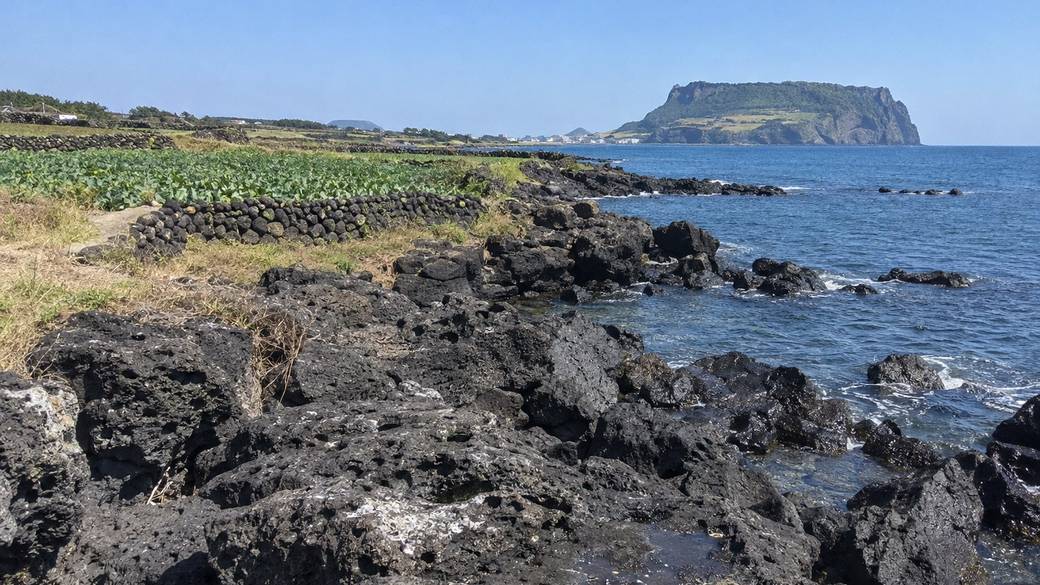
Jeju is worth visiting if you can give it three nights or more and you’re after volcanic landscapes, coast and hiking rather than city life. On a first Korea trip of a week or less, most visitors get more from Seoul plus Busan: Jeju costs a flight, airport time and long transfers across the island.
That is the short answer. The rest of this page shows the trade-offs with numbers checked on 5 October 2026: what the island offers, what it costs in time and money once you’re there, how it compares with Busan as a second stop, and the dates when it’s least rewarding. If you’ve already decided to go, our where to stay in Jeju guide picks up from here, and the Jeju section collects everything else.
What Jeju actually is
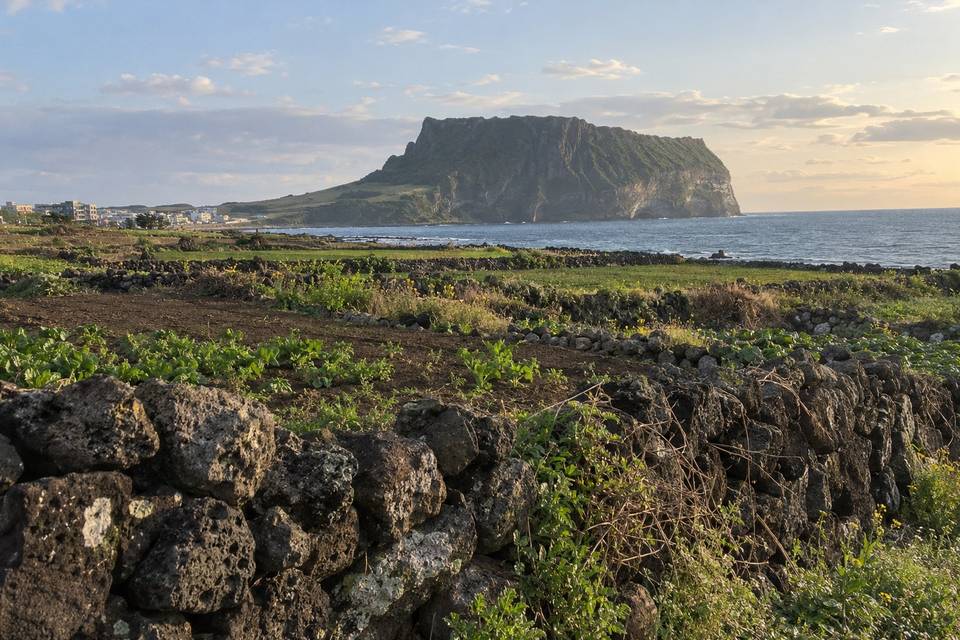
Jeju is a volcanic island off Korea’s south coast, and its strongest selling point is the landscape. UNESCO listed “Jeju Volcanic Island and Lava Tubes” as a World Heritage site in 2007, with three parts: Hallasan and its national park, the Geomunoreum lava tube system, and Seongsan Ilchulbong, the tuff cone that rises from the sea at the island’s eastern tip. Hallasan reaches about 1,950 m, the highest point in South Korea, according to the IUCN’s World Heritage assessment.
It is also Korea’s main domestic holiday island, which shapes the experience more than most guides admit. In 2025 Jeju counted 13.85 million visitors, and only 2.24 million of them (16%) were foreign, according to the Jeju Tourism Association’s year-end figures reported by Herald Kyungje on 1 January 2026. The island is built around Korean families, couples and groups who drive: rental cars, roadside cafés, resort hotels in Jungmun and beach pensions on the west coast.
What that means for you: Jeju rewards people who like being outdoors. If your idea of Korea is late-night food streets, K-pop shopping and palaces, the island has less of that than Seoul or Busan.
Who should go, and who should skip it
Go if:
- You have 10 days or more in Korea, or this is your second trip and you’ve done Seoul.
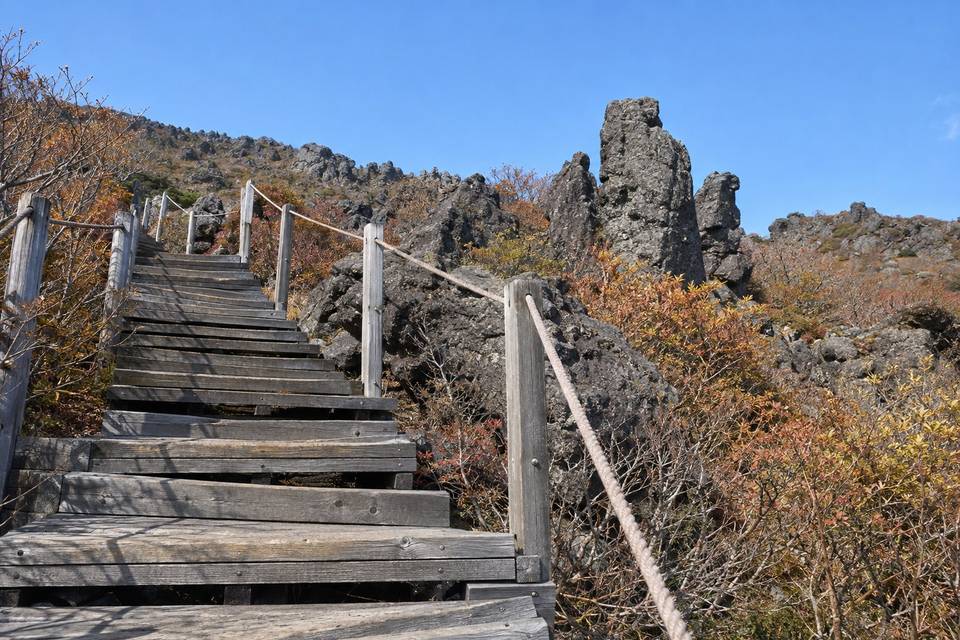
- You want to hike: Hallasan’s summit trails, the coastal Olle walking routes, or the oreum (small volcanic cones) scattered over the island.
- You’re happy to drive, or to join day tours for the far-flung sights.
- You’re travelling in May or October, when the weather is most reliable (see below).
Skip it, or save it for next time, if:
- Your first trip is 5–7 days and Seoul is the priority. Two to three days on Jeju means cutting Seoul short or dropping Busan, and the island needs time to pay off.
- You were thinking of a day trip from Seoul. It’s possible on paper, but most of the day goes on airports and transfers.
- You’ll rely entirely on buses and want to see both the east and west coasts in two days.
- You need sunshine in winter, or can’t keep a spare day at the end of a late-summer trip in case a typhoon cancels flights.
Getting there: the real time cost
Almost everyone arrives by air. Seoul (Gimpo)–Jeju is the busiest air route in the world: it carried 13.3 million passengers in 2025, its second year at the top, according to New Daily (20 July 2026). The flight itself is short, a little over an hour in the air.
The catch is everything around the flight. You need to get from central Seoul to Gimpo, check in, fly, then cross the island from the airport in the north. A realistic door-to-door journey from a Seoul hotel to a Seogwipo or Seongsan hotel takes most of half a day. Do that twice and a three-night stay gives you roughly two full days on the island.
Seats are also tighter in 2026 than they were. New Daily reports that Jeju→Gimpo flights in June 2026 numbered 3,022, down 343 on June 2025, and that domestic seat supply on Jeju routes fell 9.1% that month. Fares change by day and hour, so we don’t quote one here; compare airlines for your dates and book early for weekends and Korean holidays.
What Jeju costs once you’re there
The island itself isn’t expensive to get around, as long as you know which option you’re paying for. Bus and taxi fares come from Jeju’s official bus information site, and Jeju froze both for 2026.
Jeju costs on the ground (checked 5 Oct 2026)
| Item | Price | Notes |
|---|---|---|
| Regular bus | ₩1,150 by card (₩1,200 cash) | Free transfers within 40 min of tapping off, up to 2 |
| Express bus | ₩2,000 first 20 km, max ₩3,000 | Tap off or you pay the maximum |
| Airport limousine 600 | ₩4,500 Jungmun · ₩5,500 Seogwipo | Airport departures 06:00–22:20 |
| Taxi (mid-size) | ₩4,300 for the first 2 km | +20% from 23:00 to 04:00 |
| Rental car, compact | Standard rate in the ₩80,000s per day | Price standard since 16 Sep 2026; fuel extra |
| Seongsan Ilchulbong | ₩5,000 adults | Closed 1st Monday of the month |
| Manjanggul lava tube | ₩4,000 adults | Closed 1st Wednesday of the month |
| Airfare from Seoul | Not listed | Varies by day and hour; compare airlines |
The rental-car rate is the standard Jeju set on 16 September 2026. According to Newsseoul (21 September 2026), it brought the compact-car daily standard down to the ₩80,000 range from around ₩200,000, with discounts capped at 60%. Insurance and fuel are on top. Your T-money or other transit card from Seoul works on Jeju’s buses; our transit card comparison explains which one to get.
There is no island tourist tax to budget for. The proposed Jeju environmental conservation fee was put on hold in 2026, according to the Kyunghyang Shinmun (23 July 2026).
Jeju vs Busan as your second stop
For most first-timers the real question isn’t “Jeju or not” but “Jeju or Busan” after Seoul. The two are both by the sea, but they work very differently.
Jeju vs Busan from Seoul (checked 5 Oct 2026)
| Jeju | Busan | |
|---|---|---|
| Getting there from Seoul | Flight from Gimpo, a little over 1 hour in the air | KTX from Seoul Station, ₩54,400 adult economy |
| Arrival point | Airport in Jeju City, north coast | Busan Station, in the city centre |
| Getting around | Buses (₩1,150) or a rental car | Metro and buses, no car needed |
| Main draw | Volcanic landscapes, Hallasan, coast walks | Beaches plus city life, markets, temples |
| Minimum sensible stay | 3 nights | 2 nights |
| Weather risk | Grey winters, monsoon, typhoons Aug–Sep | Typhoons Aug–Sep, less winter cloud |
Busan wins on a short trip because it’s one train ride from Seoul, centre to centre, and its metro reaches most of what visitors want to see. Our KTX booking guide covers the ticketing, and where to stay in Busan the neighbourhoods. Jeju wins when you want landscape rather than a second city, and when you have enough nights to let the island slow you down.
Car or no car: how it changes the answer
Without a car, Jeju is still worth it, but only with the right base. Jeju City (by the airport) and Seogwipo (on the south coast) are the two ends of the express-bus network. From those two towns you can reach the waterfalls, markets, Jungmun and the Hallasan trailheads by bus.
The outer coasts are slower. Express buses take about 86–95 minutes from the airport to Seongsan in the east, and the west-coast beaches at Aewol and Hallim are 37–53 minutes out, with fewer onward connections. If you’ll only manage one or two of those trips, a day tour or a single day’s car rental is cheaper in time than a week of bus timetables. Foreign drivers need their home licence plus an International Driving Permit under the 1949 Geneva or 1968 Vienna convention.
One rule catches drivers out: you can’t take most rental cars onto Udo, the small island off Seongsan. Jeju extended the ban for another three years, from 1 August 2026 to 31 July 2029, its fifth extension since 2017, according to Twig24 (30 July 2026). Exceptions include cars carrying disabled, elderly or very young passengers, low-emission (electric) cars and guests staying on Udo itself. Everyone else parks at Seongsan port and takes the ferry as a foot passenger.
The sights that make it worth the trip
These are the places that give Jeju its case, with the facts that affect planning.
- Hallasan. The summit trails, Seongpanak and Gwaneumsa, need a booking on Jeju’s own reservation site (visithalla.jeju.go.kr). Bookings for a month open at 09:00 on the first working day of the previous month, and no-shows are barred for three months. From 1 October to 31 March, entry to both trails closes at 11:30 and you must start down from the summit by 13:30, according to the park’s winter rules reported by Financial News (28 September 2026). Autumn colour on Hallasan is forecast to peak around 6 November this year; see our autumn foliage guide.
- Seongsan Ilchulbong. The sunrise peak opens at 05:00 in September–October and 06:00 from November to February, for ₩5,000. Staying nearby is the only easy way to be there at dawn.
- Manjanggul lava tube. Part of the UNESCO lava tube system, it reopened on 30 May 2026 after two years and five months closed following a rockfall.
- The coast and the Olle Trail. Jeju’s long-distance walking routes ring the island; Course 1 starts near Seongsan.
When Jeju is most and least worth it
Weather matters more on Jeju than on the mainland, because so much of the island is outdoors. The figures below are KMA’s 1991–2020 normals, from our Korea weather by month guide.
- Best: May and October. Mild and comparatively dry. Jeju City averages a 21.6°C high in October.
- Monsoon: late June to late July. On Jeju the rainy season normally runs from 19 June to 20 July, a week earlier than in Seoul.
- Typhoon season: August and September. September is Jeju’s second-wettest month at about 228 mm. Keep the last day of the trip flexible in case flights are cancelled.
- Winter: mild but grey. January averages 8.6°C by day and 3.7°C at night, far warmer than Seoul, but with only about 70 hours of sunshine against roughly 170 in Seoul.
Some dates are worth avoiding for crowds rather than weather. Korea’s National Sports Festival is held across Jeju from 16 to 22 October 2026, and the province is inspecting room rates ahead of it. Korean holiday weeks such as Chuseok and the summer beach season also push up demand for flights, rooms and cars.
How much time to give it
- One night: not worth it for most visitors. You’ll spend most of both days in transit.
- Two nights: workable if you stay in Jeju City or Seogwipo, pick one coast, and accept a rushed feel.
- Three nights: the sensible minimum. One night in Jeju City, two in Seogwipo or Jungmun, or three in one base with a day tour. Our 3-day Jeju itinerary lays out that stay day by day, with and without a car.
- Four or five nights: enough for Hallasan, Seongsan and the west coast, ideally with a car for at least part of it.
If you’re stretching a budget to fit Jeju in, our Korea on a budget guide has the cheap-transport and free-entry rules that apply across the country.
The honest verdict
Jeju is one of Korea’s best destinations for landscape, and three or four well-planned nights there can be a highlight of a longer trip. It is not a must on a short first visit. The flight is quick, but the island is big, the buses are slow outside the two main towns, and much of the tourist infrastructure assumes you’ll drive. If that sounds like the trip you want, go, and give it the time. If you have a week and Seoul is the priority, take the train to Busan and save Jeju for the next visit.
Questions people ask
- Is Jeju worth visiting on a first trip to Korea?
- Only if your trip is long enough. With 10 days or more, three or four nights on Jeju add something Seoul and Busan don't have: volcanic landscapes, Hallasan and a slower coast. On a 5–7 day first trip, the flight and the time spent crossing the island usually make Busan the better second stop.
- How many days do you need in Jeju?
- Three nights is a sensible minimum, four or five if you want Hallasan and both coasts. The airport is in the north, and Seongsan on the east tip is 86–95 minutes away by express bus, so one or two nights leaves little time once flights are counted.
- Can you visit Jeju without a car?
- Yes, if you base yourself in Jeju City and Seogwipo. Regular buses cost ₩1,150 by card with free transfers within 40 minutes, express buses ₩2,000–3,000. The west coast and the east end are much slower by bus, so many visitors add a day tour or a one-day rental.
- Is Jeju or Busan better for a short trip?
- Busan, for most first-timers with under a week. It is one KTX ride from Seoul (₩54,400 adult economy since 1 September 2026), has a metro, and mixes beaches with city sights. Jeju is the better pick when nature and hiking matter more than city life and you have three or more nights.
- What is the best time of year to visit Jeju?
- May and October are the easiest months. Late June to late July is monsoon season on Jeju (19 June–20 July on average), August and September carry typhoon risk, and winter is mild but often overcast.
Sources
- 헤럴드경제 – 2025 제주관광 결산: 관광객 1384만 6천명, 외국인 224만 명 (1 Jan 2026) (Korean)
- 뉴데일리 – 김포~제주 2년 연속 세계 1위 노선, 운항편 감소 (20 Jul 2026) (Korean)
- 제주버스정보 – 버스 요금·환승·교통카드 안내 (bus fares, transfers) (Korean)
- 제주버스정보 – 공항리무진 600·800 노선 안내 (airport limousine fares) (Korean)
- 제이누리 – 만장굴 2년 5개월 만에 재개방 (29 May 2026) (Korean)
- Korea Tourism Organization (ktriptips) – Manjanggul Cave hours and fees (updated 10 Sep 2026)
- Korea Tourism Organization (ktriptips) – Seongsan Ilchulbong hours
- 트윅24 – 우도 렌터카 운행제한 3년 연장, 2029년 7월까지 (30 Jul 2026) (Korean)
- 파이낸셜뉴스 – 한라산 동절기 입산 통제 시간 (28 Sep 2026) (Korean)
- 뉴스서울 – 2026 전국체전 숙박요금 점검·렌터카 요금 (21 Sep 2026) (Korean)
- 한라일보 – 제주 버스·택시 요금 올해 동결 (12 Aug 2026) (Korean)
- 경향신문 – 제주 환경보전분담금 도입 유보 (23 Jul 2026) (Korean)
- IUCN World Heritage Outlook – Jeju Volcanic Island and Lava Tubes
- 한라산국립공원 탐방예약 (Hallasan trail reservations) (Korean)
Updates
- First published 5 Oct 2026, with Jeju bus fares frozen for 2026, Manjanggul's May 2026 reopening and the Udo car ban extended to July 2029.
About Korea Field Notes
An English guide to the practical side of visiting South Korea. Guides are researched from Korean-language official sources (Korail, T-money, Seoul Metro, the Korea Tourism Organization) and re-checked when rules or prices change. Each guide shows when its facts were last checked and lists its sources. About the site · How we research and update guides · Found something out of date? Tell us.