Facts About Korea: 25 Things First-Time Visitors Miss
Facts checked on 26 Oct 2026 against VisitKorea, the Bank of Korea, the Ministry of Foreign Affairs, Seoul city notices, KMA climate normals and Korean press reports of government figures.
The Korea facts that trip first-timers up are practical ones: sockets are 220 V, tipping isn't expected, toilet paper goes down the toilet and Google Maps still won't give walking directions. From 1 January 2027 most Western passports may need a ₩10,000 K-ETA again unless the exemption is extended (checked 26 Oct 2026).
Best forFirst-timersSoloFamilies
Key takeaways
- US, UK, Canadian, Australian and Singapore passports skip the K-ETA only until 31 Dec 2026, unless Korea extends it.
- Tipping isn't expected; tax refunds come off the bill on ₩15,000–₩1,000,000 purchases with your passport.
- Google Maps still has no walking or driving directions in Korea; use Naver Map.
- Alcohol and cigarettes are legal from 1 January of the year you turn 19, despite international age since 2023.
- Dial 112 for police, 119 for ambulance or fire, and 1330 for an English travel line (07:00–midnight).
| Electricity | 220 V, 60 Hz, sockets with two round holesSource: VisitKorea |
|---|---|
| K-ETA exemption (US, UK, CA, AU, SG and others) | Runs to 31 Dec 2026; no 2027 extension announced as of 26 Oct 2026Source: Ministry of Foreign Affairs mission notices |
| On-the-spot tax refund | Purchases from ₩15,000 and under ₩1,000,000; up to ₩5,000,000 per tripSource: VisitKorea |
| Legal age for alcohol and tobacco | From 1 January of the year you turn 19Source: Youth Protection Act, Art. 2 |
| Emergency numbers | 112 police · 119 fire and ambulance · 1330 travel hotline (07:00–midnight, English)Source: GOV.UK; VisitKorea |
| Population | 51,117,378 registered residents (31 Dec 2025), about 51% in the Seoul areaSource: Ministry of the Interior and Safety via Newsis |
These are the 25 facts about Korea that most often change a first-timer’s plans or catch them out on the day, sorted by when you’ll need them, each with the source we checked on 26 October 2026. Short sourced answers like these live in Korea Facts; the linked guides go deeper.
What should you know before you fly?
- The K-ETA exemption has an end date. Passport holders from 22 countries and territories, including the US, UK, Canada, Australia and Singapore, don’t need a K-ETA for arrivals up to 31 December 2026, according to the extension notice posted by Korea’s overseas missions. No extension into 2027 had been announced by 26 October 2026; last year’s came only in late December. Malaysia is not on the exempt list, and Indian and Philippine passports are not eligible for a K-ETA, so check visa rules. Our K-ETA guide has the steps and the ₩10,000 fee.
- There’s a separate, free e-Arrival Card. If you are K-ETA-exempt, you file Korea’s e-Arrival Card online up to three days before landing instead of a paper form; K-ETA holders skip it. The two are often confused because both are online and both ask for your hotel address. The K-ETA guide explains which one applies to you.
- Sockets are 220 V with two round holes. VisitKorea gives 220 volts at 60 hertz; the plug is the two-round-pin type sold as C or F. US, Canadian, UK, Australian, Singaporean, Malaysian and Philippine plugs need an adapter; Indian Type C plugs fit as they are. Most phone and laptop chargers handle 100–240 V; hair straighteners from the US often don’t. Our packing list covers adapters.
- Summer is the rainy season, not the dry one. On KMA’s 1991–2020 normals, Seoul gets 892 mm of its 1,418 mm yearly rain in June–August, about 63%. For Australians this matters because their July school break lands in Korea’s wettest weeks; for Singapore, Malaysia and the Philippines, Korea’s spring and autumn are the cool, dry months you may be travelling for. See Korea’s weather by month.
- Two holidays shut a lot down. In 2027, Seollal (Lunar New Year) runs Saturday 6 to Tuesday 9 February and Chuseok Tuesday 14 to Thursday 16 September, per the 2027 calendar published on 29 June 2026. Long-distance trains sell out; Seoul’s palaces open all four Seollal days, but in 2026 the big department stores each closed for two days around Seollal Day. Our Seollal 2027 guide lists what is open each day.
What surprises people about money?
- Nobody expects a tip. VisitKorea’s dining page says tipping is “not required or expected in Korea”. Taxi fares, haircuts and restaurant bills are paid as shown. Some hotels and upscale restaurants add a service charge instead; it is printed on the bill.
- Cards beat cash almost everywhere. In the Bank of Korea’s 2024 payment survey, credit cards were 46.2% of payments by number and cash only 15.9%. Overseas Visa and Mastercard cards work in most shops, taxis and chains; where they don’t is covered in how to pay in Korea.
- The tax refund comes off at the till. Under VisitKorea’s rules, a single purchase of at least ₩15,000 and under ₩1,000,000 at a tax-free shop can be refunded on the spot, up to ₩5,000,000 per trip; bigger receipts go to an airport counter. You need your physical passport, not a photo of it.
- Notes run from ₩1,000 to ₩50,000. The Bank of Korea issues ₩1,000, ₩5,000, ₩10,000 and ₩50,000 notes and ₩10, ₩50, ₩100 and ₩500 coins (₩1 and ₩5 coins exist but you won’t see them).
What catches people out when getting around?
- Google Maps won’t walk you anywhere. It still shows transit routes and saved places but no walking or driving directions as of October 2026. Korea approved Google’s request to export detailed map data on 27 February 2026, with conditions on servers and military sites, and Korean press reported in September that the launch had not happened yet. Install Naver Map; our travel apps guide sets it up in English.
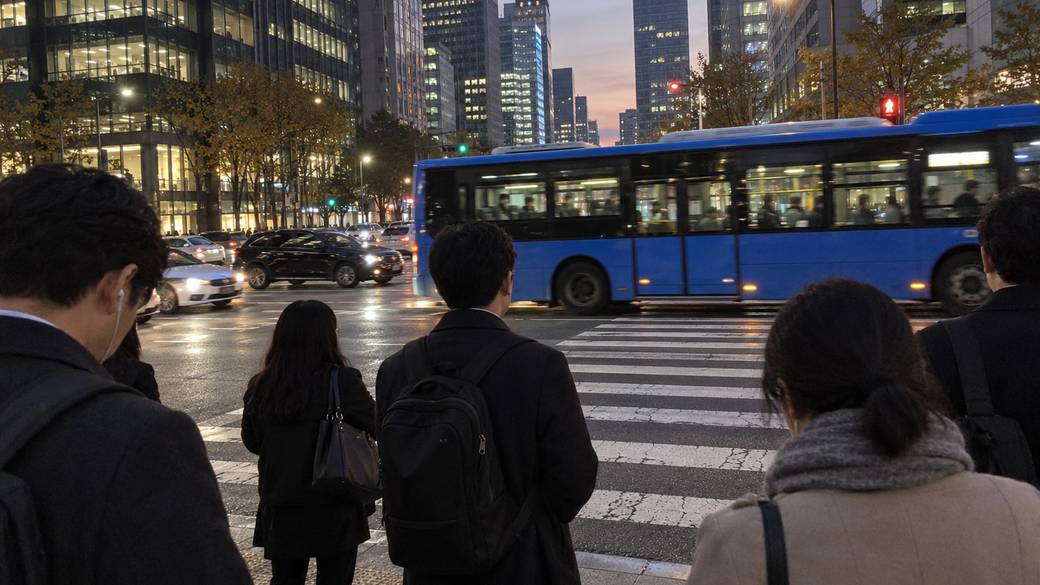
- Some Seoul buses don’t take cash at all. Seoul runs 183 “cashless” bus routes where you can only pay by transit card (T-money or a card with a transit function), per the city’s list updated 6 March 2026. Buy a T-money card at the airport or a convenience store before your first bus.
- Transfers are cheaper only with a card. A Seoul subway ride costs ₩1,550 with a transit card and ₩1,650 with a single ticket, and only card users get the transfer discount between subway and bus within 30 minutes (60 minutes between 21:00 and 07:00). T-money vs WOWPASS vs Climate Card compares the cards.
Which everyday rules catch visitors out?
- Your age is international now, except for drinking. Korea’s laws switched to international (“man”) age on 28 June 2023, according to the Ministry of Justice. The Youth Protection Act still defines adults from 1 January of the year they turn 19, so that is when you can buy alcohol and cigarettes. Bars and convenience stores card young-looking customers.
- Toilet paper goes in the toilet. Since 1 January 2018, public toilets must remove the bin from each stall and keep a separate box for sanitary products, as an Incheon city notice on the rule explains. Flush the paper unless a sign says otherwise; never flush wipes or pads.
- Tap water is safe, but many people filter it. Seoul says its Arisu tap water has met all drinking-water standards in ten years of published tests. Habits lag behind: restaurants serve free filtered water, and households commonly boil or filter. You can refill a bottle at your hotel without worry.
- Smoking is banned in more places than you’d think. Lighting up in a designated no-smoking area can cost up to ₩100,000. Since 24 April 2026, liquid and synthetic-nicotine e-cigarettes count as tobacco under the amended Tobacco Business Act, so the same no-smoking signs apply to vapes. Smoke only in marked smoking booths.
- Drinking outdoors is mostly legal, with local exceptions. There is no national ban on drinking in public. Since a 2021 law change, local governments can declare parks and playgrounds alcohol-free zones with fines of up to ₩100,000, so look for signs before opening a beer.
- Big supermarkets close two days a month. Large marts like Emart and Lotte Mart must close two days a month and can’t trade from midnight to 10:00. The default is the 2nd and 4th Sundays, but some Seoul districts have moved the days to weekdays, so check the store’s page. A bill to allow online deliveries on closure days was still in the National Assembly in July 2026.
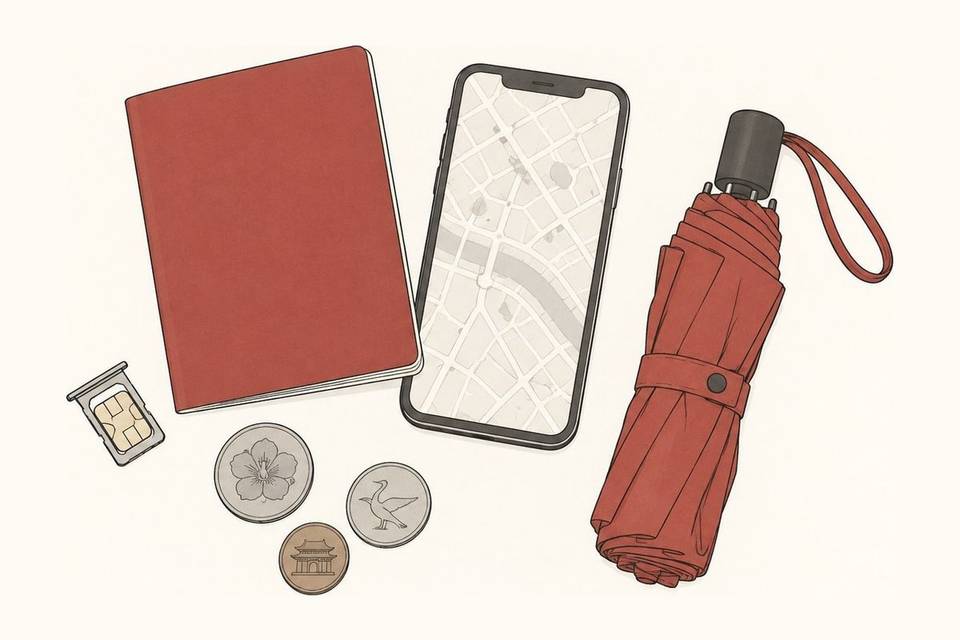
- There’s a convenience store on almost every corner. The four big chains (GS25, CU, 7-Eleven and Emart24) had 53,266 stores at the end of 2025, government figures reported by Kyunghyang show. They sell T-money cards and top-ups, SIM cards, umbrellas and hot meals, and many stay open all night.
Who do you call if something goes wrong?
- 112 is police, 119 is fire and ambulance. GOV.UK lists both for visitors, and a 119 ambulance is free; you pay only for hospital treatment. Say “English” when the call is answered so the operator can bring in an interpreter. Our guide to getting sick in Korea explains pharmacies, clinics and 1339, the health advice line.
- 1330 is the travel hotline, and it speaks English from 07:00 to midnight. The Korea Tourism Organization’s 1330 line answers in eight languages including English; the culture ministry and GOV.UK give 07:00–midnight in 2026, although some city pages still say 24 hours. Dial 1330 in Korea or +82-2-1330 from abroad, or use its WhatsApp, KakaoTalk or Line chat. It can also set up a three-way call to interpret with a taxi driver, hotel or police; our 1330 helpline guide explains each way to reach it.
Phone numbers to save before you land in Korea (checked 26 Oct 2026; 1330 hours 8 Nov 2026)
| Number | What it’s for | Hours | Cost |
|---|---|---|---|
| 112 | Police, crime, emergencies | 24 h | Free |
| 119 | Fire, ambulance, rescue | 24 h | Free (hospital fees extra) |
| 1330 | Travel hotline, interpretation | 07:00–midnight | No service fee |
| 1339 | Health advice, infectious disease | 24 h | Free |
In short, put 112, 119 and 1330 in your contacts before the flight; 1330 is the one you’ll actually use.
Which numbers sum up Korea?
- About 51 million people, half of them around Seoul. South Korea had 51,117,378 registered residents on 31 December 2025, the sixth yearly fall, according to Interior Ministry figures reported by Newsis. Seoul, Incheon and Gyeonggi held 26,081,644 of them, about 51%. That is why weekend trains out of Seoul fill first. The capital’s own numbers, from its 25 districts to which palace closes on a Monday, are in facts about Seoul.
- It’s small enough to cross in an afternoon. Korea’s land area is about 100,460 km² (end of 2024, national land statistics), a little smaller than Iceland. The KTX gets you from Seoul to Busan, the far end of the mainland, in roughly two and a half hours, which makes day trips from Seoul and a two-city trip realistic.
- There are 17 UNESCO World Heritage Sites. The latest, the Bangudae petroglyphs near Ulsan, was added in 2025. At the World Heritage Committee in Busan in July 2026, the Korean Tidal Flats site was extended to include Seosan, Yeosu, Goheung and Muan, but it is still counted as one site. Which of Korea’s best-known sights, foods and traditions fit into a short trip is in what Korea is famous for.
- Hangul has 24 basic letters. The National Institute of Korean Language lists 24 basic letters (14 consonants and 10 vowels under Korea’s spelling rules), and 9 October, Hangul Day, has been a public holiday again since 2013. Learning to sound out the letters takes most people an evening, and it makes menus and subway signs far easier.
Which of these change by where you’re from?
Facts about Korea that depend on your passport or home country (checked 26 Oct 2026)
| From | Entry in 2026 | Plug adapter | Worth knowing |
|---|---|---|---|
| US, Canada | K-ETA-exempt to 31 Dec 2026 | Yes | No tipping; charger volts matter |
| UK | K-ETA-exempt to 31 Dec 2026 | Yes | Plan for 1330 rather than GHIC cover |
| Australia | K-ETA-exempt to 31 Dec 2026 | Yes | July school break = Korea’s rainy season |
| Singapore | K-ETA-exempt to 31 Dec 2026 | Yes | Spring and autumn are the cool months |
| Malaysia | K-ETA needed | Yes | Check halal options before you go |
| Philippines, India | Not K-ETA-eligible; check visa rules | Yes (India: Type C fits) | Start weeks ahead |
The table only flags what differs; the K-ETA and visa rules can change at the end of 2026, so recheck them close to your flight. For halal and vegetarian eating, see halal food in Korea and vegetarian Korea.
Questions people ask
- Do you tip in Korea?
- No. VisitKorea says tipping is not required or expected, and taxi drivers and restaurant staff won't wait for one. Some hotels and upscale restaurants add a service charge to the bill instead, so check the receipt before paying more.
- Can you drink tap water in Korea?
- Yes, it is treated to drinking standards; Seoul says its Arisu tap water has passed every test for ten years. Many Koreans still boil or filter it, and restaurants serve filtered water free, so you rarely need to buy bottles.
- What is the drinking age in Korea?
- You can buy alcohol and cigarettes from 1 January of the year you turn 19. The Youth Protection Act still uses this year-based rule, even though Korea switched to international age for most legal purposes on 28 June 2023. Shops and bars can ask for ID.
- Does Google Maps work in Korea?
- Only partly. It shows places and public transport routes, but as of October 2026 it still gives no walking or driving directions. Korea approved Google's map-data request with conditions on 27 February 2026; until directions launch, use Naver Map or KakaoMap.
- What plug do I need for Korea?
- One with two round pins. Korean sockets run at 220 V, 60 Hz, so travellers from the US, Canada, UK, Australia, Singapore, Malaysia and the Philippines need an adapter. Check that your charger says 100–240 V before plugging it in.
- Is Korea safe to walk around at night?
- Generally yes in busy city areas, but use normal care. Save 112 (police) and 119 (ambulance) in your phone, and 1330 for an English-speaking travel hotline that can interpret a call to police or a hospital.
Next in your trip
- Check whether you need a K-ETA — The exemption for US, UK, Canada, Australia and Singapore ends 31 Dec 2026
- Install the apps that replace Google Maps — Naver Map gives walking and transit directions in English
- Sort out cards and cash — Tax refunds, T-money top-ups and the places that still want won
Sources
- VisitKorea – Electricity & Communications (220 V, 60 Hz)
- VisitKorea – Tax refund for foreign tourists and travel hotline
- VisitKorea – Food and dining (tipping not required or expected)
- 주캐나다 대한민국 대사관 – K-ETA 한시적 면제 연장 (to 31 Dec 2026) (Korean)
- Korea Times – Korea conditionally approves Google request to export map data (27 Feb 2026)
- 뉴스토마토 – 구글 지도 길찾기 서비스 출시 지연 (16 Sep 2026) (Korean)
- Bank of Korea – Banknotes and coins
- SBS Biz – 한국은행 2024 지급수단 이용행태 조사: 신용카드 46.2%, 현금 15.9% (25 Mar 2025) (Korean)
- 서울시 – 현금 없는 버스 운영 노선 (183 routes, updated 6 Mar 2026) (Korean)
- 법무부 – 만 나이 통일법 시행 (28 Jun 2023) (Korean)
- 청소년 보호법 제2조 (text of the Youth Protection Act) (Korean)
- 인천광역시 – 2018년 1월 1일부터 공중화장실 휴지통 없앱니다 (Korean)
- 서울시 – 아리수 수질 (Seoul tap water quality) (Korean)
- 뉴시스 – 액상형 전자담배도 담배로… 개정 담배사업법 시행 (Feb 2026) (Korean)
- 내 손안에 서울 – 금주구역 지정 (no-drinking zones) (Korean)
- 뉴시스 – 대형마트 의무휴업 유통산업발전법 개정안 (27 Jul 2026) (Korean)
- 경향신문 – 편의점 점포 수 첫 감소, 5만3266개 (28 Jan 2026) (Korean)
- GOV.UK – South Korea travel advice: getting help (112, 119, 1330)
- 기상청 – 지역별 기후 평년값 1991–2020 (KMA climate normals) (Korean)
- 뉴시스 – 주민등록인구 5111만7378명, 6년 연속 감소 (4 Jan 2026) (Korean)
- e-나라지표 – 국토면적 (national land area) (Korean)
- 뉴시스 – 한국의 갯벌 2단계 세계유산 확대 등재 (25 Jul 2026) (Korean)
- 국립국어원 – 한글의 기본 자모 24자 (Korean)
- 세계일보 – 2027년 월력요항: 설 2월 6~9일, 추석 9월 14~16일 (29 Jun 2026) (Korean)
Updates
- Corrected 1330 phone hours to 07:00–midnight (culture ministry and GOV.UK, 2026) and listed its chat apps.
- Published with 25 sourced facts, including the 31 Dec 2026 K-ETA exemption end, the Feb 2026 Google map-data decision and the 2026 e-cigarette rule.
About Korea Field Notes
An English guide to the practical side of visiting South Korea. Guides are researched from Korean-language official sources (Korail, T-money, Seoul Metro, the Korea Tourism Organization) and re-checked when rules or prices change. Each guide shows when its facts were last checked and lists its sources. About the site · How we research and update guides · Found something out of date? Tell us.