Facts About Seoul: 25 Numbers That Shape Your Trip
Facts checked on 28 Oct 2026 against Seoul Metropolitan Government pages and open data, the Korea Heritage Service, the Seoul City Wall site, KMA climate normals, AREX and Korean press reports of official figures.
Seoul is a 605 km² city of about 9.55 million people, has 25 districts on both banks of the 41.5 km Han River, with palaces that close on Mondays or Tuesdays. The facts below cover its shape, transport, palaces and weather, each checked against city, heritage or weather-agency sources on 28 Oct 2026.
Best forFirst-timersSoloFamilies
Key takeaways
- Gyeongbokgung and Jongmyo close on Tuesdays; Changdeokgung, Changgyeonggung and Deoksugung close on Mondays.
- All five palace sites are free to enter from 29 Oct to 15 Nov 2026 during the Korea Grand Festival.
- Seoul Metro lines 1–8 carried an average of 6.69 million riders a day in 2025, so rush hours are packed.
- Bukchon's red zone admits visitors only 10:00–17:00, and fines of about ₩100,000 apply outside those hours.
- August averages 26.1 °C and January −1.9 °C, with July alone bringing about 414 mm of rain.
| Population | 9,552,617 (city open data, latest quarter, 2026)Source: Seoul Open Data Plaza |
|---|---|
| Area and districts | 605.25 km², 25 districts (gu), 427 administrative neighbourhoods (dong)Source: Seoul Metropolitan Government |
| Han River inside Seoul | 41.5 km, crossed by about 31 road and rail bridgesSource: Seoul Metropolitan Government |
| Palace closing days | Tuesday: Gyeongbokgung, Jongmyo · Monday: Changdeokgung, Changgyeonggung, DeoksugungSource: Korea Heritage Service |
| Subway use | 6.69 million riders a day on Seoul Metro lines 1–8 in 2025Source: Seoul Metro via Hankyung |
These are 25 facts about Seoul that change how you plan the days, from which side of the river to sleep on to which palace is shut on a Monday, each checked against its source on 28 October 2026. For the country-wide basics (plugs, tipping, visas), see facts about Korea, and for Korea’s second city, facts about Busan; more short sourced answers live in Korea Facts.
How is Seoul laid out?
- It’s 25 districts, not one downtown. Seoul is split into 25 districts (gu) and 427 administrative neighbourhoods (dong), according to the city’s district page. Addresses, taxi drivers and Naver Map all use the district names, so Jongno-gu, Jung-gu and Mapo-gu are worth recognising. Our where to stay in Seoul guide picks a base by district.
- The city covers 605.25 km². That is the area on Seoul’s open-data “100 statistics” page. It sounds compact, but crossing it from Gimpo in the west to Jamsil in the east takes well over an hour on the subway, so plan one area per half-day.
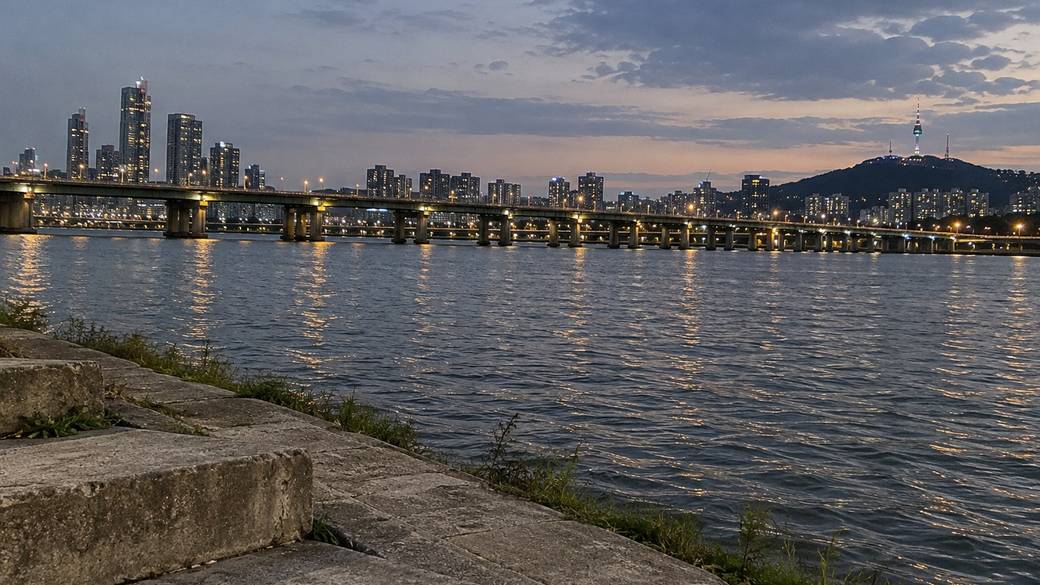
- The Han River cuts it in two. The river runs 41.5 km through Seoul, the city’s river-safety page says. North of it is Gangbuk, with the palaces, Bukchon, Insadong and Myeongdong; south of it is Gangnam, with COEX, Jamsil and the newer business towers. Most first-timers base themselves north of the river.
- About 31 bridges cross it inside the city. Seoul’s traffic office counts 27 road bridges and 4 rail bridges, and lists 5 where cycling across is officially allowed. Tallies of 33 or more include bridges outside the city limits, so you’ll see different numbers.
- There are 11 riverside parks. Seoul’s 11 Hangang parks, from Gangseo in the west to Gwangnaru in the east, include Yeouido, Banpo and Ttukseom, the three easiest to reach by subway. The Han River bus guide shows which piers sit next to which park.
- Mountains are inside the city. Bukhansan’s Baegundae peak, about 836 m, is the highest point in Seoul, the city’s news site notes. Bugaksan, Inwangsan, Naksan and Namsan ring the old centre, so many “walks” in Seoul involve stairs.
- The old city wall still runs about 18.6 km. First built in 1396, the Seoul City Wall links those four inner mountains. The official course guide splits it into sections, and walking the whole loop takes most people 10–11 hours. The Seoul City Wall walk picks the easiest section.
How many people live in and visit Seoul?
- It has been the capital since 1394. The city’s history page says Hanyang, the old name for Seoul, was confirmed as the capital of the Joseon dynasty in 1394. The palaces, Jongmyo shrine and the wall all date from that city plan.
- About 9.55 million people live here. Seoul’s open-data page gives a population of 9,552,617 for its latest 2026 quarter, with 272,756 registered foreigners listed separately.
- Half of Korea lives within commuting distance. Seoul, Incheon and Gyeonggi together held 26,081,644 of South Korea’s 51,117,378 registered residents at the end of 2025, about 51%, based on the Interior Ministry figures reported by Herald Business. That is why the subway is packed from about 07:30 to 09:00.
- Most foreign visitors to Korea come to Seoul. About 14.5 to 14.9 million foreign tourists visited Seoul in 2025, a record, out of roughly 18.94 million arrivals in Korea. The Seoul Tourism Organization’s own estimate (14.54 million, 76.8%) and the figure reported by News1 (about 14.85 million, 77.3%) differ slightly, but both put it at about three in four.
What do the transport numbers mean for you?
- The subway carries more people than many countries have. Seoul Metro’s lines 1–8 averaged 6,692,000 riders a day in 2025, up 1.3% on 2024, Hankyung reported from the operator’s figures. Expect standing room only on the busiest lines at rush hour, and skip transfers with big luggage then.
- The network is about 360 km long. The city’s January 2025 rail table lists 12 lines covering 359.86 km. Station numbers are printed on every sign (for example 201 for City Hall on Line 2), and they’re the easiest way to match a map to a platform. Paying is easiest with a transit card; T-money vs WOWPASS vs Climate Card compares them.
- Night buses fill the gap after the last train. Seoul’s “Owl” night buses, route numbers starting with N, run 14 routes from 23:00 to 06:00 for ₩2,500 by card, per the city’s March 2026 notice. They are the cheap fallback after the subway stops around midnight.
- The main airport is in a different city. Incheon International Airport is in Incheon, west of Seoul. The AREX all-stop train costs ₩4,750 from Terminal 1 to Seoul Station and takes 59–66 minutes; the Express is ₩13,000 and 43 minutes. Our Incheon Airport to Seoul guide covers buses and late arrivals.
What should you know about the palaces and old neighbourhoods?
- No palace closes on the same day as all the others. Gyeongbokgung and Jongmyo close on Tuesdays; Changdeokgung, Changgyeonggung and Deoksugung close on Mondays, according to the Korea Heritage Service. A Monday or Tuesday plan only needs swapping which palace you visit.
- Entry costs ₩1,000–₩3,000. Gyeongbokgung and Changdeokgung are ₩3,000 each; Deoksugung, Changgyeonggung and Jongmyo are ₩1,000. A ₩6,000 integrated ticket covers all five once within six months, against ₩9,000 bought separately. Changdeokgung’s Secret Garden is a separate ₩8,000 tour.
- They’re all free from 29 October to 15 November 2026. The Korea Heritage Service opened all four palaces and Jongmyo free to everyone for the Korea Grand Festival, per its 22 September notice. The Korea Grand Festival 2026 guide lists the events.
- Wearing hanbok gets you in free, for now. Visitors in hanbok enter the palaces free under the Heritage Service guideline. On 8 October 2026 it told lawmakers it would review that rule, and its planned fee rise had no start date as of late October, SBS Biz reported. The hanbok rental guide covers what passes the dress check.
- The guard-changing ceremony runs at 10:00 and 14:00. At Gyeongbokgung’s main gate, the royal guard changing takes place at 10:00 and 14:00, Segye Ilbo reported in August 2026. The Heritage Service cancels all sessions during heat warnings, as it did from 5 August 2026, so check before a summer visit.
- Bukchon has a curfew for visitors. In the “red zone” of Bukchon Hanok Village, tourists may enter only from 10:00 to 17:00, and fines of about ₩100,000 have applied since 1 March 2025, per Seoul’s notice and Financial News. People live in these houses. If you want to stay in one, see hanok stays in Seoul.
Seoul palaces and royal shrine: closing day and adult fee (Korea Heritage Service, checked 28 Oct 2026)
| Site | Closed | Adult fee | October hours |
|---|---|---|---|
| Gyeongbokgung | Tuesday | ₩3,000 | 09:00–18:00 (last entry 17:00) |
| Changdeokgung | Monday | ₩3,000 (Secret Garden ₩8,000 extra) | 09:00–18:00 (last entry 17:00) |
| Deoksugung | Monday | ₩1,000 | 09:00–21:00 (last entry 20:00) |
| Changgyeonggung | Monday | ₩1,000 | 09:00–21:00 (last entry 20:00) |
| Jongmyo | Tuesday | ₩1,000 | 09:00–18:00; guided tour only Mon, Thu, Fri |
Wednesday to Sunday every site is open, and from 29 October to 15 November 2026 all of them are free. From November to February, Gyeongbokgung closes an hour earlier, at 17:00.
What are Seoul’s weather and landmark numbers?
- Summer is hot and humid, winter well below freezing. KMA’s 1991–2020 normals give Seoul an average of 26.1 °C in August and −1.9 °C in January; January highs average only 2.1 °C and lows −5.5 °C. Coming from Singapore, Malaysia or the Philippines, a December or January trip needs a real winter coat.
- July brings about a third of the year’s rain. Seoul averages 414.4 mm in July out of 1,417.9 mm a year, and the monsoon usually runs from late June to late July. May (23.6 °C average high) and October (20.2 °C) are the easy months. Korea’s weather by month has the full table.
- Cheonggyecheon is a rebuilt stream, not an old one. The stream through central Seoul was covered by a road and an elevated highway until its restoration opened on 1 October 2005, Seoul’s news site recalls. The restored section runs 5.84 km from Taepyeong-ro to Sindap rail bridge. It starts at Cheonggye Plaza, a short walk from City Hall and Gwanghwamun.
- Lotte World Tower is 555 m and 123 floors. The tower in Jamsil is the tallest building in Korea, with the Seoul Sky observatory on floors 117 to 123, Newstomato reported shortly before it opened in 2017. It is the main reason to cross to the south side if you are short on time.
How should these facts change your plan?
Before you lock in the days
- Check the palace closing day before fixing the order of your first two days.
- If you arrive between 29 October and 15 November 2026, do the palaces then; entry is free.
- Book your base north of the river if palaces and markets are the point of the trip.
- Keep rush hour (about 07:30–09:00) for walking, not subway transfers with luggage.
- Arrive in Bukchon after 10:00 and leave before 17:00.
Most first-timers fit Seoul’s main sights into four full days; how many days in Seoul sets out the split, and the 7-day first-time itinerary adds day trips.
Questions people ask
- How many people live in Seoul?
- About 9.55 million. Seoul's open-data site gave 9,552,617 for its latest 2026 quarter, and lists 272,756 registered foreigners alongside. The wider capital area of Seoul, Incheon and Gyeonggi held 26.08 million people at the end of 2025, about half of South Korea.
- Is Gangnam north or south of the river?
- South. Gangnam means south of the river and Gangbuk north of it. The palaces, Bukchon, Insadong and Myeongdong are all on the north side; Gangnam, COEX, Jamsil and Lotte World Tower are on the south side.
- Which day are Seoul's palaces closed?
- Gyeongbokgung and Jongmyo close on Tuesdays. Changdeokgung, Changgyeonggung and Deoksugung close on Mondays. So no day has all five shut, and Wednesday to Sunday they are all open.
- Is Seoul's airport in Seoul?
- Incheon International Airport isn't; it is in Incheon, west of Seoul. The AREX all-stop train reaches Seoul Station in 59–66 minutes for ₩4,750 from Terminal 1. Gimpo Airport is inside Seoul but handles mostly domestic and short regional flights.
- What is the best month to visit Seoul for weather?
- May and October. KMA normals give average highs of 23.6 °C in May and 20.2 °C in October, between the humid, wet summer and January's average of −1.9 °C. July is the wettest month, with about 414 mm of rain.
Next in your trip
- Decide how many days Seoul needs — Four full days covers the palaces, a river evening and one day trip
- Pick a base north or south of the river — Which side you stay on decides most of your travel times
- Plan the ride in from Incheon — The airport is in a different city, about an hour away by train
Sources
- 서울 열린데이터광장 – 서울 100대 통계 (인구, 면적, 등록외국인) (Korean)
- 서울특별시 – 자치구 현황 (25개 자치구, 427 행정동) (Korean)
- 서울특별시 – 서울의 역사 (1394년 한양 수도 확정) (Korean)
- 서울시 – 한강 안전 (서울시내 한강 41.5km) (Korean)
- 서울시 교통 – 한강 교량 현황 및 자전거 통행 교량 (Korean)
- 내 손안에 서울 – 11개 한강공원 (3 Aug 2022) (Korean)
- 내 손안에 서울 – 북한산 백운대 (16 Apr 2026) (Korean)
- Seoul City Wall – Course guide
- 헤럴드경제 – 주민등록인구 5111만7378명, 수도권 인구 (3 Jan 2026) (Korean)
- 뉴스1 – 지난해 서울 방문 외래관광객 역대 최대 (Korean)
- 서울관광재단 – 서울 방문 외래관광객 추정 통계 (Korean)
- 한국경제 – 서울지하철 하루평균 669만명 (10 Mar 2026) (Korean)
- 서울시 교통 – 도시철도 노선 현황 (31 Jan 2025) (Korean)
- 서울시 교통 – 심야버스 (올빼미버스) 운행 안내 (Korean)
- 공항철도 AREX – 일반열차 운임안내 (Korean)
- Korea Heritage Service – Royal palaces opening hours (Korean)
- Korea Heritage Service – Royal palaces admission fees (Korean)
- 국가유산청 궁능유적본부 – 코리아 그랜드 페스티벌 기간 궁궐 무료 개방 (22 Sep 2026) (Korean)
- SBS Biz – 궁궐 한복 무료입장 재검토 (8 Oct 2026) (Korean)
- 세계일보 – 폭염에 경복궁 수문장 교대의식 중단 (5 Aug 2026) (Korean)
- 내 손안에 서울 – 북촌한옥마을 관광객 방문 제한시간 (11 Nov 2024) (Korean)
- 파이낸셜뉴스 – 북촌 레드존 3월부터 과태료 (28 Feb 2025) (Korean)
- 내 손안에 서울 – 청계천 복원 10년 (30 Sep 2015) (Korean)
- 머니투데이 – 청계천 복원 구간 5.84km (1 Oct 2016) (Korean)
- 뉴스토마토 – 롯데월드타워 123층 555m, 서울스카이 (21 Mar 2017) (Korean)
- 기상청 – 서울 지역 기후 특성 (1991–2020 평년값) (Korean)
- 기상자료개방포털 – 평년값 1991–2020 (Korean)
Updates
- Published with 25 sourced Seoul facts, including the 2026 Korea Grand Festival free-entry dates and 2025 subway ridership.
About Korea Field Notes
An English guide to the practical side of visiting South Korea. Guides are researched from Korean-language official sources (Korail, T-money, Seoul Metro, the Korea Tourism Organization) and re-checked when rules or prices change. Each guide shows when its facts were last checked and lists its sources. About the site · How we research and update guides · Found something out of date? Tell us.