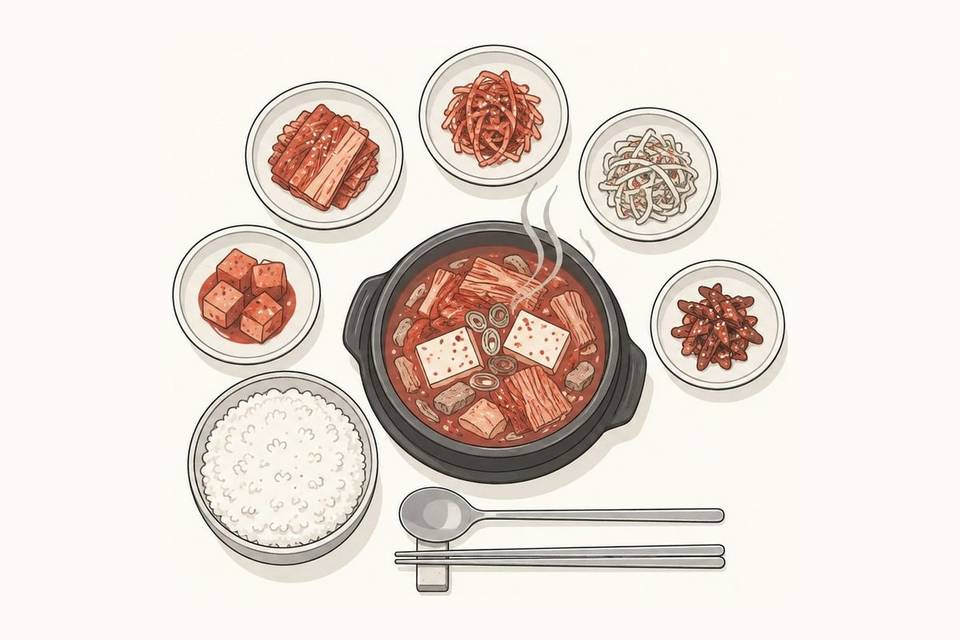
Must-Try Korean Food: 20 Dishes to Order First (2026)
Prices checked on 3 Nov 2026 against Korea Consumer Agency restaurant averages for September 2026 (reported 19 Oct 2026), Kyochon and other official menus; dish details against VisitKorea and the Korean Food Promotion Institute.
Order bibimbap, kimchi stew, pork belly barbecue, fried chicken and tteokbokki first. In September 2026 Seoul averaged ₩12,000 for bibimbap and ₩8,846 for a kimchi-stew set, so one Korean meal costs about ₩8,000–₩20,000 (Korea Consumer Agency, checked 3 Nov 2026).
Best forFirst-timersBudgetFamilies
Your situation → do this
| If you… | Do this |
|---|---|
| It's your first Korean meal and you don't know what you like | Bibimbap (sauce on the side) or a kimchi-stew set meal with rice and side dishes |
| You can't handle chilli heat | Samgyetang, bulgogi, galbi, kalguksu, mul-naengmyeon or jajangmyeon; skip anything red |
| You don't eat pork (halal or by choice) | Chicken dishes, bibimbap without meat or naengmyeon, but check broths; halal-certified places are in Itaewon |
| You're eating alone | Kimbap, bibimbap, stews and noodle soups; barbecue and dakgalbi usually need two servings |
| You only have one evening | Pork belly barbecue with soju, or fried chicken and beer, then a market snack round |
Key takeaways
- Seoul bibimbap averaged ₩12,000 in September 2026, a first; kimbap ₩3,923 a roll (Korea Consumer Agency).
- Mild starters: samgyetang, bulgogi, galbi, kalguksu, mul-naengmyeon and jajangmyeon. Red-coloured dishes are usually spicy.
- Kimchi stew, gukbap, budae-jjigae, bossam and sundae all contain pork; kimchi itself usually has seafood seasoning.
- Barbecue, dakgalbi and jjimdak are table dishes, usually ordered for two or more people.
- Chuncheon dakgalbi, Andong jjimdak, Busan dwaeji-gukbap and Jeonju bibimbap are worth eating in their home cities.
| Bibimbap, Seoul average (Sep 2026) | ₩12,000, up 3.7% in a yearSource: Korea Consumer Agency via Newsis/Financial News, 19 Oct 2026 |
|---|---|
| Kimchi-stew set meal, Seoul (Sep 2026) | ₩8,846 (national ₩9,092)Source: Korea Consumer Agency via Newsway, 19 Oct 2026 |
| Kimbap roll, Seoul (Sep 2026) | ₩3,923, up 8.3% in a yearSource: Korea Consumer Agency via Newsway, 19 Oct 2026 |
| Pork belly 200 g, national (Sep 2026) | ₩17,906Source: Korea Consumer Agency via Newsis/Financial News, 19 Oct 2026 |
| Kyochon soy garlic whole chicken | ₩19,000 list price (31 Oct 2026)Source: kyochon.com |
This page is for your first few days of eating in Korea: which dishes to order first, which ones are spicy or contain pork, and what they cost in 2026. It belongs to our food and drink section; the barbecue, street food and fried chicken guides go deeper on each.
How we chose the 20 dishes
We ranked each dish on four things: whether it is easy to find in Seoul and Busan, whether it works as a first meal for someone new to Korean food, what it costs in 2026, and whether VisitKorea presents it as a core or regional dish. Prices come only from dated sources: the Korea Consumer Agency’s monthly restaurant survey (참가격), official chain menus, and press reports we name in the text. Where we found no 2026 price, we left the price out.
Dish names follow the Korean Food Promotion Institute’s official romanisation, so they match most English menus. You will still see variants: kimbap and gimbap, jjigae and chigae.
Which Korean dishes should you order first?
Must
Bibimbap (비빔밥)
- What it is
- Warm rice topped with vegetables, usually beef and a fried egg; you mix in gochujang yourself.
- Why go
- VisitKorea's pick for the dish that best sums up Korean food. Seoul average ₩12,000 (Sep 2026).
- Time needed
- 20 min
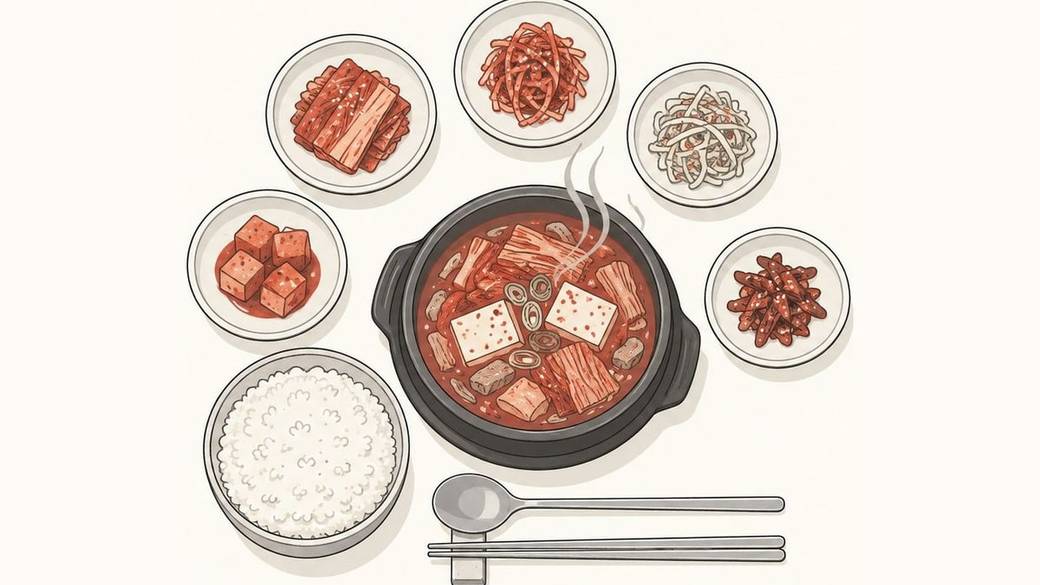
Kimchi-jjigae (김치찌개)
- What it is
- Kimchi stew with pork or tuna and tofu, served bubbling with rice and side dishes.
- Why go
- The everyday Korean lunch; a set meal averaged ₩8,846 in Seoul (Sep 2026).
- Time needed
- 20 min
- What it is
- Thick pork belly you grill at the table and wrap in lettuce with garlic and ssamjang.
- Why go
- VisitKorea calls it the most popular meat dish; ₩17,906 per 200 g nationally (Sep 2026).
- Time needed
- 90 min
- What it is
- Double-fried chicken, plain, soy-garlic or sweet-spicy, usually with beer (chimaek).
- Why go
- Kyochon soy garlic lists at ₩19,000 a whole bird (31 Oct 2026).
- Time needed
- 45 min
- What it is
- Chewy rice cakes and fish cake in a sweet, spicy gochujang sauce.
- Why go
- The core snack-shop dish, sold in every market and bunsik shop.
- Time needed
- 10 min
Bulgogi (불고기)
- What it is
- Thin beef marinated in soy, sugar and garlic, grilled or cooked in a shallow pan.
- Why go
- Sweet, not spicy and familiar: the safest meat dish for children and cautious eaters.
- Time needed
- 40 min
Samgyetang (삼계탕)
- What it is
- A whole young chicken stuffed with rice, ginseng, garlic and jujube in clear broth.
- Why go
- Mild and filling; ₩16,875 nationally (Sep 2026), more at famous Seoul shops.
- Time needed
- 40 min
Worth it
Naengmyeon (냉면)
- What it is
- Cold buckwheat noodles: mul in icy beef broth, bibim with spicy sauce.
- Why go
- Eaten all year, not only summer; ₩10,853 nationally (Sep 2026).
- Time needed
- 20 min
Kimbap (김밥)
- What it is
- Rice and fillings rolled in seaweed and sliced; the fillings usually include ham or fish cake.
- Why go
- Seoul average ₩3,923 a roll (Sep 2026): breakfast, train snack or solo lunch.
- Time needed
- 10 min
Jajangmyeon (짜장면)
- What it is
- Korean-Chinese wheat noodles in black bean sauce with pork and onion.
- Why go
- Cheap and not spicy; Seoul average ₩7,808 (Sep 2026).
- Time needed
- 15 min
Kalguksu (칼국수)
- What it is
- Knife-cut wheat noodles in anchovy, clam or chicken broth.
- Why go
- Mild noodle soup; ₩9,071 nationally (Sep 2026). Visit Seoul names Myeongdong Kyoja for it.
- Time needed
- 20 min
- What it is
- Marinated beef or pork ribs grilled at the table, sweeter than plain barbecue cuts.
- Why go
- The barbecue order for people who prefer sweet over smoky.
- Time needed
- 90 min
- What it is
- Spicy chicken stir-fried on a big pan with cabbage, sweet potato and rice cakes, then fried rice.
- Why go
- Chuncheon's dish; eaten for two or more, often with cheese.
- Time needed
- 60 min
- What it is
- Pork and rice soup with chives and salted shrimp to season.
- Why go
- Busan's signature; ₩10,000 a bowl at Busan-named chains (Dec 2025).
- Time needed
- 20 min
Sundubu-jjigae (순두부찌개)
- What it is
- Silky soft tofu in a red, spicy broth, often with seafood or pork and a raw egg.
- Why go
- A good hot lunch on a cold day; ask for it mild.
- Time needed
- 20 min
Haemul pajeon (해물파전)
- What it is
- A savoury pancake of spring onions and seafood, crisp at the edges.
- Why go
- Shared with makgeolli, especially on rainy days.
- Time needed
- 30 min
If time
Andong jjimdak (안동찜닭)
- What it is
- Chicken braised in soy sauce with vegetables and glass noodles, a little spicy.
- Why go
- Andong's dish, now sold in chains everywhere; a plate feeds two.
- Time needed
- 45 min
Bossam (보쌈)
- What it is
- Boiled pork slices wrapped in cabbage with radish kimchi.
- Why go
- Mild and easy, but it is a sharing platter for two or more.
- Time needed
- 60 min
Budae-jjigae (부대찌개)
- What it is
- Army stew with sausage, Spam, kimchi, beans and instant noodles in a spicy broth.
- Why go
- Uijeongbu's dish; heavy, salty and loved by groups.
- Time needed
- 40 min
Japchae (잡채)
- What it is
- Sweet potato glass noodles stir-fried with vegetables and usually beef.
- Why go
- Often arrives as a side dish anyway, so you may not need to order it.
- Time needed
- 15 min
If you have three days, eat the seven ★★★ dishes and add two ★★ ones that suit your diet. The ★ dishes are good, but most are sharing platters or turn up as side dishes, so they suit groups or a second trip. Dessert isn’t on this list because Koreans usually have it at a café afterwards; our Korean café dessert guide ranks what to order there.
What do these dishes cost in 2026?
The Korea Consumer Agency surveys eight popular dishes every month. These are the September 2026 figures, reported on 19 October 2026:
Average restaurant prices in Korea, September 2026, ₩ (Korea Consumer Agency, checked 3 Nov 2026)
| Dish | Seoul average | National average | Change in a year (national) |
|---|---|---|---|
| Kimbap (one roll) | ₩3,923 | ₩3,511 | +5.1% |
| Jajangmyeon | ₩7,808 | ₩7,233 | +3.4% |
| Kimchi-stew set meal | ₩8,846 | ₩9,092 | +4.0% |
| Kalguksu | not reported | ₩9,071 | +3.1% |
| Bibimbap | ₩12,000 | ₩10,330 | +2.4% |
| Naengmyeon | not reported | ₩10,853 | +3.4% |
| Samgyetang | not reported | ₩16,875 | +2.5% |
| Samgyeopsal (200 g) | not reported | ₩17,906 | +2.7% |
A one-dish Korean meal costs about ₩8,000–₩13,000 in Seoul, and a barbecue dinner for two runs well above that because most places want at least two servings. The September reports gave Seoul figures for only four dishes, so the gaps say “not reported” rather than mixing in older months.
Three things move the price you actually pay:
- Tourist streets and famous names cost more. Long-running naengmyeon and samgyetang restaurants in central Seoul charge well above the average. The survey tracks ordinary restaurants.
- Barbecue is priced per serving. One serving (1인분) can be 100 g or 250 g, so compare the gram figure, not the menu price. Our Korean BBQ guide explains how to read the menu.
- Side dishes and water are free. Menu prices include VAT and service by law, and there is no tip. How ordering works covers call bells, tablets and paying at the counter.
For a full day of food, transport and rooms, our Korea travel budget adds these meal prices into daily totals.
Which dishes are spicy, and which contain pork?
This is the table to check if you have a low chilli tolerance or don’t eat pork, beef or seafood. It shows the usual restaurant version; recipes vary, so ask when it matters.
Spice and main ingredients of the 20 dishes, usual restaurant version (checked 3 Nov 2026)
| Dish | Spice | Usual meat or fish | Eat it solo? |
|---|---|---|---|
| Bibimbap | You add it | Beef, egg | Yes |
| Kimchi-jjigae | Medium | Pork or tuna | Yes |
| Samgyeopsal | None | Pork | Usually 2+ servings |
| Fried chicken | None to hot | Chicken | Yes, or take it away |
| Tteokbokki | Medium to hot | Fish cake | Yes |
| Bulgogi | None | Beef | Often |
| Samgyetang | None | Chicken | Yes |
| Mul-naengmyeon / bibim-naengmyeon | None / hot | Beef broth | Yes |
| Kimbap | None | Ham, fish cake, egg | Yes |
| Jajangmyeon | None | Pork | Yes |
| Kalguksu | None | Anchovy, clam or chicken | Yes |
| Galbi | None | Beef or pork | Usually 2+ servings |
| Dakgalbi | Medium to hot | Chicken | Usually 2+ servings |
| Dwaeji-gukbap | None | Pork | Yes |
| Sundubu-jjigae | Medium to hot | Seafood or pork | Yes |
| Haemul pajeon | None | Squid, shrimp | Shared |
| Andong jjimdak | Mild | Chicken | Shared |
| Bossam | None | Pork | Shared |
| Budae-jjigae | Medium | Pork sausage, Spam | Usually 2+ servings |
| Japchae | None | Beef | Yes, as a side |
Red usually means chilli, and soup and stew broths are where pork and seafood are hardest to spot. If either matters to you, ask before you order.
Which dishes work for one person?
Korean restaurants are generous to solo diners at lunch, but some dishes are built for a table of two or more. Barbecue, dakgalbi, jjimdak, bossam and budae-jjigae are usually priced and cooked for groups, and many barbecue places refuse a single serving at busy times.
Dishes that always work for one:
- Bibimbap, kimchi-jjigae and sundubu-jjigae, each served with rice and side dishes.
- Noodles: kalguksu, naengmyeon and jajangmyeon.
- Kimbap and tteokbokki from a snack shop (bunsik-jip), the cheapest sit-down meal in Korea.
- Samgyetang and dwaeji-gukbap, one bowl per person.
If you want barbecue alone, ask at the door with “1인분 돼요?” (il-inbun dwaeyo, can I order one serving?). Our solo travel guide covers eating alone in more detail.
Which regional dishes are worth eating where they started?
Most of these dishes are sold all over Korea, but VisitKorea’s K-Local Food Trip series ties several to one city, and the home version is usually the reason to go:
Regional Korean dishes and their home cities (VisitKorea, checked 3 Nov 2026)
| Dish | Home city | Fits into |
|---|---|---|
| Jeonju bibimbap | Jeonju | A Jeonju hanok village trip |
| Dakgalbi | Chuncheon | A day trip from Seoul by ITX |
| Andong jjimdak | Andong | Hahoe folk village trip |
| Dwaeji-gukbap | Busan | Any Busan stay |
| Budae-jjigae | Uijeongbu | North Seoul, rarely a trip on its own |
| Wanggalbi (big beef ribs) | Suwon | A Suwon fortress day trip |
| Jajangmyeon | Incheon | Incheon Chinatown |
If your route already passes one of these cities, plan a meal around its dish; they don’t justify a separate trip. Jeonju is UNESCO’s first City of Gastronomy in Korea, according to VisitKorea, and the where to stay in Jeonju guide helps if you stay overnight. For Busan, the Busan food guide also covers milmyeon and Jagalchi Market, and the Suwon day trip and Chuncheon day trip guides cover the other two near Seoul.
What changes depending on where you’re from?
- Malaysia, Singapore, Indonesia, India (Muslim visitors): ordinary restaurants don’t serve halal meat, and pork is in many broths, kimbap and dumplings. KTO lists halal-certified and self-certified restaurants, most of them around Itaewon; see our halal food guide.
- India (vegetarian visitors): beef and seafood stocks are the trap rather than the meat itself. Ask for bibimbap without meat and egg, or eat at temple-food restaurants.
- Singapore, Malaysia, Philippines: the heat level is rarely the problem; the surprise for many visitors is the sweetness of tteokbokki sauce and galbi marinade.
- US, UK, Canada, Australia: portions of stews and barbecue are built for sharing, so a table of two often orders two mains and shares, not one each plus starters. There is no tipping.
- Gluten-free: gochujang, soy sauce and most marinades contain wheat. Our gluten-free guide explains what to ask.
What mistakes do first-timers make?
Avoid these
- Ordering one barbecue serving for a table of three and waiting for it to stretch. Order one per person.
- Assuming a red dish is mild because the menu photo looks harmless. Ask “maewoyo?” (is it spicy?).
- Filling up on the free side dishes before the main arrives. They refill, but the stew is the point.
- Paying ₩10,000+ for a snack on Myeongdong’s tourist strip when a market or bunsik shop sells the same for less.
- Expecting kimchi to be vegetarian. It usually isn’t.
- Leaving a tip. Prices already include service.
If you want to try many dishes in one evening, a market food alley such as Gwangjang in Seoul lets you share small plates of tteokbokki, kimbap and mung-bean pancakes. Our street food guide lists the stalls and prices, and the convenience store ramen guide covers late-night eating.
Questions people ask
- What is the most popular food in Korea?
- VisitKorea calls bibimbap the dish that best embodies Korean food and grilled pork belly (samgyeopsal) the most popular meat dish. For visitors, Korean fried chicken and tteokbokki are the other two almost everyone tries. All four are easy to find in any Korean city.
- Is Korean food very spicy?
- Much of it is, but you can avoid it. Red colour usually means gochujang or chilli flakes. Samgyetang, bulgogi, galbi, kalguksu, mul-naengmyeon and jajangmyeon are mild, and in bibimbap you add the chilli paste yourself. Say "an maepge haejuseyo" (not spicy, please) at places that cook to order.
- How much does a meal cost in Korea?
- A simple restaurant meal costs about ₩8,000–₩13,000 in Seoul. In September 2026 a kimchi-stew set averaged ₩8,846 and bibimbap ₩12,000. Barbecue costs more: pork belly averaged ₩17,906 per 200 g nationally, and most places want two servings per table.
- What Korean food is safe for people who don't eat pork?
- Samgyetang, dakgalbi, Andong jjimdak and fried chicken are chicken dishes, and bibimbap and naengmyeon often use beef. Ordinary restaurants don't serve halal meat, and broths and kimchi may contain pork or seafood, so Muslim visitors should use KTO's halal-certified or self-certified restaurants.
- Can vegetarians eat Korean food?
- Yes, with care. Ask for bibimbap without meat and egg, vegetable kimbap (yachae gimbap) or a plain pancake. Kimchi usually contains salted seafood or fish sauce, and most stews use anchovy or meat stock, so temple-food restaurants are the safest choice for vegans.
Next in your trip
- How to order at a Korean restaurant — Call bells, tablets, kiosks and paying at the counter
- How to eat Korean BBQ — The one meal most first-timers plan the trip around
- Korean street food guide — The snack round after dinner
Sources
- 뉴스웨이 – 서울 김밥 한 줄 평균 3923원, 9월 외식비 (Korea Consumer Agency data, 19 Oct 2026) (Korean)
- 파이낸셜뉴스(뉴시스) – 서울 비빔밥 평균 1만2000원, 9월 외식 가격 (19 Oct 2026) (Korean)
- 한국소비자원 참가격 – 외식비 가격 정보 (Korea Consumer Agency price portal) (Korean)
- 한식진흥원 – 한식메뉴 외국어 표기법 (official English names of Korean dishes) (Korean)
- 교촌치킨 – 치킨 메뉴 (Kyochon menu and prices, checked 31 Oct 2026) (Korean)
- 한경비즈니스 – 국밥 가격 (Busan gukbap chain prices, 5 Dec 2025) (Korean)
- VisitKorea – About Korean Food (bibimbap, ssam, samgyeopsal)
- VisitKorea – K-Local Food Trip 33 (regional dishes by city, Feb 2025)
- VisitKorea – Tips for Vegetarians
- VisitKorea – Bunsik & Street Food
- VisitKorea – Food Trip through 7 Hidden Alleys of Korea (Jeonju, Oct 2023)
- Visit Seoul – A Complete Guide to Restaurants in Seoul
- VisitKorea – Muslim-friendly restaurants
Updates
- Published with Korea Consumer Agency Seoul and national restaurant averages for September 2026 and 20 dishes ranked for first-time visitors.
About Korea Field Notes
An English guide to the practical side of visiting South Korea. Guides are researched from Korean-language official sources (Korail, T-money, Seoul Metro, the Korea Tourism Organization) and re-checked when rules or prices change. Each guide shows when its facts were last checked and lists its sources. About the site · How we research and update guides · Found something out of date? Tell us.